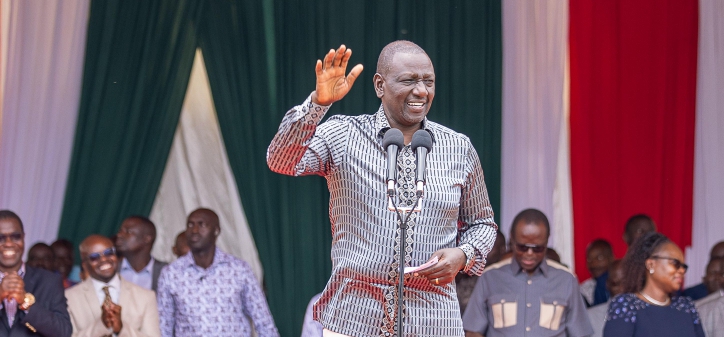
President William Ruto has firmly declared that the Kenya Kwanza–ODM partnership is not about political convenience but a deliberate, people-centered strategy to fast-track national development and foster unity. Speaking in Migori County, the President emphasized that the coalition is built on a shared vision to confront Kenya’s long-standing challenges and deliver prosperity across all regions without discrimination.
Through the partnership, President Ruto underscored, development projects are no longer politicized or confined to regions aligned with the government. From Turkana to Taita, the administration is investing in roads, markets, health centres, schools, and last-mile electricity connectivity, making the promise of inclusive growth a tangible reality for many Kenyans.
In Migori, for instance, President Ruto laid the foundation stone for the Suna West Technical Training College and commissioned a new Sub-County office, underscoring the administration’s investment in skills development and governance infrastructure. The launch of an Affordable Housing Project in Kehancha is also part of a wider national housing agenda targeting job creation and dignified living.
Other counties, like Tharaka Nithi, are preparing to break ground on industrial parks, a cornerstone in the Kenya Kwanza economic model, meant to create rural employment and reduce urban migration. In Kisii and Nyeri, feeder roads are being upgraded, new classrooms built, and rural households are now receiving grid electricity, fulfilling campaign pledges one project at a time.
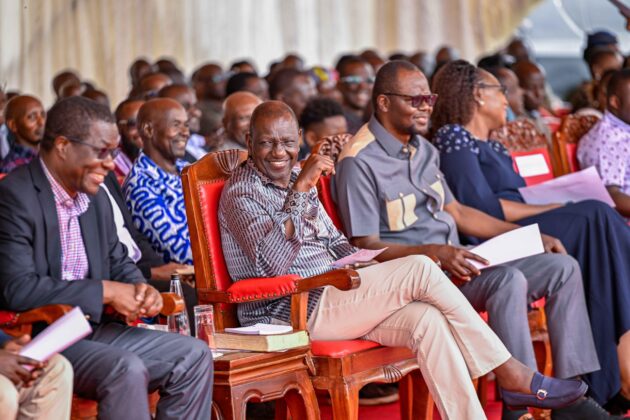
Energy CS Opiyo Wandayi and Treasury CS John Mbadi reaffirmed the broad-based government’s resolve, saying the Kenya Kwanza–ODM partnership has not only delivered development to ODM strongholds but also improved policy inclusivity. They dismissed critics who fail to acknowledge that this coalition has enhanced national cohesion, far beyond any past government formations.
In stark contrast, the emerging opposition coalition—featuring former Deputy President Rigathi Gachagua, Kalonzo Musyoka, Fred Matiang’i, Martha Karua, and Eugene Wamalwa—has drawn criticism for promoting ethnic politics and power-hungry rhetoric. National Assembly Minority Leader Junet Mohamed derided the alliance as aimless and lacking an agenda beyond empty slogans like “Ruto Must Go.”
President Ruto cautioned that tribal politics and incitement have no place in a modern, forward-looking Kenya. He emphasized the importance of peace, condemning the murder of Kasipul MP Charles Were and assuring the nation that justice will prevail. “We will not allow violence to define our politics or derail progress,” he said.
The ODM wing has distanced itself from internal party dissenters opposed to the pact, reminding critics that the decision to work with Kenya Kwanza was a collective one. Senator Oburu Oginga challenged Governor James Orengo to exit the party if he opposes the direction taken, affirming that national interest supersedes personal pride.
By investing in every county and dismissing political exclusivity, President Ruto is redefining governance and proving that campaign promises are not just rhetoric. The Kenya Kwanza–ODM pact is laying the groundwork for a new political culture—one rooted in service delivery, equity, and national cohesion. As roads are paved and lights turned on in the furthest corners of the country, it’s clear that development is becoming the new language of politics in Kenya.