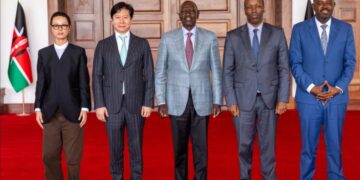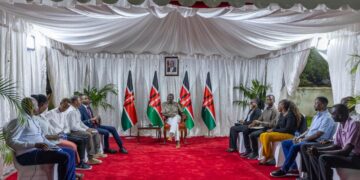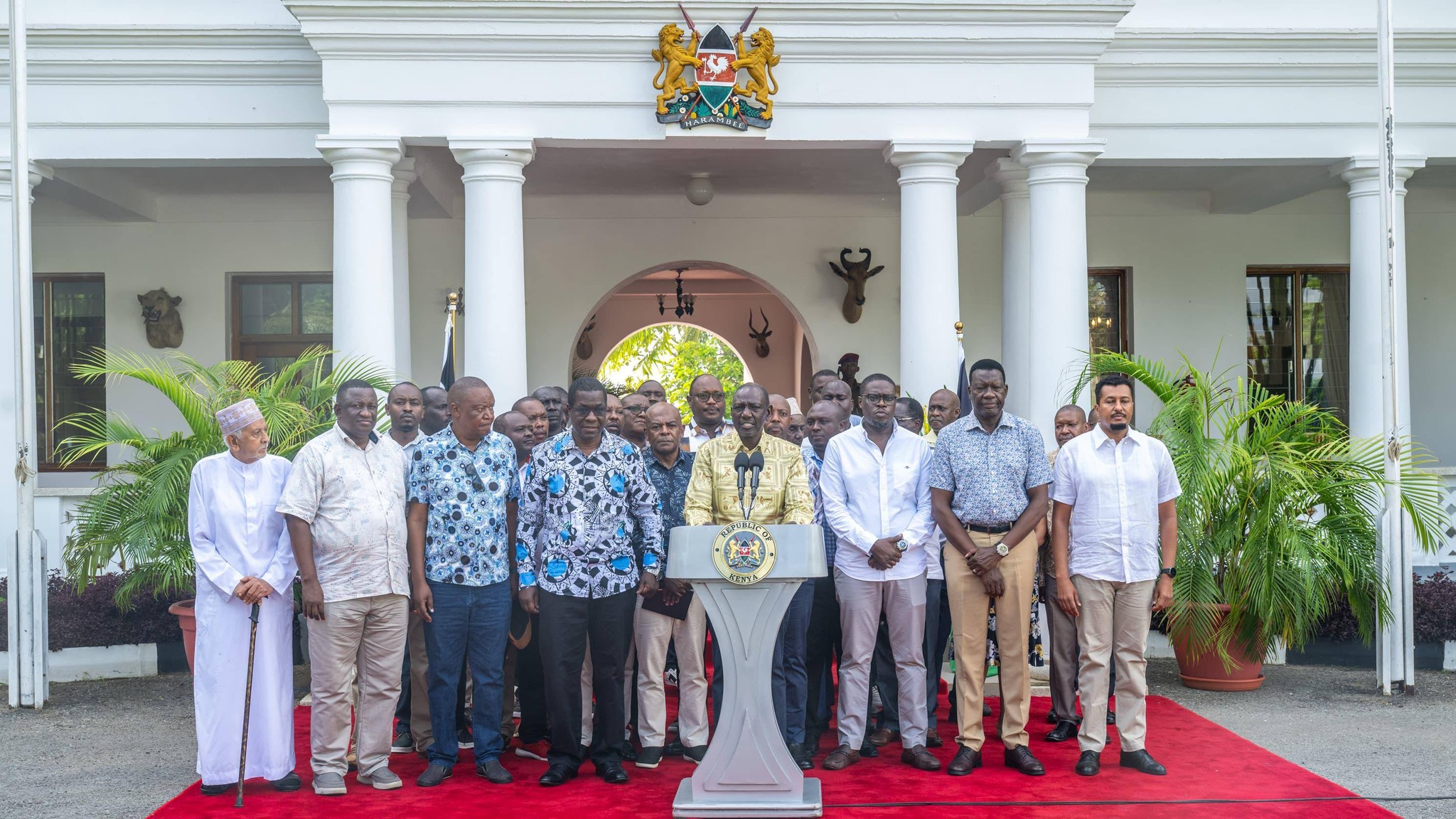
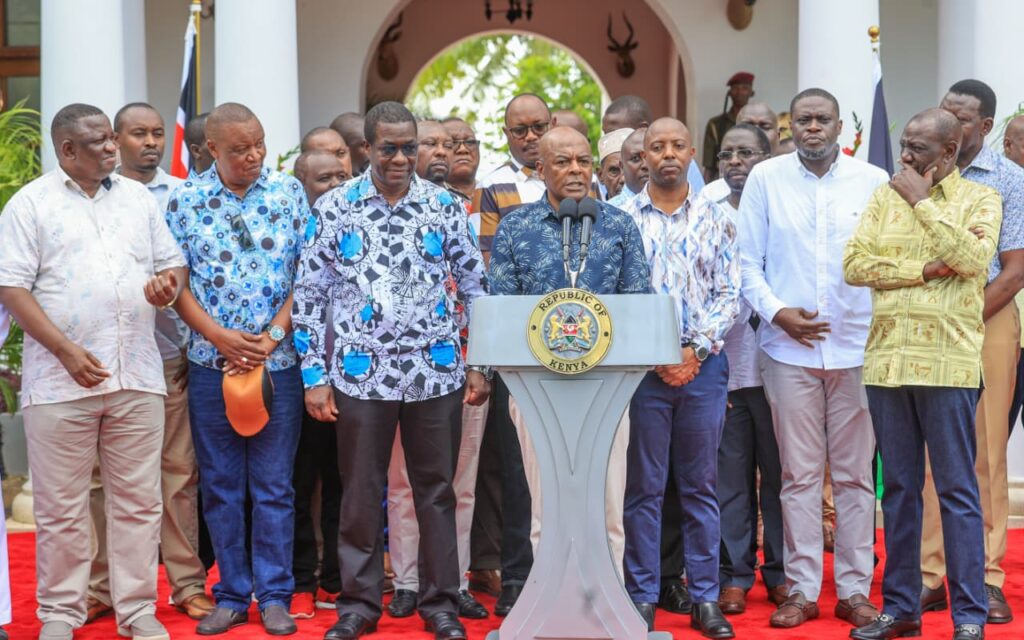
President William Ruto’s intervention to cushion public service vehicle operators has brought relief across the transport sector after the planned nationwide matatu strike over rising fuel costs was officially called off. The breakthrough followed extensive consultations between the government and transport stakeholders at State House in Mombasa, where concerns over livelihoods, operational costs and sustainability of the sector were addressed.
The strike had initially been suspended to next week as operators piled pressure on the government to respond to the escalating fuel crisis that has significantly affected the matatu industry. However, following the President’s commitments and new measures unveiled during the meeting, Matatu Owners Association leadership announced that the planned industrial action would no longer proceed.
Speaking alongside President William Ruto in Mombasa, Matatu Owners Association Chair Albert Karakacha welcomed the government’s intervention and urged Kenyans to support constructive engagement rather than political confrontation. He said operators were ready to move forward and partner with the government in building a stronger economy while safeguarding the transport sector from collapse.
President Ruto used the occasion to criticize opposition leaders whom he accused of exploiting the fuel crisis for political populism instead of supporting practical solutions. He argued that politicizing the challenges facing ordinary Kenyans was unfortunate at a time when the government was implementing measures to stabilize fuel prices and protect vulnerable sectors of the economy from further shocks.
The Head of State revealed that the government had already spent Ksh28.19 billion across the April–May and May–June 2026 fuel pricing cycles in efforts aimed at cushioning consumers and stabilizing the energy market. According to the President, these interventions were necessary to prevent a deeper economic strain on transport operators, businesses and households already grappling with high operational expenses.
To further protect PSV operators facing reduced profit margins and risks of loan defaults, President Ruto directed the Ministry of Transport to engage financial institutions and banking partners on temporary relief measures regarding lending terms within the transport industry. The move is expected to ease financial pressure on operators struggling with repayments amid increased fuel and maintenance costs.
The President also took issue with insurance companies over delays and failures in settling claims involving public service vehicles despite operators maintaining valid insurance cover. Consequently, he ordered an immediate review of both the Insurance Act and the Auctioneers Act within the next three months to establish a fairer and more responsive framework for the transport sector. The Ministry of Transport and the Insurance Regulatory Authority were also instructed to engage stakeholders and address the grievances raised by operators.
Digital taxi operators were equally among the beneficiaries of the government’s interventions after President Ruto directed the Ministry of Transport through the National Transport and Safety Authority to engage ride-hailing companies and drivers on implementing regulations governing minimum taxi fares and resolving long-running disputes in the sector. The President reaffirmed the government’s commitment to continued dialogue with stakeholders to develop practical and sustainable solutions that protect livelihoods, preserve jobs and support economic growth across Kenya.