Deputy President Kithure Kindiki has once again demonstrated his calm, practical and people-centered leadership after successfully leading government engagement efforts that saw Public Service Vehicle operators call off their nationwide strike. The breakthrough came after intensive consultations and dialogue spearheaded through the DP’s counsel, allowing both the government and transport stakeholders to agree on the need for negotiations instead of confrontation.
The government maintained that dialogue remains the best path toward resolving the fuel pricing impasse while protecting the country’s economic stability. Prof. Kindiki assured Kenyans that the administration remains fully committed to lowering fuel prices through practical interventions and continuous engagement with all affected stakeholders in the transport sector.
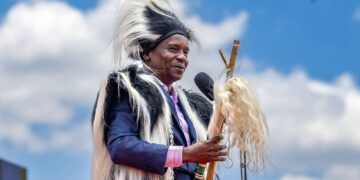
Speaking during the funeral service of Mzee Eshbon Thuku Kwenya, father of Kinangop MP Kwenya Thuku, held in Rugongo, Kinangop Constituency, Prof. Kindiki thanked PSV operators for demonstrating patriotism by suspending the strike to pave the way for discussions. He noted that the move reflected maturity, national responsibility and commitment to protecting ordinary Kenyans from further suffering.
“The government is committed to engage the stakeholders and come up with a solution so that our country and the economy continue flourishing. We will get a solution to the fuel issue. There is no problem that is so big that we cannot handle,” the Deputy President assured.
The Second in Command outlined several urgent measures already taken by the government to cushion Kenyans from the rising cost of fuel. These include reducing Value Added Tax on fuel from 16 percent to 8 percent, releasing more than KSh12 billion for fuel subsidies and implementing a KSh10 reduction on diesel prices. According to Prof. Kindiki, further consultations are ongoing to identify additional relief measures for wananchi.
The Deputy President emphasized that sustainable solutions cannot be achieved through violence, destruction or political incitement. He urged all Kenyans to maintain peace and lawfulness, warning that criminal acts witnessed during the strike only worsened the country’s economic challenges and hurt innocent citizens trying to earn a living.
Indeed, the two-day PSV strike caused widespread disruption across several parts of the country. Businesses suffered losses, roads were blocked, vehicles were torched, property was destroyed and thousands of Kenyans struggled to access transport to their workplaces and schools. The unrest dealt another blow to an economy that is steadily recovering and seeking stability through ongoing reforms and investment.
Political analysts and government supporters have criticized sections of the opposition for allegedly attempting to fuel tensions surrounding the strike for political mileage rather than supporting solutions that would benefit ordinary Kenyans. Critics argue that while the government focused on dialogue and compromise, some opposition leaders resorted to populist rhetoric that risked prolonging public suffering and economic paralysis.
Government Digital Strategists have particularly praised DP Kindiki’s leadership style, describing him as a practical mentor and teacher who invests deeply in those working around him. According to one strategist, Prof. Kindiki does not merely assign duties but actively guides teams through challenges while nurturing professional growth and accountability.
“He doesn’t just assign work, he places you right at the center of the assignment, allows you to struggle, even fail, then patiently teaches you how to succeed. He refines ideas with you, rewrites drafts himself and supervises every detail with passion and genuine interest in seeing you grow,” the strategist stated while describing the Deputy President’s hands-on leadership approach.
The strategist further observed that Prof. Kindiki creates time from an extremely demanding schedule to mentor and guide those around him, paying attention to every detail until assignments are successfully completed. Many within government circles believe this leadership style has strengthened coordination within government and enabled faster responses to national challenges, including the recent PSV standoff.
Prof. Kindiki also used the occasion to urge residents of the Mt. Kenya region and Kenyans at large not to turn political differences into hostility and division. He reminded citizens that Kenya’s democratic struggles, including the fight for independence and multiparty democracy, were achieved without destroying property or attacking one another. He stressed that politics is temporary, but peace, unity and economic stability must remain national priorities for the benefit of all Kenyans.