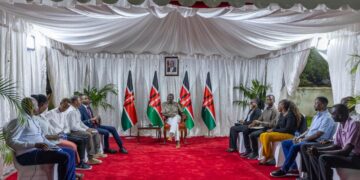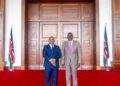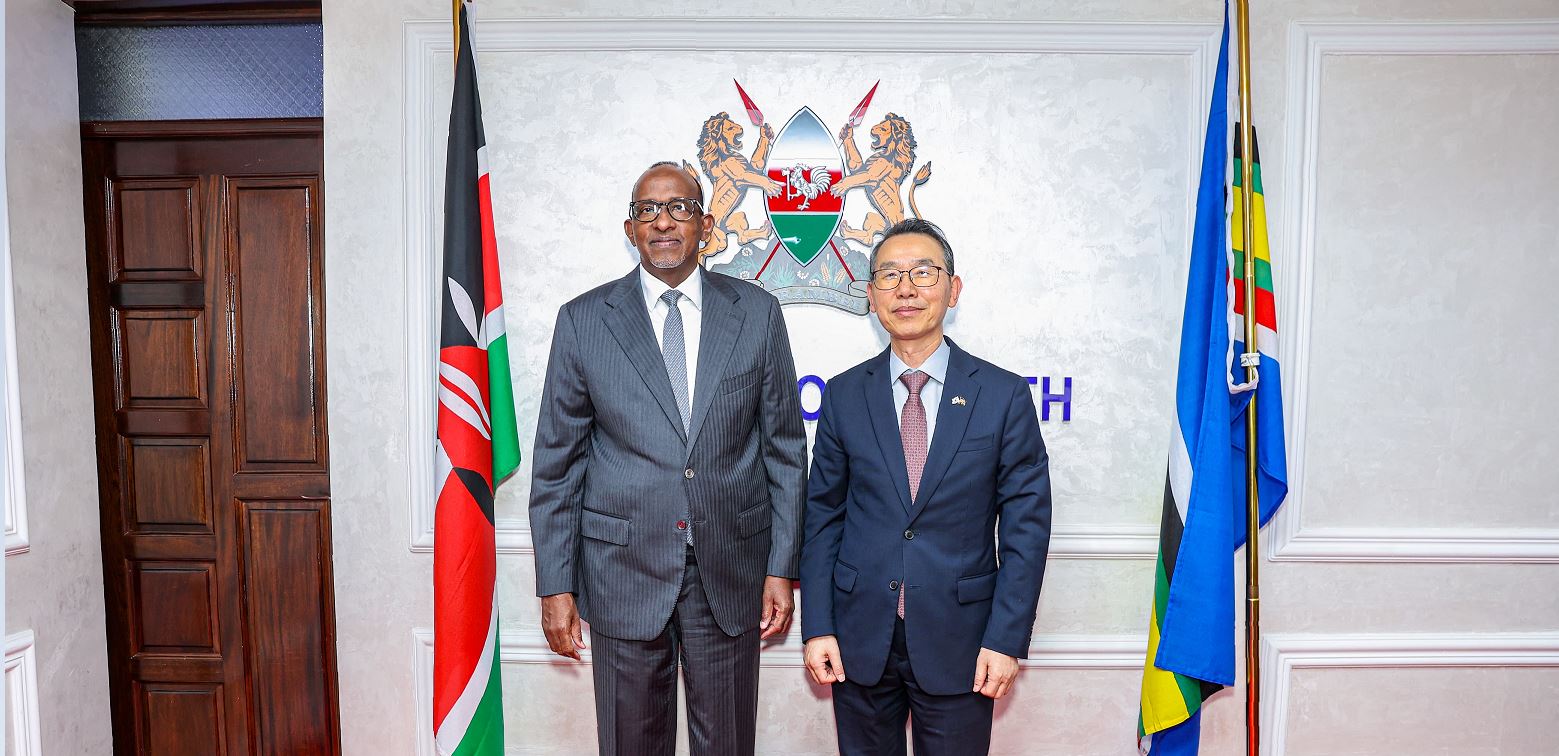
Health Cabinet Secretary Aden Duale has stepped up Kenya’s health diplomacy with South Korea following talks with Korean Ambassador Hyung-Shik, unlocking fresh momentum for maternal and child health programmes. At the center of the engagement is a 14-million-dollar investment that will see a Level 5 specialized hospital built in Kitengela, Kajiado County, in a move aimed at reducing deaths among mothers and newborns.
Backed by the Korea International Cooperation Agency, the Mamtoto Project is expected to change how maternal care is delivered in one of Kenya’s fastest growing regions. For years, expectant mothers in Kajiado and neighboring counties have relied heavily on overstretched facilities in Nairobi. The new hospital is set to bring advanced services closer to home, cutting travel time and easing congestion in the capital’s referral hospitals.
The project builds on earlier investments that have already strengthened emergency response systems and expanded access to care for hundreds of thousands of residents in Kajiado. Health officials say the next phase will focus on specialized treatment, including handling high-risk pregnancies and neonatal complications that often require urgent, highly skilled intervention.
Beyond healthcare access, the planned facility is expected to reshape the local economy. A hospital of this scale typically attracts doctors, nurses, technicians, and support staff, while also creating demand for pharmacies, laboratories, and medical suppliers. Kitengela, already a rapidly expanding urban center, could emerge as a key health services hub in the wider Nairobi metropolitan area.
The talks also highlighted growing cooperation in medical training and research, with institutions such as Inha University Hospital and Korea Advanced Institute of Science and Technology supporting skills development and innovation. This comes at a time when Kenya is pushing to strengthen its health workforce and improve the quality of care at all levels. In addition, Kenya is looking to deepen collaboration in vaccine production and technology transfer through partnerships involving SK Bioscience and the International Vaccine Institute. These efforts are tied to the work of the Kenya BioVax Institute, which aims to position the country as a regional leader in vaccine manufacturing.
The engagement also reflects a broader push to improve health outcomes through partnerships. Programmes supported by UNICEF in areas such as water and sanitation are already helping reduce health risks for mothers and children in vulnerable regions like Turkana. While the new hospital offers clear promise, its long-term impact will depend on how well it is staffed, equipped, and integrated into the wider health system. Similar projects in the past have faced challenges once donor funding ends, raising questions about sustainability and maintenance.
Even so, the Kenya Korea partnership marks a significant step in expanding access to quality maternal care. If successfully implemented, the Kitengela facility could reduce pressure on Nairobi hospitals, bring lifesaving services closer to communities, and contribute to safer pregnancies and births across the region.
Kenya Plans Sh80 Billion Nuclear Research To Advance Local Cancer Care And Pharmaceutical Production
Kenya plans to begin construction of a Sh80 billion nuclear research reactor at Konza Technopolis in 2027, laying the groundwork for local production of specialized medical isotopes used...
Read moreDetails