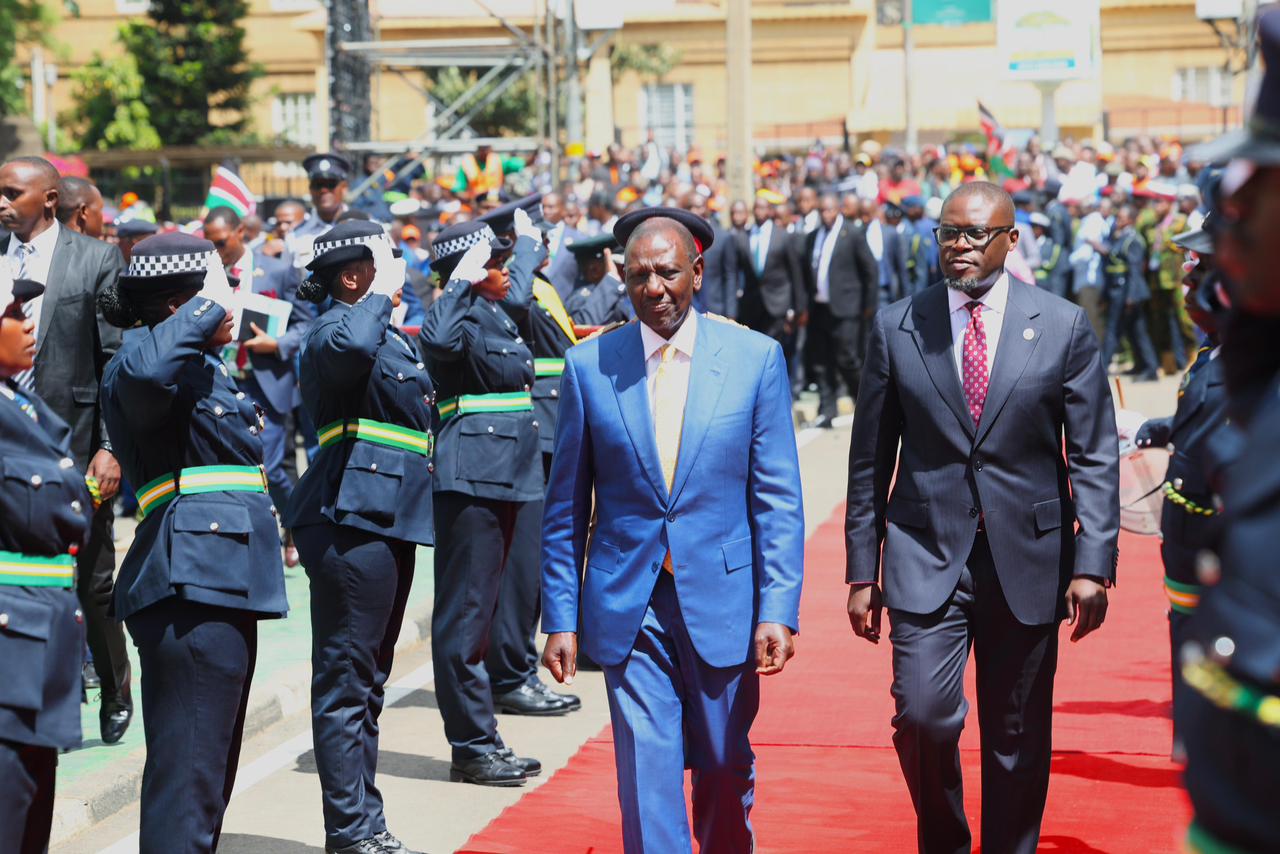
President William Samoei Ruto unveiled an ambitious six-month plan to transform Nairobi into a brighter, safer, and more efficient capital, backed by a sweeping Sh80 billion infrastructure program already taking shape across the city. The initiative signals a decisive shift towards fast, visible delivery, with the administration prioritizing immediate execution over drawn-out timelines. By setting a clear six-month window, the government is positioning the transformation as a results-driven intervention aimed at restoring confidence in urban management while rapidly improving the daily experience of residents in Kenya’s economic hub.
At the center of the program is the construction of 247 kilometers of roads, forming the backbone of a wider effort to ease congestion, improve connectivity, and unlock economic activity across Nairobi. With several sections nearing completion and others commencing, the scale of road expansion is expected to significantly reduce travel times, streamline movement between residential and commercial zones, and enhance access to key markets and business districts. Complementary drainage upgrades are set to address persistent flooding challenges, while improved road quality is likely to boost efficiency for both public and private transport, reinforcing Nairobi’s role as a critical engine of national growth.
The benefits for residents are expected to be immediate and far-reaching, extending beyond mobility to safety and overall urban functionality. A major street lighting rollout covering tens of thousands of points is set to illuminate neighborhoods, enhance security, and support extended economic activity into the evening hours. At the same time, expanded electricity access in underserved areas is expected to improve living standards while enabling small businesses to thrive. These upgrades, combined with cleaner streets and improved infrastructure aesthetics, are designed to reshape public perception of the city and create a more orderly and accessible urban environment.
Beyond roads and lighting, the transformation agenda incorporates a broad package of water, sanitation, and environmental improvements aimed at modernizing Nairobi’s urban systems. New sewer infrastructure and expanded treatment capacity are being rolled out to address long-standing sanitation gaps, while ongoing clean-up operations and the development of a modern waste recovery facility signal a shift towards sustainable waste management. Together, these interventions are expected to improve public health outcomes, restore environmental integrity, and position Nairobi as a cleaner and more attractive destination for investment and tourism.
Housing development remains a central pillar of the program, with a large pipeline of affordable housing projects already under construction and more units in the pipeline. This push is not only addressing the city’s housing deficit but also driving significant job creation across construction, engineering, and supply chains, offering employment opportunities for thousands of young people. The scale of activity is expected to stimulate economic growth while gradually reshaping Nairobi’s skyline with modern, planned developments that align with the city’s long-term expansion needs.
The plan also introduces enhanced urban security through improved lighting, surveillance systems, and the establishment of a metropolitan policing framework designed to strengthen enforcement and restore order. Crucially, delivery is being anchored on close coordination between the national government and the administration of Johnson Sakaja, ensuring that planning, financing, and execution move in sync. This cooperative model is enabling faster implementation and reducing the bureaucratic bottlenecks that have historically slowed major projects in the capital.
The broader objective is to reposition Nairobi as a leading African capital that is efficient, competitive, and attractive to investors. By accelerating infrastructure delivery and improving essential services, the government is laying the groundwork for sustained economic expansion while reinforcing the city’s status as a regional hub for trade, business, and innovation. The six-month timeline places a premium on urgency and accountability, signaling a leadership approach focused on tangible outcomes.
With projects already underway and timelines clearly defined, the transformation plan stands out as a forward-looking intervention aimed at delivering measurable change within a short period. It reflects a strong commitment to infrastructure-led development and a determination to modernize Kenya’s capital in a way that directly improves the lives of its residents while strengthening confidence in the government’s ability to deliver.
Deputy President Kithure Kindiki has reaffirmed his unwavering commitment to supporting President William Ruto in delivering transformative development projects across the country, as he embarked on an extensive...
Read moreDetails