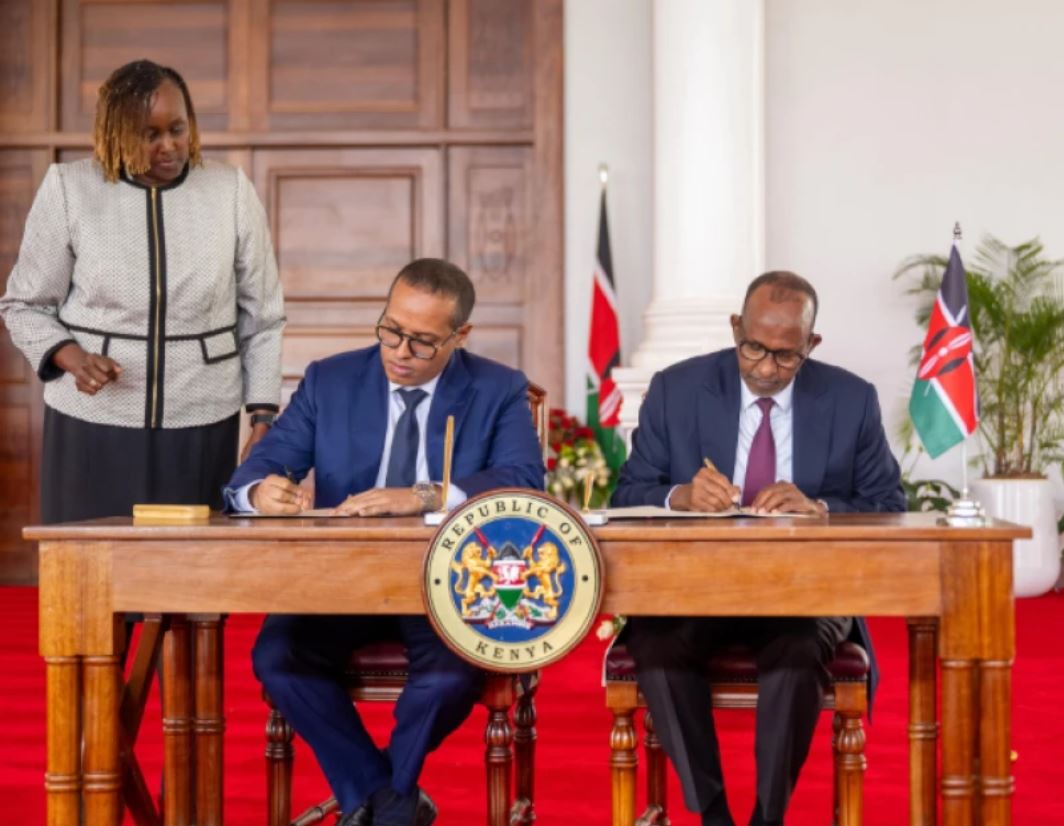
Kenya’s healthcare transformation agenda has received a major boost following a landmark KSh 4.5 billion investment by Tanzanian billionaire Edha Nahdi, marking one of the most significant private-sector commitments to maternal and child health in the country’s history. The initiative will see the construction of 10 modern, fully equipped mother-and-child hospitals across nine counties, reinforcing Kenya’s position as an increasingly attractive destination for high-value health sector investments.
The project, formalized at State House in the presence of William Ruto, reflects growing investor confidence in Kenya’s stable policy environment and ongoing health sector reforms. It also underscores the rising role of private capital in complementing public investment to accelerate the delivery of essential social services.
Strategically distributed across Nairobi, Mombasa, Kisumu, Nakuru, Kwale, Garissa, Embu, Uasin Gishu, and West Pokot, the hospitals are designed to address longstanding gaps in access to quality maternal and pediatric care. Nairobi will host two facilities, while the remaining counties will each receive one, ensuring a targeted response to regions with high maternal and infant health burdens.
Each facility will be developed as a Level 4 hospital with a capacity of approximately 250 beds, incorporating advanced maternal intensive care units, antenatal and postnatal services, modern delivery suites, and fully equipped operating theatres. The integration of digital health systems and modern diagnostic technologies is expected to significantly enhance service delivery, patient monitoring, and referral efficiency.
This investment is closely aligned with Kenya’s Universal Health Coverage ambitions, which prioritizes strong primary healthcare systems supported by robust referral networks. By decentralizing specialized maternal services, the new hospitals will reduce pressure on urban referral centers while bringing life-saving care closer to communities in rural and peri-urban areas.
Beyond healthcare delivery, the project is expected to generate substantial socio-economic benefits. Construction and operational phases will create jobs for healthcare professionals, technicians, and support staff, while also stimulating local supply chains in pharmaceuticals, medical equipment, and facility maintenance. Improved access to quality maternal care is also projected to reduce preventable deaths, strengthen family health outcomes, and contribute to long-term human capital development.
The initiative highlights the effectiveness of public-private partnerships in advancing national development goals. Collaboration between national and county governments, private investors, and health sector regulators is enabling faster infrastructure rollout while maintaining quality and accountability standards. This model is increasingly becoming central to Kenya’s strategy for scaling critical services in a sustainable and efficient manner.
Importantly, the project aligns with the Bottom-Up Economic Transformation Agenda, which places accessible healthcare at the core of inclusive growth. By focusing on mothers and children, the investment directly supports vulnerable populations while strengthening the broader healthcare ecosystem
At a continental level, the initiative contributes to Africa’s wider efforts to improve maternal and child health outcomes and aligns with global commitments under Sustainable Development Goal 3 on good health and well-being. Expanding access to skilled birth attendance, emergency obstetric care, and neonatal services remains a key priority in reducing mortality rates across developing economies.
With construction expected to roll out over three financial years, the hospitals will eventually be integrated into Kenya’s public health system under a build-equip-transfer model. This approach allows the country to leverage private financing and expertise while ensuring long-term public ownership and sustainability
Edha Nahdi’s investment stands as a strong vote of confidence in Kenya’s healthcare sector and its long-term development trajectory. It reinforces the country’s commitment to building a resilient, decentralised, and high-quality health system capable of delivering equitable care to all citizens, while positioning Kenya as a regional leader in innovative health sector partnerships
Deputy President Kithure Kindiki has reaffirmed his unwavering commitment to supporting President William Ruto in delivering transformative development projects across the country, as he embarked on an extensive...
Read moreDetails