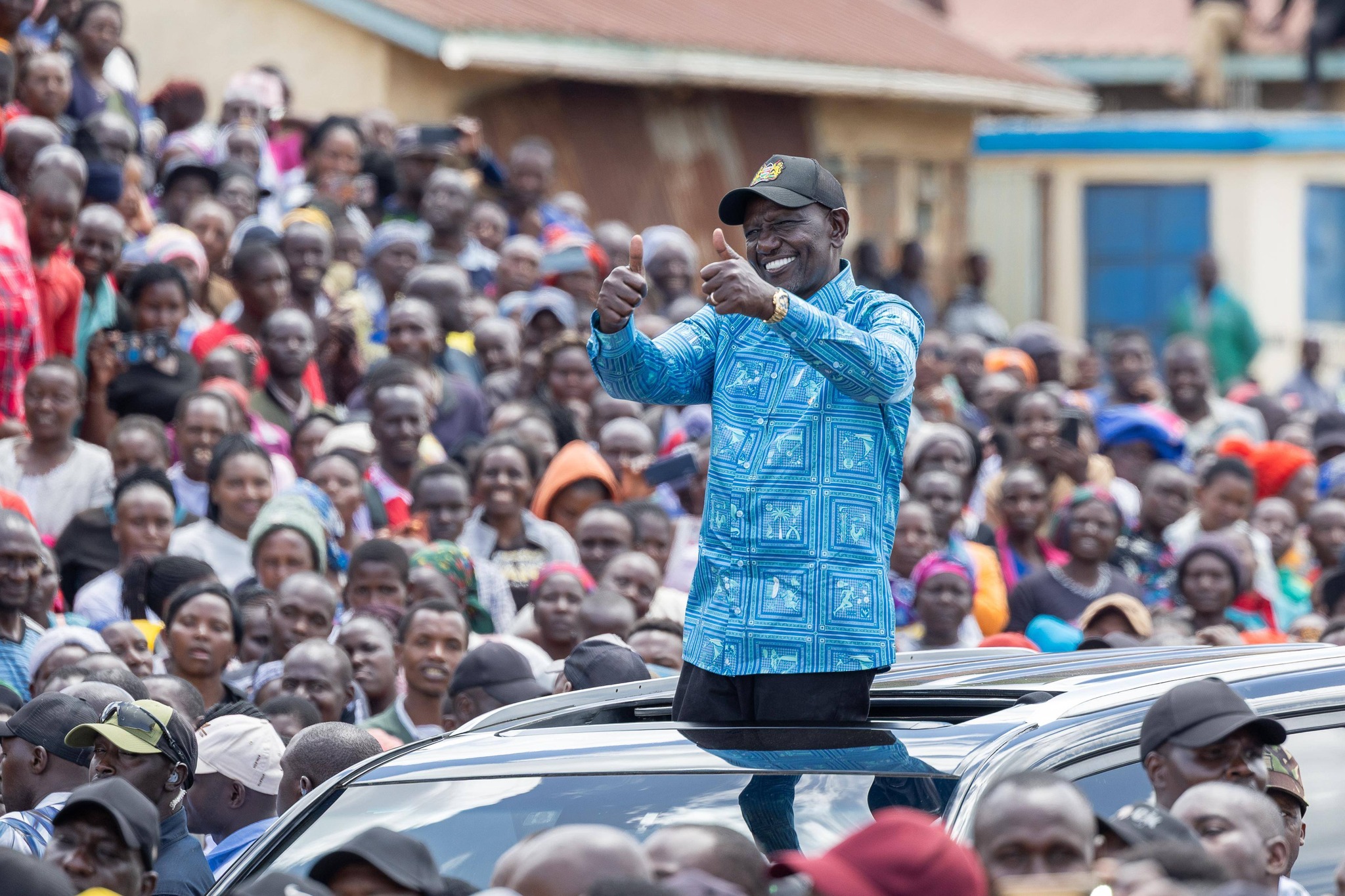
President William Ruto has strongly defended the growing alliance between the United Democratic Alliance (UDA) and the Orange Democratic Movement (ODM), describing it as a strategic partnership aimed at accelerating national development and fostering unity across Kenya. Speaking during his development tour of Kisii and Nyamira counties, the Head of State emphasized that the broad-based government arrangement is not merely political convenience, but a deliberate framework designed to deliver tangible transformation to citizens.
The President underscored that the collaboration between UDA and ODM represents a new political direction focused on inclusivity and service delivery. According to him, the broad-based government has created a stable environment necessary for economic growth, infrastructure expansion, and improved public services. He reiterated that unity remains central to his administration’s agenda, arguing that political cooperation is essential in overcoming long-standing regional disparities.
During the tour, President Ruto dismissed criticism from opposition leaders, accusing them of lacking a coherent vision for the country. He argued that while his administration is focused on development and results, its critics are engaged in propaganda and divisive rhetoric. In his view, such approaches threaten national cohesion and risk derailing progress achieved so far under the current administration.
The President further cautioned against what he termed as attempts by a few political actors to incite instability ahead of future elections. He maintained that Kenya’s destiny lies in the collective will of its citizens rather than the ambitions of a handful of leaders. By framing the alliance as a unifying force, he positioned his government as a stabilizing pillar amid what he described as rising political tension fueled by the opposition.
Deputy President Kithure Kindiki echoed these sentiments, emphasizing that the government is committed to serving all Kenyans regardless of their political or ethnic backgrounds. He highlighted the administration’s deliberate effort to move away from tribal politics, noting that development projects are being distributed equitably across counties. Kindiki warned that divisive politics could undermine national progress and urged citizens to support unity-driven leadership.
A key theme throughout the tour was the government’s commitment to ensuring that every region benefits from national development initiatives. In Kisii and Nyamira, the President pointed to multiple projects either underway or newly launched as evidence of this commitment. These initiatives span infrastructure, education, healthcare, and trade, reflecting a holistic approach to regional development.
In Nyamira County, the President announced plans for a Standard Gauge Railway (SGR) station at Ikonge, a project expected to significantly enhance transportation and trade. He dismissed claims that the region had been excluded from the railway expansion, affirming that the government had allocated substantial resources to ensure its inclusion. The proposed transport hub is anticipated to facilitate the movement of agricultural produce such as tea, bananas, and macadamia, thereby boosting local economies.
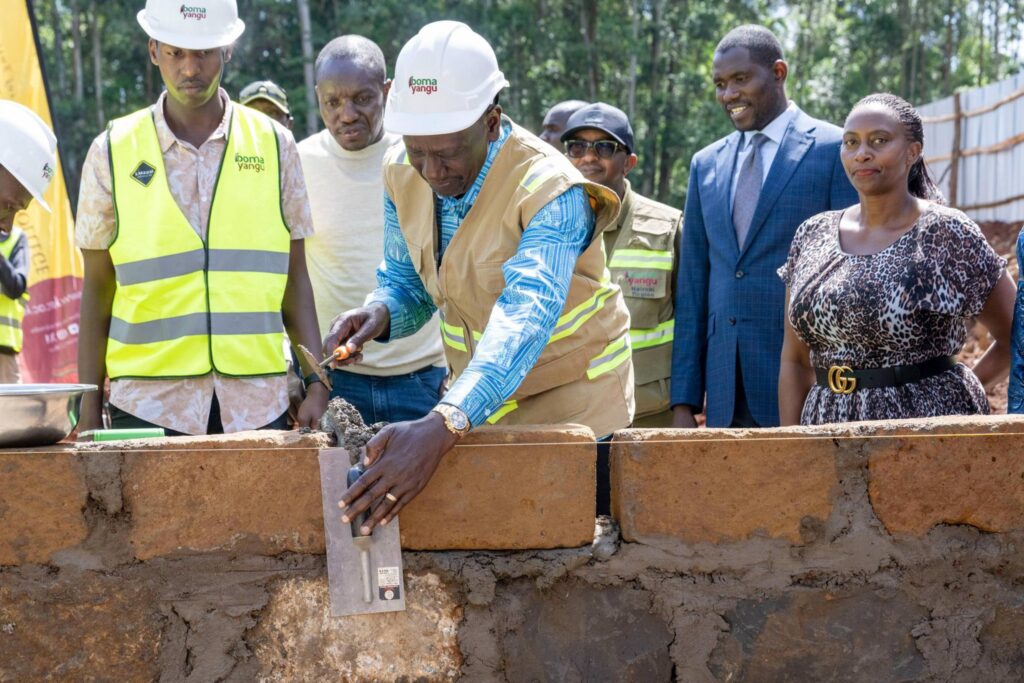
Education development also featured prominently, with the President laying the foundation stone for Nyamira University College. He revealed increased funding for the institution, including additional allocations for infrastructure and student accommodation. The project is expected to expand access to higher education in the region and stimulate local economic activity through job creation and increased demand for services.
Healthcare infrastructure is another area receiving significant attention, with plans underway to establish a modern hospital in Nyamira. The proposed facility, valued at approximately KSh1 billion, is intended to improve access to quality medical services for residents of the county and surrounding areas. This initiative aligns with the government’s broader goal of strengthening healthcare systems nationwide.
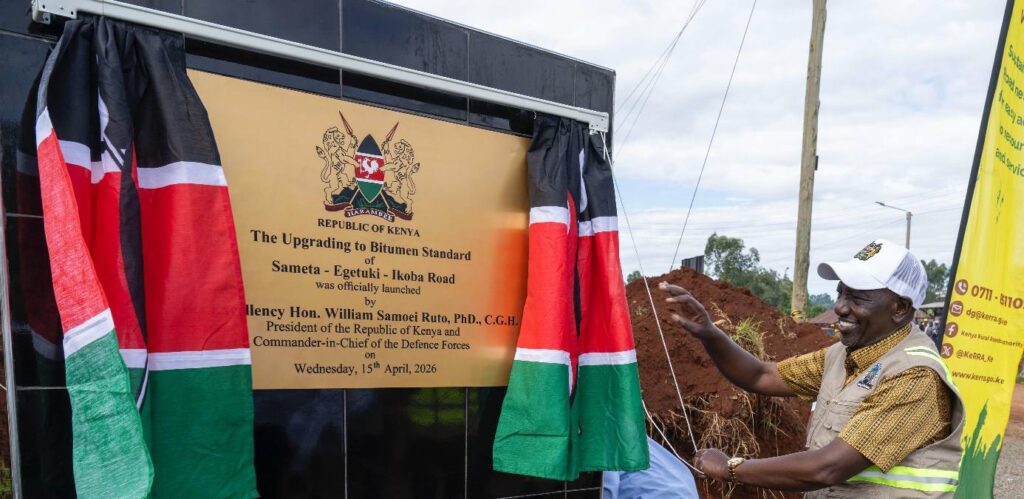
In Kisii County, the President launched several infrastructure projects aimed at improving connectivity and supporting local industries. Among them is the construction of the Bobaracho–Ting’a road and access roads to Gianchore Tea Factory, which are expected to ease transportation challenges faced by farmers. Improved road networks are likely to reduce post-harvest losses and enhance market access for agricultural producers.
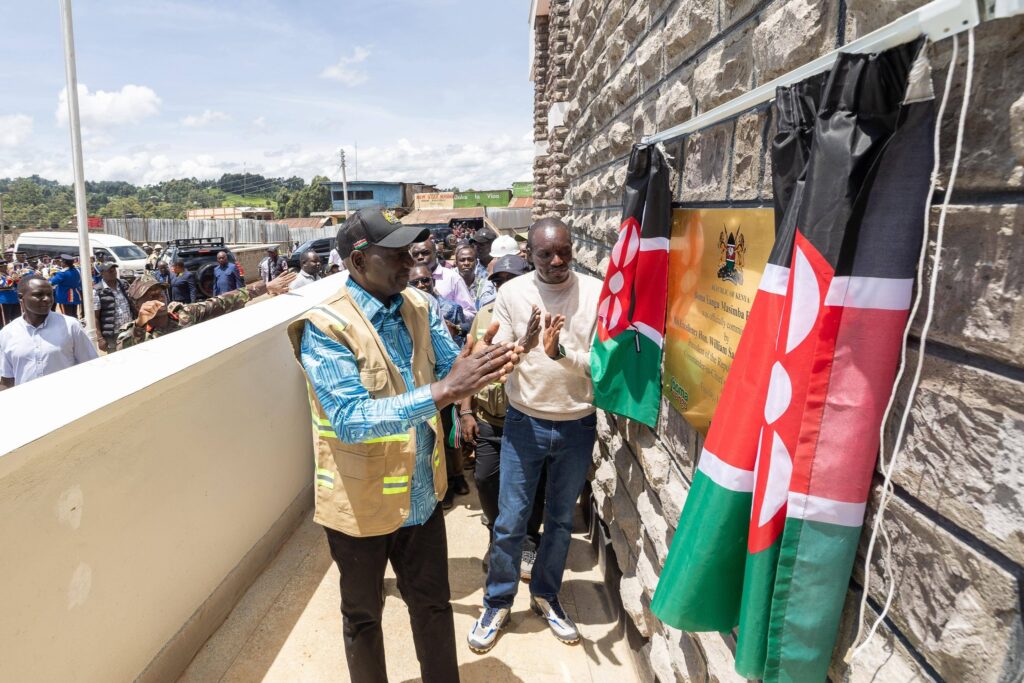
Additionally, the government is investing heavily in market infrastructure to empower small-scale traders. The launch of the Kegogi Modern Market, alongside plans to construct multiple markets across Kisii County, reflects a targeted effort to provide dignified and functional trading spaces. These developments are expected to support micro-enterprises, particularly those run by women and youth, thereby strengthening grassroots economic activity.
President Ruto also highlighted broader national achievements, including the stabilization of key economic indicators and increased investment in education and energy connectivity. He noted that thousands of classrooms have been constructed, teachers employed, and additional households connected to electricity under the last-mile program. These efforts, he argued, demonstrate the administration’s capacity to deliver on its promises.
Ultimately, the President framed the UDA–ODM alliance as a cornerstone of his administration’s development agenda, contrasting it with what he described as the opposition’s focus on division and political antagonism. With Deputy President Kindiki reinforcing the message of unity and inclusivity, the government continues to position itself as a driver of national transformation, committed to ensuring that all counties— including Kisii and Nyamira—benefit from sustained development and shared prosperity.