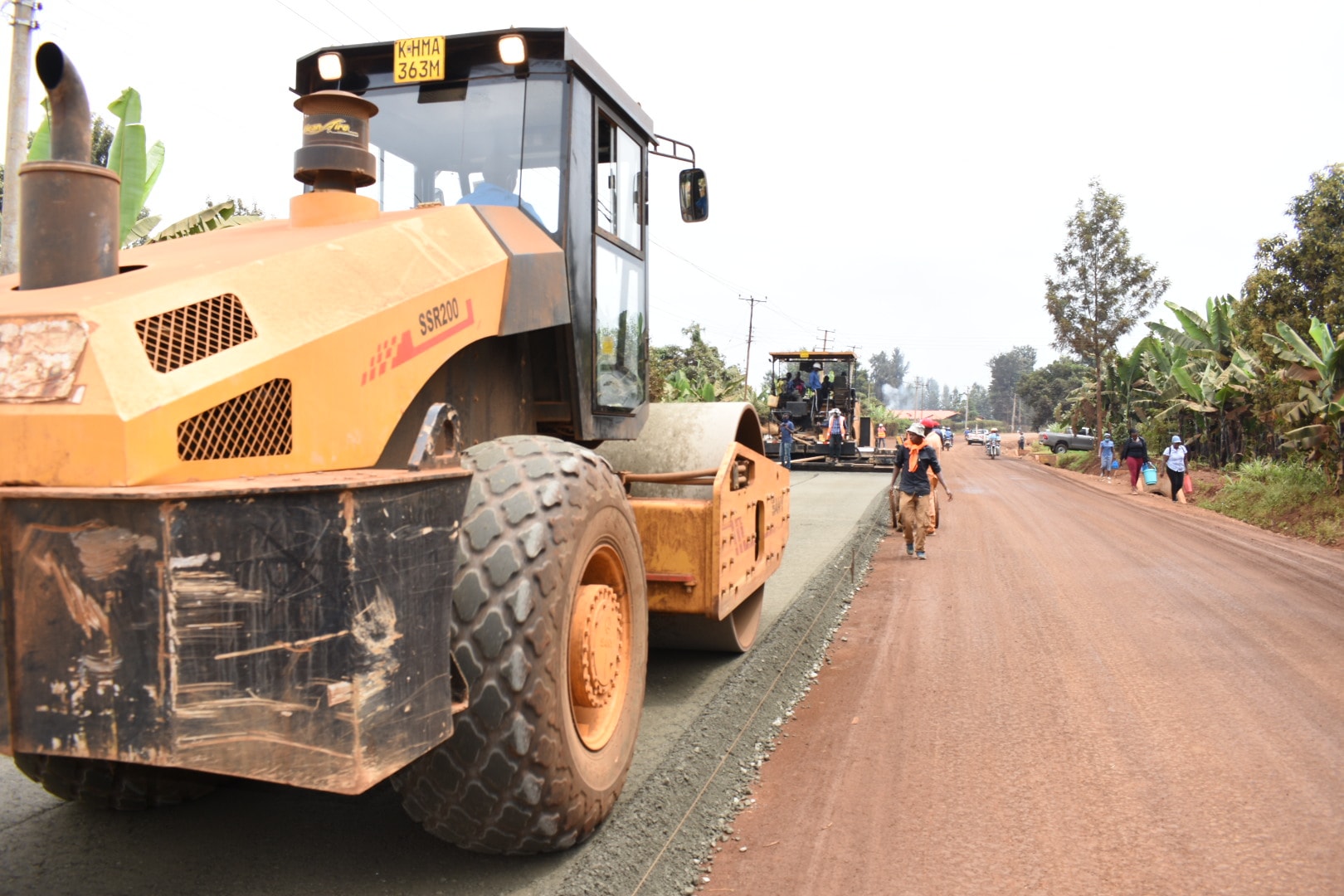
Kenya has awarded a Sh4.06 billion contract to Shengli Engineering Construction Group Company Limited to upgrade the Uplands-Githunguri-Ruiru road to bitumen standards, marking a key step in efforts to strengthen transport infrastructure within the Nairobi metropolitan region. The 44 kilometre project will link the Nairobi-Nakuru Highway at Uplands with the Nairobi-Thika Superhighway at Ruiru, creating a more efficient corridor for the movement of goods and people across Kiambu County.
The upgrade is expected to ease longstanding transport challenges along the route, which has been prone to poor conditions and seasonal disruptions. Once completed, the improved road is set to enhance connectivity between agricultural zones in Uplands and Githunguri and the industrial hub of Ruiru, supporting trade flows, reducing travel time, and improving access to markets for local producers and businesses.
At an economic level, the project is expected to unlock latent productivity across one of Kenya’s most agriculturally vibrant zones. The Uplands and Githunguri areas serve as key producers of tea and dairy, yet poor road conditions have historically constrained timely access to markets. Upgrading the road to bitumen standards is likely to reduce transport costs, improve delivery timelines, and limit post-harvest losses, thereby strengthening value chains and enhancing farmer incomes. The improved corridor also creates a more efficient link to Ruiru’s industrial base, reinforcing supply chain integration between rural producers and urban processing hubs
Strategically, the road enhances network redundancy within the greater Nairobi region by providing an alternative east-west connection that bypasses congestion in the city core. This aligns with broader national objectives under Kenya Vision 2030, which prioritizes infrastructure as a driver of economic transformation. By easing pressure on existing highways and improving interconnectivity, the project contributes to a more resilient and efficient transport ecosystem that supports both domestic commerce and regional trade flows.
The project also reflects the continued prominence of foreign contractors in Kenya’s infrastructure landscape, particularly firms linked to China’s global construction footprint. The involvement of Shengli Engineering underscores the role of foreign direct investment and international expertise in delivering capital-intensive projects. Such partnerships often bring advantages in financing, technical capacity, and rapid mobilization. However, they also intensify scrutiny around local content participation, technology transfer, and long-term sustainability of infrastructure investments.
From a socio-economic perspective, the construction phase is expected to generate employment opportunities across multiple skill levels, from manual labor to engineering and project management. There is potential for small and medium enterprises to benefit through supply of materials and auxiliary services, though the extent of this participation will depend on procurement structures and enforcement of local inclusion policies. Skills transfer and exposure to modern construction techniques could provide longer-term benefits for Kenya’s domestic workforce, particularly if knowledge sharing mechanisms are effectively implemented.
Urban development dynamics along the corridor are also likely to shift. Improved accessibility typically drives land value appreciation and stimulates real estate activity, especially in peri-urban zones such as Githunguri and Ruiru. This could accelerate the transformation of these areas into residential and commercial nodes within the Nairobi commuter belt. At the same time, unmanaged growth may strain existing social infrastructure and raise concerns around land use planning, displacement, and environmental sustainability.
Regionally, the corridor strengthens Kenya’s positioning within frameworks such as the East African Community and the African Continental Free Trade Area. Efficient internal logistics are a prerequisite for competitiveness in cross-border trade, and improved road infrastructure enhances Kenya’s ability to function as a gateway for goods moving across Eastern Africa. By linking production zones to major highways, the project contributes to a broader network that facilitates intra-regional commerce and industrial expansion.
The financing and execution of the project also reflect evolving approaches to infrastructure delivery, including the use of hybrid funding models supported by public resources and leveraged through mechanisms such as securitized fuel levies. These approaches aim to address fiscal constraints while sustaining momentum in infrastructure development, although they introduce long-term financial obligations that require careful management.
Ultimately, the Uplands-Ruiru road upgrade illustrates the intersection of infrastructure investment, economic strategy, and geopolitical engagement. Beyond its immediate transport function, the project is part of a larger effort to position Kenya as a competitive manufacturing, logistics, and investment hub. Its success will depend not only on timely completion and construction quality, but also on how effectively it integrates into broader development frameworks, supports inclusive growth, and reinforces Kenya’s strategic leverage in regional and global economic systems.
Deputy President Kithure Kindiki has reaffirmed his unwavering commitment to supporting President William Ruto in delivering transformative development projects across the country, as he embarked on an extensive...
Read moreDetails