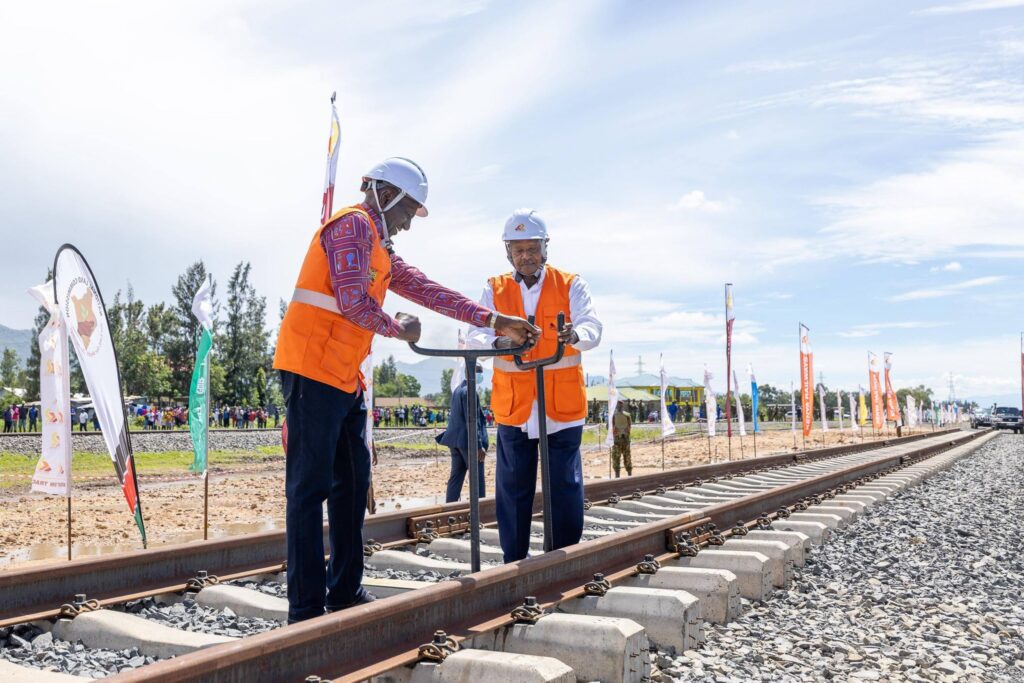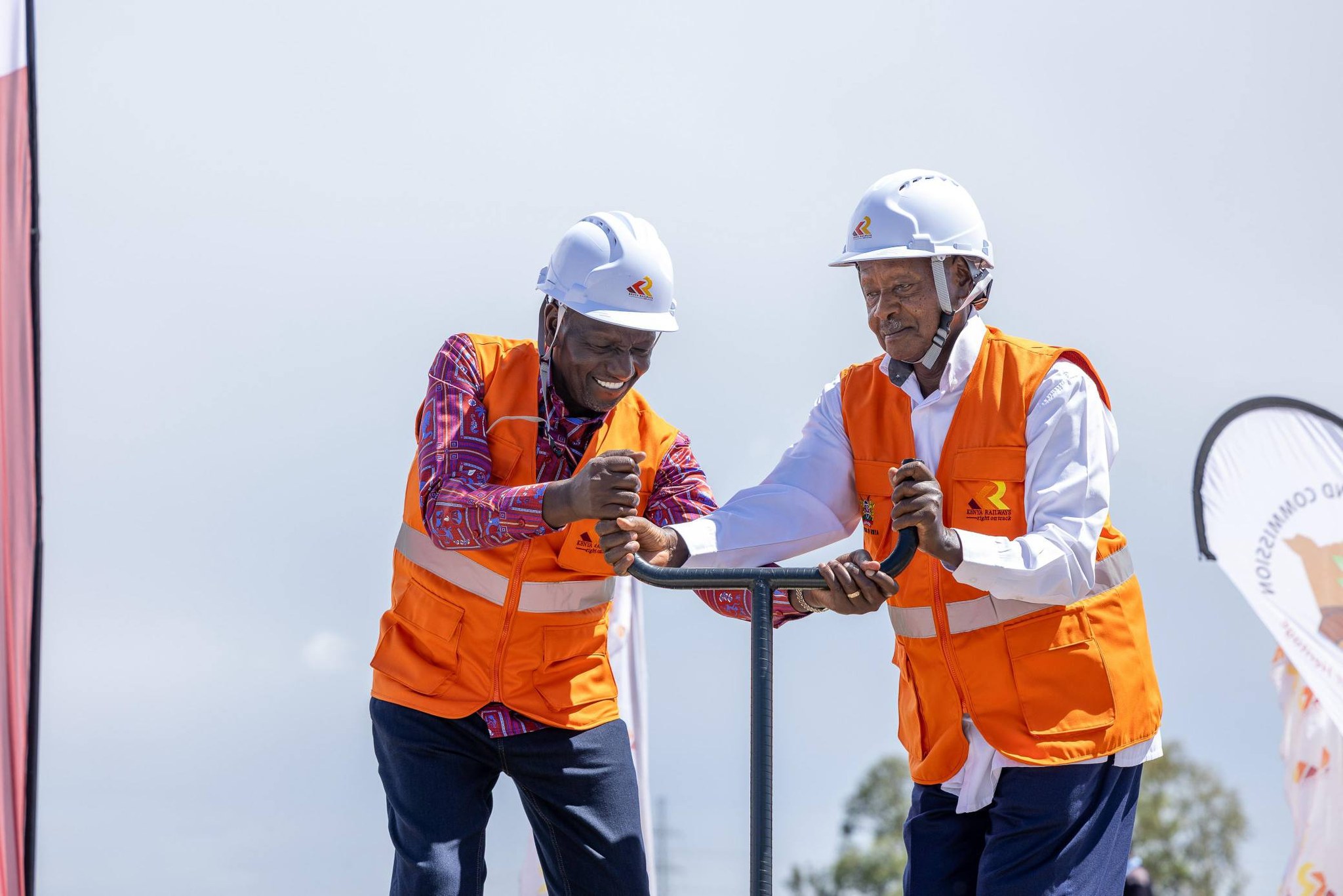
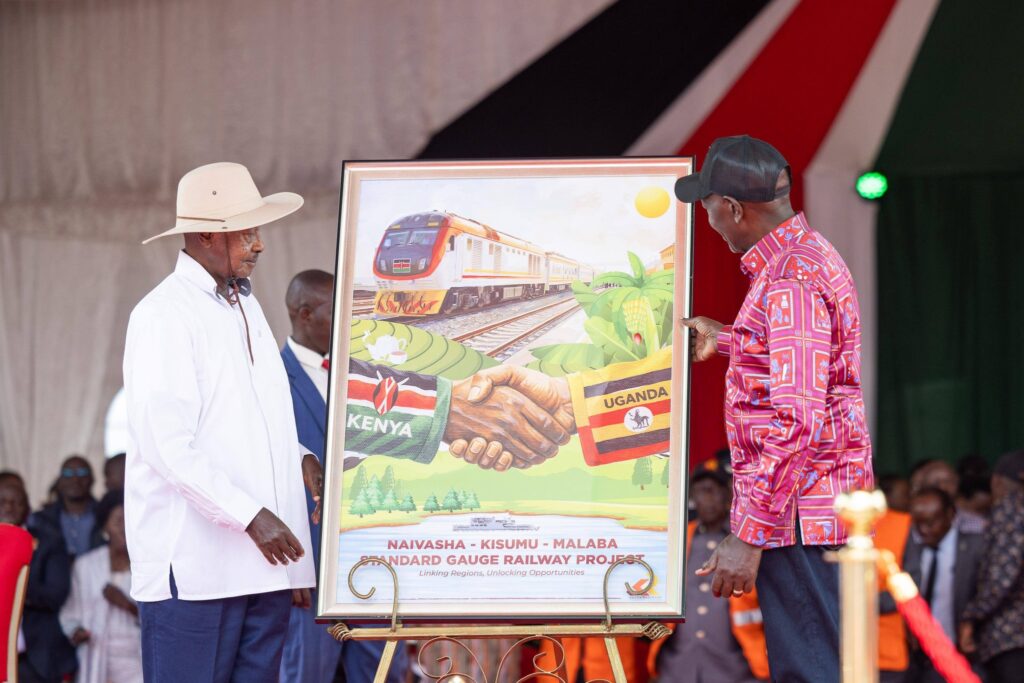
President William Ruto has unveiled an ambitious vision for regional transformation through the Kisumu–Malaba Standard Gauge Railway (SGR) extension, positioning it as a cornerstone of economic integration in East Africa. Speaking during the launch alongside Yoweri Museveni, Ruto emphasized that the railway will significantly cut logistics costs, enhance connectivity, and unlock new trade opportunities across the region.
The Kisumu–Malaba SGR section represents a critical link in the broader railway corridor stretching from Mombasa to the Kenya–Uganda border. This extension is expected to solidify Kenya’s role as a regional logistics hub, connecting landlocked countries such as Uganda, Rwanda, Burundi, South Sudan, and the Democratic Republic of the Congo to global markets through Kenya’s port infrastructure.
Economically, the railway is poised to drastically reduce the cost of doing business. Currently, transport expenses account for up to 40 percent of the final value of goods, making regional exports less competitive. With the SGR, freight costs are projected to drop by at least 40 percent, while transit times from Mombasa to Malaba and onward to Kampala will significantly decrease. This efficiency will directly benefit traders, manufacturers, and exporters across the region.
The project also carries immense significance for Kenya–Uganda trade relations. By improving cargo movement between the two nations, the railway will strengthen bilateral trade volumes, reduce border congestion, and enhance the flow of goods such as fuel, agricultural produce, and manufactured products. This seamless connectivity is expected to deepen economic interdependence and foster long-term regional stability.
Beyond trade, the SGR extension will play a vital role in boosting agricultural productivity and market access. Farmers in regions such as Kisumu, Kericho, Bomet, and Narok will gain faster and cheaper access to urban markets and export routes. The railway will enable efficient transportation of tea, dairy products, and livestock, reducing post-harvest losses and increasing incomes for rural communities.
Industrialization is another key pillar of the project. The government plans to establish special economic zones in areas like Kibos and Busia, strategically linked to the railway. These zones are expected to attract investment in manufacturing, logistics, and value addition industries, creating a ripple effect of economic growth along the corridor.
Equally important is the project’s impact on employment and livelihoods. The construction and operation of the railway will generate thousands of direct and indirect jobs, ranging from engineering and construction to logistics and service industries. This job creation is critical in addressing unemployment and supporting Kenya’s rapidly growing population.
Ultimately, the Kisumu–Malaba SGR extension is more than just a transport project—it is a transformative economic lifeline. By enhancing regional connectivity, lowering trade costs, and stimulating industrial growth, the railway sets the stage for shared prosperity across East and Central Africa. As President Ruto noted, infrastructure does not merely connect places; it shapes the future of nations by determining where opportunity and prosperity take root.