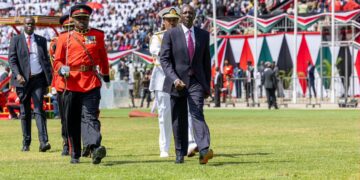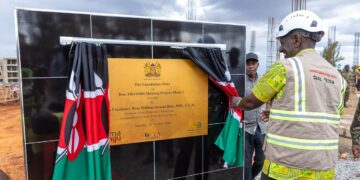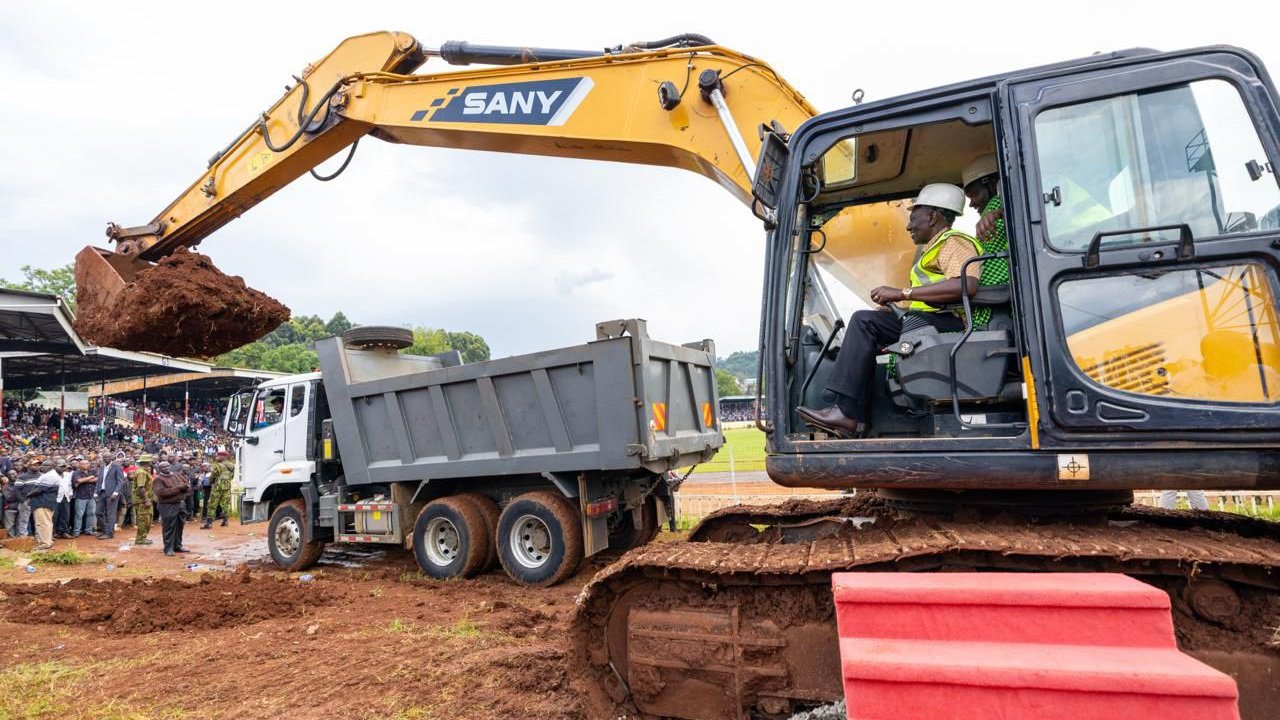
President William Ruto launched an expansive development push across Kisii and Nyamira, anchoring his tour in a Sh1 billion upgrade of Gusii Stadium alongside a wide portfolio of markets, roads, health and education projects. The scale and diversity of the rollout positions the Gusii region as a key testing ground for the administration’s effort to translate national policy frameworks into visible grassroots transformation.
At the core of the initiative is alignment with the Bottom-Up Economic Transformation Agenda and the long-term ambitions of Kenya Vision 2030. The focus on dispersed but interconnected projects reflects a deliberate shift from megaproject concentration toward regionally distributed infrastructure. By targeting counties that have historically faced infrastructural and spatial constraints, the programme signals a recalibration of state investment toward balancing regional disparities and expanding economic inclusion.
In Kisii and Nyamira, the immediate development implications are tangible. Market construction and upgrades are likely to formalize trade, reduce post-harvest losses, and improve income stability for small traders and farmers. Expanded road networks will enhance intra-county connectivity, lowering transport costs and integrating rural production zones with urban consumption centers. Investments in health facilities and training institutions strengthen service delivery capacity while building local human capital. Together, these interventions create conditions for incremental urban modernization, particularly in secondary towns such as Keroka and Nyamira, where infrastructure gaps have constrained growth.
The planned upgrade of Gusii Stadium into a 14,000-seat, FIFA-standard facility introduces an additional economic dimension. Beyond sports, modern stadium infrastructure can catalyze hospitality, retail and event-driven commerce. If effectively managed, the facility could anchor a local sports economy, support talent development, and attract regional competitions, thereby injecting new revenue streams into the local economy. However, such outcomes depend heavily on post-construction utilization strategies and institutional management capacity.
Economically, the broader infrastructure rollout is positioned to stimulate local demand cycles. Construction phases generate short-term employment and inject liquidity into the regional economy. Over the medium term, improved infrastructure lowers transaction costs, enabling small and medium enterprises to scale operations. Strengthened agribusiness linkages are particularly significant in the Gusii highlands, where high population density and agricultural productivity require efficient market access to sustain livelihoods. The integration of electricity connectivity and water projects further enhances productivity and quality of life, reinforcing the foundations for sustained local growth.
Yet the success of this development surge will hinge on execution. Infrastructure quality, contractor performance, and adherence to procurement standards remain critical risk factors. Kenya’s past experience with stalled or substandard projects underscores the importance of rigorous oversight, transparent tendering, and technical supervision. The concentration of multiple projects within a short timeframe also raises questions about prioritization and sequencing, particularly in ensuring that complementary infrastructure is delivered in a coordinated manner.
Governance and financing considerations are equally central. The fiscal space for large-scale public investment remains constrained, placing pressure on efficient resource allocation and value for money. Coordination between national and county governments will determine whether projects are integrated into local development plans or operate as parallel initiatives. Without such alignment, risks of duplication and underutilization increase. Transparency in contracting and expenditure will also be essential to sustain public confidence and mitigate perceptions of politically driven allocation.
Politically, the Gusii tour reflects a broader recalibration of the national development map. By intensifying state presence in regions outside traditional investment corridors, the administration is reinforcing its political economy strategy of broad-based inclusion. Infrastructure in this context serves both as an economic enabler and a tool for consolidating national cohesion. However, the long-term credibility of this approach will depend less on announcements and more on delivery timelines, operational sustainability, and measurable socio-economic outcomes.
Looking ahead, the long-term impacts could be significant. Enhanced infrastructure is likely to accelerate urbanization trends in Kisii and Nyamira, reshape labor markets, and expand opportunities for youth employment. Improved sports facilities may strengthen talent pipelines and diversify income sources beyond agriculture. Over time, these shifts could reposition the Gusii region as a more competitive economic zone within western Kenya.
The development tour ultimately represents a strategic political and economic intervention with the potential to reshape regional trajectories. Its success will depend on disciplined implementation, sustained financing, and accountable governance. If these conditions are met, the initiative could stand as a credible model for inclusive growth. If not, it risks reinforcing a familiar cycle where ambitious project rollouts outpace delivery, leaving the promise of transformation only partially fulfilled.
Deputy President Kithure Kindiki has reaffirmed his unwavering commitment to supporting President William Ruto in delivering transformative development projects across the country, as he embarked on an extensive...
Read moreDetails