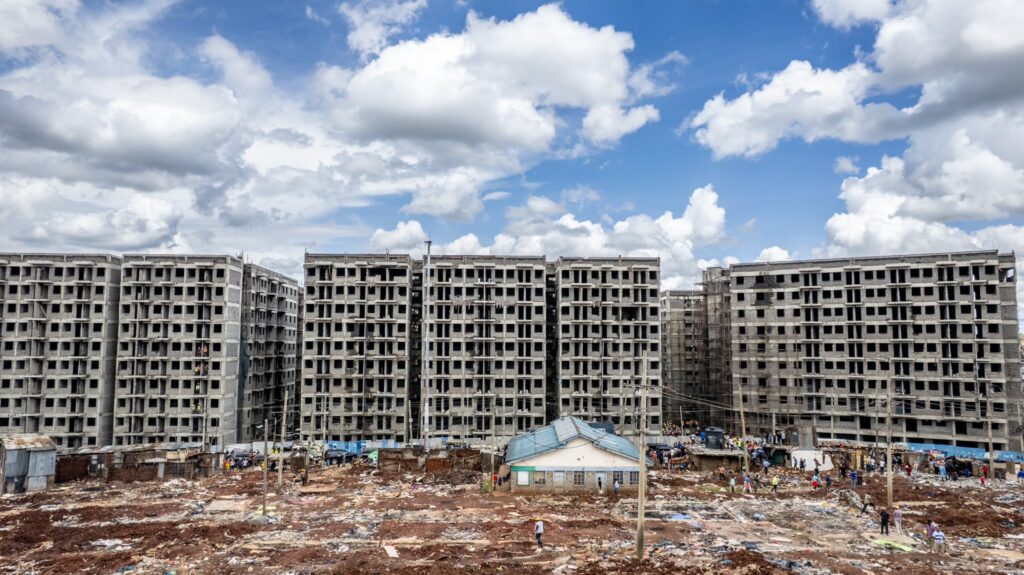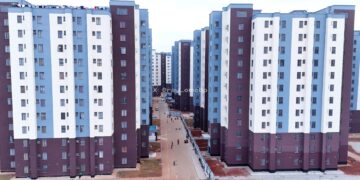
The government’s ambitious drive to eradicate informal settlements and deliver dignified housing has reached a defining milestone, with the Kibera Soweto East Zone B Affordable Housing Project now entering its final phase of completion. More than 4,000 families are on the brink of moving into modern homes, marking one of the most significant urban transformation efforts in Nairobi’s history.
Valued at Sh7.4 billion, the project is now over 80 per cent complete and is set to deliver 4,465 housing units tailored to low income households. The development stands as a flagship intervention under the national Affordable Housing Programme, reinforcing the administration’s resolve to replace unsafe and overcrowded slum structures with well planned, secure, and dignified living spaces.
The scale of the project signals a decisive shift in how the government is addressing the long-standing challenge of informal settlements. By systematically redeveloping Kibera, long regarded as one of Africa’s largest informal settlements, the initiative demonstrates a clear commitment to transforming urban landscapes while restoring dignity to thousands of families who have lived for generations in precarious conditions.
The housing units have been designed to meet diverse household needs, comprising one room, two room, and three-room configurations. Beyond the physical structures, the project reflects a broader vision of integrated urban living. Plans include a fully equipped primary school, a kindergarten, a health centre, commercial spaces, and recreational facilities, creating a complete and functional community rather than a standalone housing estate.
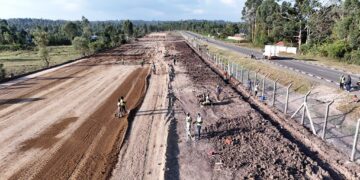
Critical infrastructure has also been embedded into the development to ensure long term sustainability and improved quality of life. Internal access roads, a paved connection to nearby schools, reliable water supply supported by boreholes, sewer systems, and solid waste management facilities are all part of the transformation. Flood mitigation measures, including upgraded drainage and culverts directing water into the Ngong River, are expected to significantly reduce the risks that have historically affected residents in the area.
The socioeconomic impact of the project is already evident. More than 2,500 direct jobs have been created during construction, with strong participation from local enterprises and the jua kali sector supplying essential materials. This approach has ensured that the economic benefits of the project are retained within the community, supporting livelihoods while building national capacity in construction and manufacturing.
The initiative also underscores the government’s Bottom Up Economic Transformation Agenda, positioning housing as a key driver of inclusive growth. By expanding access to decent housing, the programme is improving public health outcomes, enhancing security, and creating an environment where families can pursue economic opportunities with stability and confidence.
Collaboration between national government agencies, county authorities, contractors, and community stakeholders has been central to the project’s progress. This coordinated approach has strengthened implementation efficiency while ensuring that the development aligns with the needs of the residents it is designed to serve. Looking ahead, the government is seeking to expand the transformation within Kibera through additional housing initiatives, including the planned revival of stalled projects that could unlock hundreds of new units. This signals a sustained commitment to eliminating slum conditions not only in Nairobi but across urban centers nationwide.
The Kibera Soweto East Zone B project reflects a broader national ambition anchored in sustainable urbanization and improved living standards. It aligns with Kenya’s development priorities and global commitments to provide adequate housing, enhance urban resilience, and promote inclusive cities.
As the project nears completion, it stands as a powerful symbol of a government determined to confront one of the country’s most persistent challenges. The Affordable Housing Programme is emerging as a historic intervention, reshaping communities, restoring dignity, and laying the foundation for a future where every Kenyan has access to safe, modern, and affordable housing.