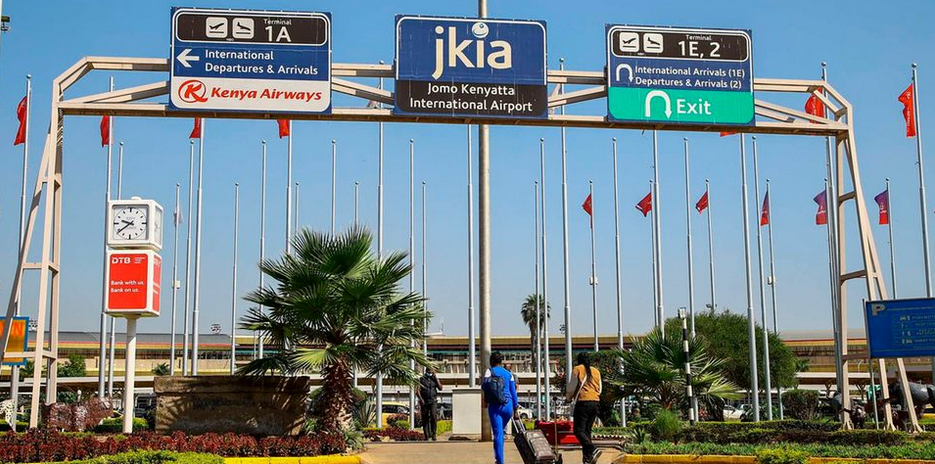
The Government of Kenya has set a Sh100 billion minimum capital requirement for firms seeking to bid for the modernization and expansion of Jomo Kenyatta International Airport (JKIA), reinforcing its commitment to ensuring that only financially capable investors participate in one of Kenya’s most strategic infrastructure projects. The requirement, outlined in official tender documents issued by the State Department for Aviation and Aerospace, marks a decisive step toward delivering a modern aviation facility capable of supporting Kenya’s growing role as a regional transport and logistics hub.
According to the tender titled “The Proposed Design, Development and Modernization of JKIA,” interested bidders must demonstrate access to at least Sh100 billion in cash flow. The government has emphasized that the funds must be readily available and not tied to real assets, lines of credit, or other financial instruments within the last six months. This strict financial threshold is intended to guarantee that bidders have the financial muscle necessary to implement the complex and large-scale modernization project without delays or funding uncertainties.
The expansion plan forms part of the government’s broader strategy to transform JKIA into a world-class aviation gateway. Roads and Transport Cabinet Secretary Davis Chirchir recently unveiled plans for a new passenger terminal that will handle an additional 10 million passengers annually. The development aims to ease congestion at the airport, which has been operating beyond its original design capacity for several years.
In addition to the new terminal, the modernization project will include significant improvements to the airport’s airside infrastructure. These upgrades will involve expanding the taxiway system, constructing new taxiways, aprons, and aircraft support facilities to streamline aircraft movement and reduce congestion on the ground. Such enhancements are expected to improve operational efficiency while strengthening safety and service standards at the airport.
The project will also see the modernization of critical operational systems within the airport. Planned upgrades include improvements to air traffic control systems, firefighting and emergency response stations, as well as enhancements to cargo handling facilities, aircraft maintenance infrastructure, fuel supply systems, and essential utilities. These developments are expected to position JKIA among the most advanced aviation facilities in Africa.
On the landside, the government plans to improve access roads and develop expanded parking facilities to support the new passenger terminal and increased airport activity. These improvements are aimed at easing congestion around the airport and improving passenger movement. Authorities say the modernization is necessary because the current terminal complex has evolved through incremental expansions over the years, resulting in space limitations and circulation challenges.
The urgency of the expansion is supported by long-term traffic forecasts. According to the government, passenger numbers are projected to grow from 8.93 million in 2025 to approximately 22.31 million by 2045, representing an annual growth rate of about 4.6 percent. Air cargo volumes are also expected to more than double during the same period, rising from 407,214 tonnes to over 860,400 tonnes, reflecting Kenya’s growing importance in global and regional trade networks.
Beyond aviation infrastructure, the modernization plan also includes the development of an Airport City and a Special Economic Zone (SEZ) around JKIA. This initiative aims to transform the airport into a fully integrated aviation-led economic hub capable of attracting logistics companies, manufacturing firms, trade enterprises, and service-oriented businesses. By linking aviation growth with economic development, the government hopes the JKIA upgrade will not only enhance air transport capacity but also unlock new investment opportunities, create jobs, and strengthen Kenya’s position as East Africa’s primary gateway to international markets.