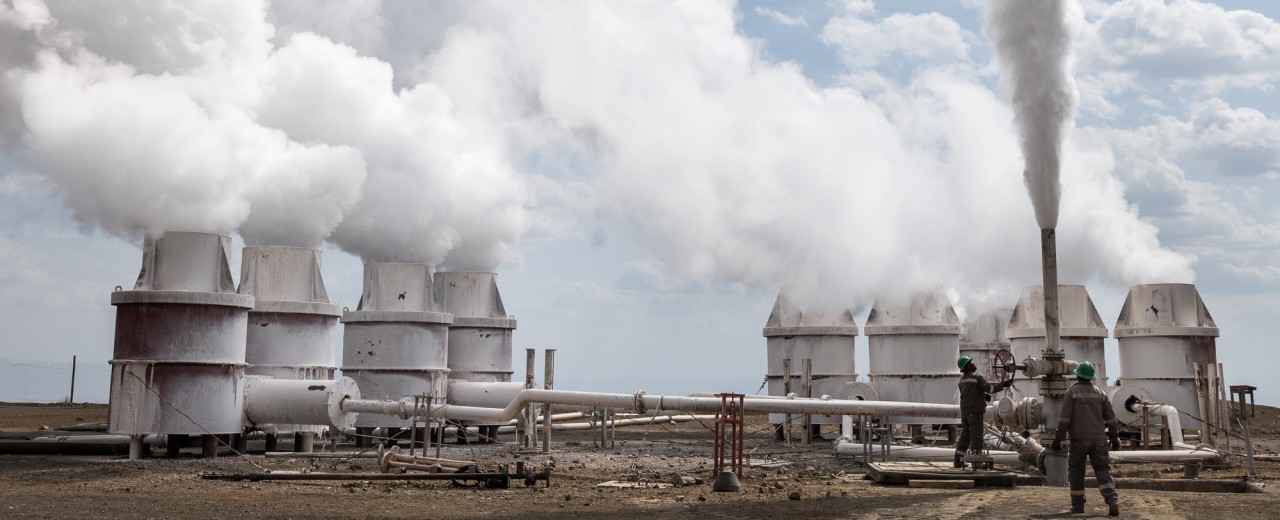
Kenya has taken a bold step toward achieving its ambitious target of generating five gigawatts of geothermal power by 2030, following a $10 million (KSh1.3 billion) investment from the African Union and Rift Valley National Polytechnic. The funding marks a defining moment in Kenya’s clean energy drive, designed to speed up geothermal exploration, expand renewable energy infrastructure, and strengthen the country’s long-term energy security.
Rift Valley National Polytechnic Principal Sammy Chemoiwa said the investment will fund surface studies under the African Union’s Geothermal Risk Mitigation Facility, which aims to fast-track geothermal development across the Eastern African Rift region. The African Union will contribute 80 percent of the exploration costs (about KSh146 million) while the Polytechnic provides the remaining KSh36 million.
He explained that the project is expected to provide dependable, affordable, and sustainable power that will boost industrial growth, create employment opportunities, and fuel economic transformation. The first phase will focus on mapping geothermal resources in preparation for full-scale drilling, while the second phase, valued at KSh1.2 billion, will harness the resource for power generation.
In addition, plans are underway to establish an industrial park adjacent to the geothermal site, giving local industries access to low-cost electricity and stimulating regional manufacturing. The initiative also seeks to link renewable energy development with skills training through a dual Technical Vocational Education Training (TVET) model that combines classroom instruction with practical field experience in geothermal operations. This will help align technical education with the demands of Kenya’s growing energy industry.
Chemoiwa emphasized that geothermal energy’s potential reaches beyond power generation. The steam produced can be used in milk pasteurization, greenhouse heating, aquaculture, and industrial drying of crops, cutting production costs while boosting efficiency and food security. The project also promotes environmental conservation by reducing greenhouse emissions and curbing reliance on firewood and charcoal.
Kenya currently leads Africa in geothermal generation, with about 700 megawatts already installed, placing it among the world’s top ten producers. The 2030 target of five gigawatts highlights the government’s determination to reduce dependence on hydropower and costly diesel energy while turning the country into a hub for green energy investment.
Ongoing projects such as the 140 MW Ol Karia V and the 300 MW Lake Turkana Wind Power Plant reflect the administration’s broader renewable energy agenda. With strong backing from the African Union and the active participation of national institutions, Kenya is positioning itself at the forefront of sustainable, modern, and environmentally responsible energy innovation.
Deputy President Kithure Kindiki has reaffirmed his unwavering commitment to supporting President William Ruto in delivering transformative development projects across the country, as he embarked on an extensive...
Read moreDetails