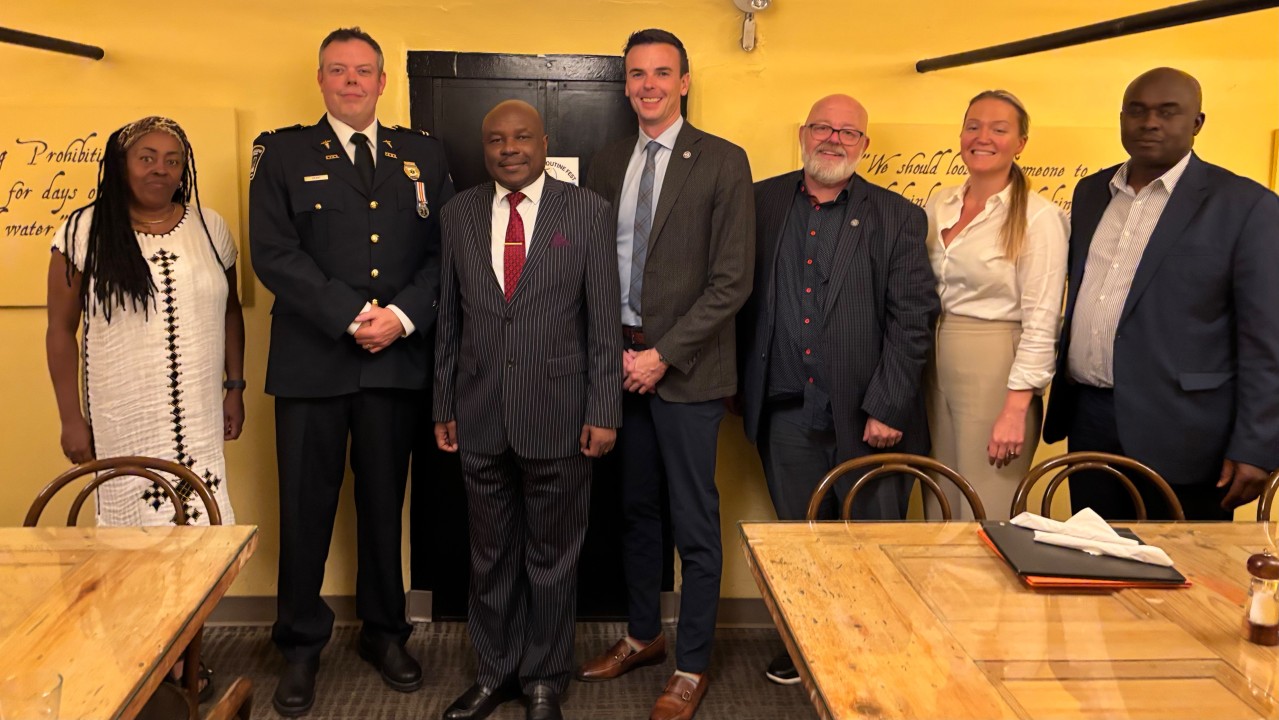
Kenya and Canada have begun discussions on a landmark labour partnership that seeks to address New Brunswick’s critical shortage of paramedics while creating new opportunities for young Kenyans in the healthcare sector. Senior officials from Kenya’s Ministry of Labour met with leaders from the Paramedic Association of New Brunswick in Fredericton to explore a framework that will culminate in a Memorandum of Understanding between the two countries.
The meeting was led by Labour Principal Secretary Shadrack Mwadime, who was accompanied by Secretary for Labour Migration Joel Mwanzia and Secretary for Post-Training and Skills Development Dr. Wanjiru Kariuki. The Canadian delegation was represented by Paramedic Association of New Brunswick Executive Director Chris Hood, incoming President Eric Grant, and Deputy President Jordan Baker.
The talks focused on New Brunswick’s growing paramedic shortage, which has been described as one of the province’s most pressing healthcare challenges. The association reported that the region currently employs about 40,000 paramedics but faces an annual attrition rate of 20 percent. This translates to a need for about 8,000 new recruits each year, a demand expected to rise significantly over the next five years as healthcare needs increase and the population continues to age.
The partnership aims to position Kenya as a reliable source of highly trained paramedics while helping Canada to sustain its emergency medical services. It also reflects Kenya’s broader labour strategy to expand global employment opportunities for its youth while strengthening skills development and institutional training at home.
Under the proposed framework, two recruitment and training pathways will be established. The first will offer a 15-month intensive program that aligns with Canadian competency standards. Graduates of this program will qualify for immediate employment in Canada’s paramedic sector and will have opportunities to advance to higher-level certificate and diploma programs while working. The second pathway will focus on upskilling existing healthcare workers in Kenya. Through this approach, professionals will undergo competency assessments to identify skill gaps relative to Canadian paramedic standards and receive targeted training to meet those requirements.
The Paramedic Association of New Brunswick also committed to supporting the development of Kenya’s paramedic training capacity. The association plans to train Kenyan instructors and equip local training institutions to deliver programs that meet Canadian accreditation and competency standards. This effort will not only prepare Kenyans for international employment but also strengthen emergency response systems within the country.
Principal Secretary Mwadime said the collaboration marks an important milestone in Kenya’s pursuit of international labour partnerships that generate decent, sustainable work for its citizens. He noted that such initiatives are consistent with the government’s vision of empowering young people through skill-based employment opportunities, both at home and abroad.
“This initiative not only opens global employment opportunities for our youth but also strengthens Kenya’s position as a trusted partner in providing skilled healthcare professionals to the world,” he said.
The partnership is viewed as a model of mutually beneficial international labour cooperation. It addresses workforce shortages in developed economies while enabling developing countries like Kenya to benefit from structured training and skills transfer. If successful, the Kenya–New Brunswick collaboration could pave the way for similar arrangements with other Canadian provinces and global partners seeking skilled medical professionals.
The talks reflect President William Ruto’s government’s commitment to tackling youth unemployment through labour export programs that emphasize training, certification, and global competitiveness. By promoting such partnerships, Kenya is not only securing foreign employment for its citizens but also positioning itself as a hub for high-quality vocational and technical training in Africa.
The initiative is expected to boost youth empowerment and strengthen Kenya’s growing reputation as a dependable global provider of healthcare professionals. It also highlights how strategic international partnerships can translate into practical employment solutions while reinforcing Kenya’s contribution to global healthcare systems.
As the discussions move toward the signing of a formal agreement, optimism remains high that the partnership will provide a sustainable model for future collaborations. It represents a convergence of shared priorities between Kenya and Canada—meeting global labour needs while creating new pathways for young people to gain meaningful, well-paying employment in essential service sectors.

President William Ruto has declared that Kenya has crossed a historic threshold in its pursuit of Universal Health Coverage (UHC), with 32.3 million Kenyans registered under the Social...
Read moreDetails