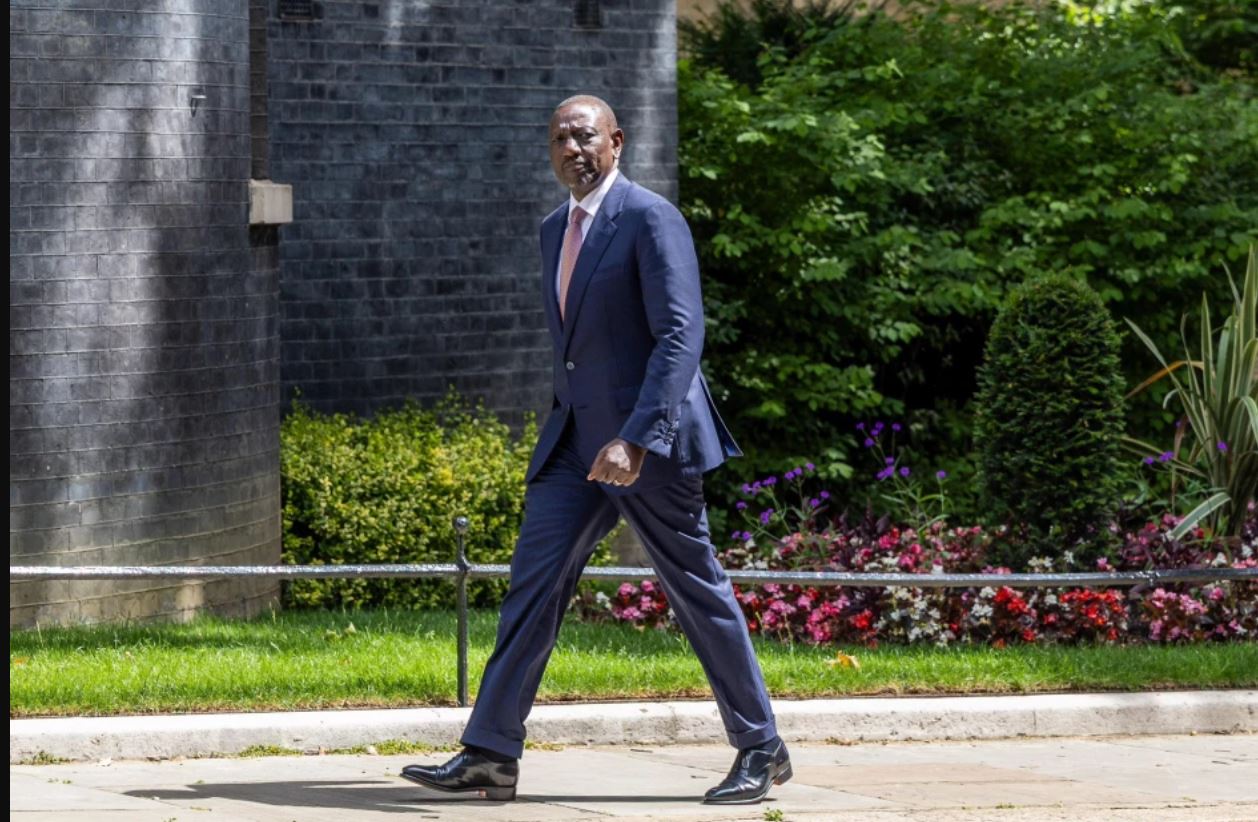
During his official visit to the United Kingdom, President William Ruto oversaw the signing of major Memorandums of Understanding with three renowned British institutions: King’s College London, the University of Nottingham, and the Liverpool School of Tropical Medicine. These partnerships, valued in the millions, are designed to strengthen Kenya’s healthcare education, research, and pharmaceutical production, marking a significant diplomatic and economic milestone for the country.
The agreements will see King’s College London and the University of Nottingham join the Kenya-UK Health Alliance to establish Centres of Health Education and Research Excellence across Kenya. These centers aim to elevate the quality of medical training, encourage collaborative research, and improve the standard of patient care. By investing in education and research, Kenya positions itself to become a regional hub for medical expertise, attracting scholars and practitioners from across East Africa and beyond.
Equally transformative is the MoU signed with the Liverpool School of Tropical Medicine, which will support local pharmaceutical manufacturing at the state-owned BioVax Institute. This partnership will leverage the BRITE initiative, a model that merges research and innovation with enterprise to strengthen domestic production. In practical terms, this means Kenya can begin to produce essential medicines locally, cutting reliance on imports and improving access to life-saving treatments. It also promises to stimulate local employment and create new opportunities in biotech and pharmaceutical sectors.
These partnerships carry broader diplomatic significance. They reflect Kenya’s evolution from a traditional donor-recipient relationship to one grounded in shared goals and expertise. By engaging world-class institutions on equal terms, Kenya demonstrates confidence in its institutional capacity and ambition to lead, rather than follow, in shaping its healthcare destiny. For the United Kingdom, this cooperation signals a commitment to sustainable development partnerships that have real impact on the ground.
At the domestic level, President Ruto used the occasion to highlight his government’s bold health reforms. Over the past year, the number of Kenyans covered by health insurance has surged from about seven million to twenty-four million, largely thanks to the redesigned Social Health Insurance Fund (SHIF). Under this model, contributions for vulnerable groups have dropped sharply from ten percent of income to 2.75 percent, while contributions for higher-income earners have modestly increased to the same rate. The shift creates a fairer and more predictable funding base, moving Kenya closer to universal health coverage supported primarily by local resources.
President Ruto’s emphasis on self-reliance was clear. He underlined that the government will no longer rely heavily on donors to finance health services, opting instead to build a system grounded in locally mobilized funds. This approach strengthens Kenya’s fiscal independence and gives policymakers greater control over national health priorities. It also enhances credibility on the international stage, demonstrating that Kenya is prepared to meet its commitments and invest in its own citizens.
Beyond financing, the president announced measures to improve the quality of care in public hospitals. Working alongside Nairobi Governor Johnson Sakaja, the government is exploring innovative models to acquire modern equipment without adding strain to the national budget. Such initiatives align with broader economic strategies that prioritize smart investment and cost efficiency.
Complementing institutional reforms is the deployment of 107,000 Community Health Promoters throughout the country, including nearly eight thousand in Nairobi alone. These trained workers play a critical role in early disease detection and preventive care, acting as a bridge between healthcare institutions and local communities. Their work helps reduce pressure on hospitals and ensures that reforms translate into real improvements for families across Kenya.
Taken together, these agreements and reforms reflect an integrated strategy that connects foreign partnerships, local policy innovation, and long-term economic planning. They illustrate how diplomacy can directly advance national development goals when rooted in mutual benefit and shared vision.
President Ruto’s visit and the agreements signed do more than just boost Kenya’s medical sector. They symbolize a shift towards a health system that is modern, resilient, and fair—one built on local resources yet open to global expertise. For Kenya, the benefits go beyond better healthcare. Stronger diplomatic ties, growth in local manufacturing, and a reputation for innovative health policy all reinforce its standing as a forward-looking nation ready to lead in the region.
Ultimately, the millions invested through these partnerships are more than financial commitments. They are investments in people, institutions, and Kenya’s future as a country determined to shape its path with confidence and collaboration.
President William Ruto is increasingly positioning his development record as the strongest argument for a second term, with Deputy President Kithure Kindiki declaring that the Kenya Kwanza administration...
Read moreDetails