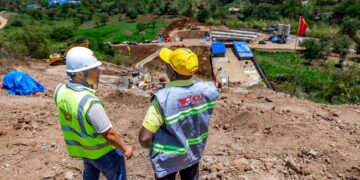
President William Ruto has announced that construction of the first phase of the 612-kilometre Lake Victoria Ring Road will begin in November 2026, with the Government committing Ksh60 billion to the project as it moves to strengthen transport links and unlock the economic potential of the wider lake region.
The long-awaited road will connect five counties around the Lake Victoria basin, creating a more integrated transport network linking communities, agricultural production areas, commercial centers and key economic corridors. The project is expected to improve the movement of people and goods while creating a stronger platform for trade, investment and the expansion of businesses across the region.
The Ksh60 billion commitment forms part of the Government’s broader Ksh92 billion allocation for road construction and underlines the administration’s continued investment in major transport infrastructure. For a project that has been under discussion for more than 15 years, the move towards construction represents an important shift from prolonged planning to implementation, with the potential to address longstanding connectivity constraints affecting communities and businesses around the lake.
The road is expected to improve the efficiency of movement across the region by providing better links between production areas and markets. For farmers, improved roads can make it easier to transport agricultural produce to buyers while reducing the costs and logistical difficulties associated with poor connectivity. Businesses can similarly benefit from more reliable movement of goods, workers and supplies, strengthening links between rural economies and growing urban and commercial centers.
The economic significance of the project extends across several sectors. Lake Victoria supports major agricultural, fishing, trading and tourism activities, while the surrounding counties contain significant potential for manufacturing, processing and other enterprises. Better road infrastructure can help connect these activities to larger markets, allowing producers to move goods more efficiently and creating conditions for businesses to expand beyond their immediate local markets.
The road could also strengthen the region’s role in national and regional trade by improving connections between production zones, urban centers, established transport corridors and commercial markets. As movement becomes easier, businesses can potentially reach wider customer bases while investors gain improved access to areas whose economic potential has historically been constrained by inadequate transport infrastructure.
For local enterprises, the impact could extend well beyond the construction phase. The project is expected to create demand for labour, supplies and services during implementation, while improved connectivity can support the emergence of new businesses along the corridor. Retail, hospitality, logistics, transport, agricultural processing and other enterprises could benefit from increased movement and commercial activity generated by a more accessible road network.
The infrastructure can also help distribute economic opportunities more widely. Communities located away from major urban centers often face higher costs and longer journeys when accessing markets and essential services. Improved roads can reduce these barriers and make it easier for residents to reach schools, hospitals, markets and other public facilities, while strengthening their connection to larger economic centers.
Tourism stands to benefit from the improved accessibility as well. The Lake Victoria region has lakeside attractions, cultural sites and emerging tourism opportunities that can be difficult to fully exploit when transport links are inadequate. Better roads can make destinations more accessible to domestic and international visitors while supporting hotels, restaurants, tour operators, small traders and other businesses that depend on tourism activity.
Strategically, the Lake Victoria Ring Road can complement existing national infrastructure and reinforce the region’s position within Kenya’s wider economic network. By linking communities and economic centers more effectively, the project can strengthen the connection between local production and national markets while supporting broader regional integration and trade.
The investment also fits within the Government’s wider development approach under the Bottom-Up Economic Transformation Agenda, which places infrastructure at the center of efforts to expand economic opportunity. The underlying objective is not simply to build roads, but to create the physical connections required for farmers, traders, manufacturers, investors and communities to participate more effectively in the economy.
The Government’s broader road investment programme provides an important foundation for this strategy. The Ksh92 billion allocation for road construction demonstrates continued emphasis on transport infrastructure as a driver of economic activity, particularly in areas where better connectivity can open previously underdeveloped commercial potential.
The long-term significance of the Lake Victoria Ring Road will ultimately depend on successful implementation and the ability of businesses and communities to take advantage of the connectivity it creates. The November construction start is therefore an important milestone in a much larger development process. If delivered effectively, the 612-kilometre network can help reduce regional economic disparities, strengthen market access and position the Lake Victoria basin as a more competitive destination for production, investment and trade.
The project therefore represents more than an expansion of Kenya’s road network. It is an infrastructure investment with the potential to connect economic opportunity to communities that have faced persistent connectivity challenges, strengthen the movement of goods and people and create a stronger foundation for inclusive growth across the lake region.
As construction moves towards commencement in November, the Lake Victoria Ring Road is emerging as one of the Government’s significant infrastructure interventions in the region. Its ultimate measure will not only be the kilometers of road constructed, but the businesses enabled, markets opened, communities connected and economic opportunities created as the lake region becomes more closely integrated with Kenya’s wider development network.