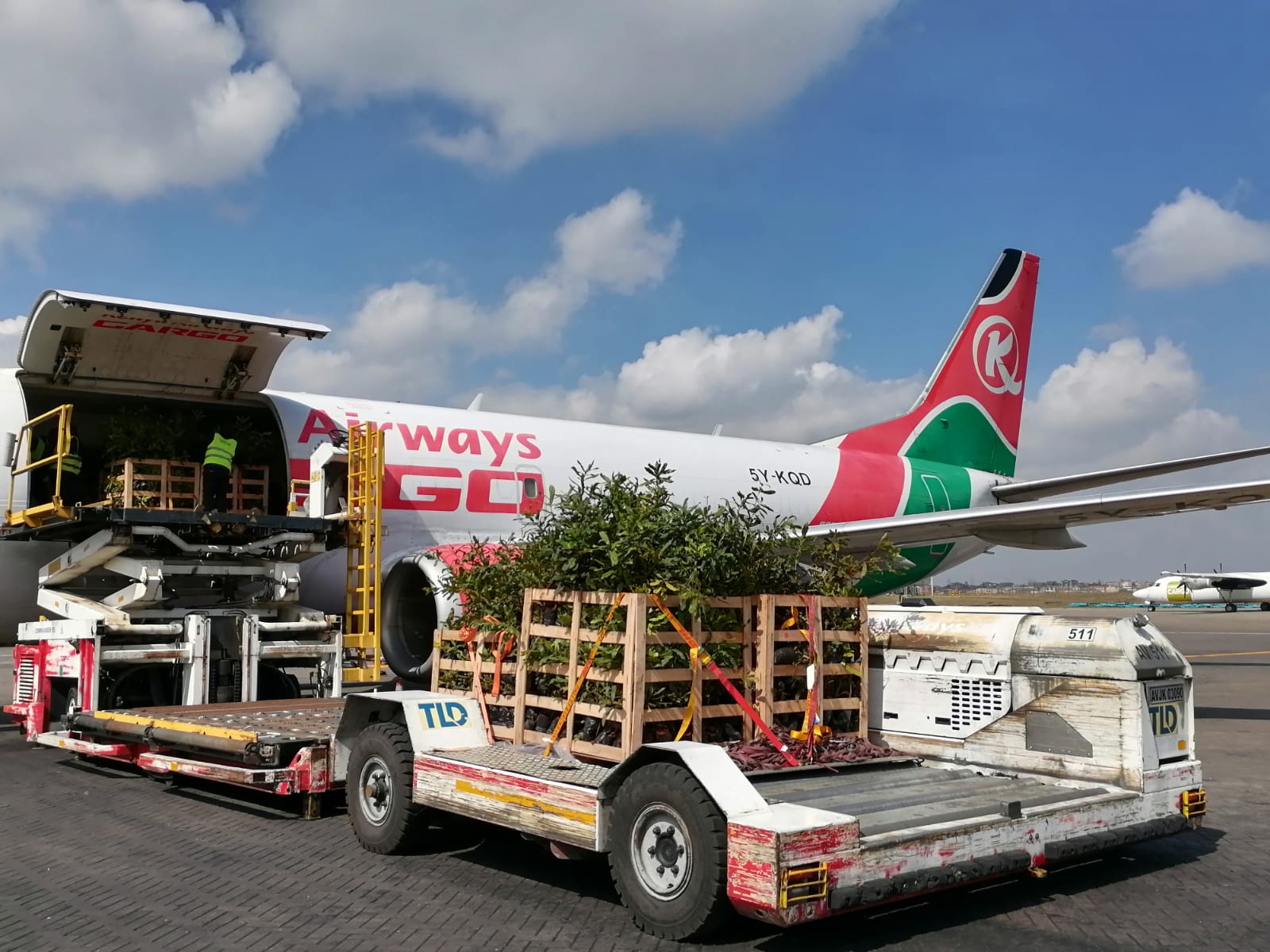
Kenya Airways is expanding its cargo and maintenance capabilities as the national carrier seeks to strengthen its operations and take advantage of growing demand for air transport, reinforcing the strategic role of aviation in Kenya’s trade, tourism and wider economic transformation. The airline handled 2.2 million passengers during the first half of 2026 and improved its load factor to 76.3 percent, demonstrating stronger utilization of available capacity despite operating in a difficult global aviation environment. The performance provides an important foundation for the carrier’s efforts to diversify its business and strengthen Nairobi’s position as a gateway linking Kenya and other African economies with international markets.
The passenger figures are particularly significant because they show that demand remains present even as airlines continue to face high operating costs and constraints affecting aircraft availability. Kenya Airways generated KSh81 billion, equivalent to about US$625 million, in revenue during the six months to June while operating with 9 percent less capacity than in the previous year. This indicates that the carrier has been able to generate substantial commercial activity from a more constrained fleet, with stronger demand and improved utilization helping to sustain its operations. For Kenya, reliable air connectivity remains closely linked to tourism, business travel, investment and regional integration, making the performance of the national carrier relevant well beyond the airline’s own balance sheet.
Cargo has emerged as an increasingly important part of this strategy. Kenya Airways recorded an 18 percent year on year increase in cargo revenue and is planning to scale daily cargo operations to 250 metric tons. Expanded freighter capacity and consideration of additional dedicated cargo aircraft could give the carrier greater ability to respond to the needs of exporters and businesses requiring fast and dependable international logistics. The significance of this expansion extends across the economy because Kenyan agriculture, horticulture, pharmaceuticals, manufacturing and e-commerce all depend on efficient supply chains capable of moving products quickly and safely to markets.
A stronger air cargo operation can consequently support Kenya’s competitiveness as a trading nation. Perishable and high value products often depend on speed, reliability and predictable connections, while manufacturers and other businesses require efficient logistics to integrate with international supply chains. Increasing the volume of goods moving through Nairobi would also strengthen the capital’s potential as a regional logistics centre, allowing the city to serve not only as a passenger hub but increasingly as a platform for the movement of goods between African and international markets. The planned increase in cargo activity therefore has implications for trade facilitation, export growth and the development of supporting logistics businesses.
The airline’s ambition to increase cargo’s contribution to its revenue from about 11 percent towards 20 percent also reflects a necessary move towards a more diversified business model. Greater reliance on cargo can provide an additional revenue stream while reducing the pressure on passenger operations to carry the full weight of the airline’s commercial recovery. If successfully implemented, the strategy could give Kenya Airways greater resilience during periods when passenger demand or fleet availability is affected by external shocks. It also creates an opportunity for the national carrier to become a more important participant in Kenya’s export economy.
Alongside cargo, the expansion of Maintenance, Repair and Overhaul capabilities is critical to the airline’s long-term operational resilience. Global shortages of engines and spare parts have extended maintenance turnaround times and contributed to reduced aircraft availability, demonstrating the vulnerability of airlines that depend heavily on external supply chains for specialized technical work. Strengthening in house MRO capability can give Kenya Airways greater control over maintenance schedules, reduce exposure to external bottlenecks and improve the ability to return aircraft to service. The airline has already undertaken major maintenance work internally, providing a foundation for a broader technical services strategy.
The proposed development of a larger MRO operation in Nairobi could have an impact extending beyond Kenya Airways. A stronger local maintenance industry can create demand for aviation engineers, technicians and other specialized professionals while encouraging investment in training, technology and technical services. Over time, the development of an aviation services ecosystem around the national carrier could position Kenya to serve a wider regional market and reduce the need for African airlines to depend exclusively on maintenance facilities outside the continent. The resulting skills development and technology transfer would add another dimension to the economic value of aviation.
These opportunities are being pursued while Kenya Airways continues to confront serious financial pressures. The airline recorded a KSh16 billion net loss during the first half of 2026, compared with KSh12 billion in the corresponding period last year. The result reflects the impact of volatile global jet fuel prices and supply chain disruptions, with fuel costs rising sharply during the period while shortages of parts and engines contributed to prolonged maintenance cycles. These pressures remain significant and underline the need for continued cost discipline, fleet recovery and careful execution of the airline’s expansion plans.
The financial loss, however, needs to be considered alongside the carrier’s operational performance and the wider conditions affecting global aviation. The central challenge is not simply generating demand but ensuring that sufficient aircraft are available to serve that demand efficiently and profitably. Restoring fleet availability, strengthening technical capabilities and developing alternative sources of revenue can therefore support a more sustainable recovery. Cargo and MRO are particularly important because they can strengthen the airline’s commercial base while addressing some of the operational vulnerabilities exposed by global supply chain disruptions.
For Kenya, the strengthening of the national carrier also has wider implications for the country’s economic ambitions. Aviation provides the connectivity through which tourists reach destinations, investors access markets, businesses conduct international operations and exporters connect with customers. A more resilient Kenya Airways can therefore complement investments in airports, logistics infrastructure and other transport systems while supporting Nairobi’s development as a regional commercial centre.
The next phase will depend on implementation. The benefits of expanded cargo capacity and enhanced MRO services will materialize only if the airline can secure the resources, technical capability and operational discipline required to execute its plans successfully. Continued investment in aviation technology, fleet efficiency, cargo infrastructure, maintenance facilities and skilled personnel will remain essential as Kenya Airways navigates a challenging global market.
The direction being taken nevertheless presents a significant strategic opportunity. Stronger passenger demand, growing cargo activity and expanding technical capabilities can give Kenya Airways a more diversified foundation while strengthening the wider aviation ecosystem. For Kenya, this can translate into better trade connectivity, stronger tourism links, skilled employment, investment opportunities and deeper regional integration. With effective implementation, the national carrier can play an increasingly important role in positioning Nairobi as a leading aviation and logistics gateway to Africa and strengthening Kenya’s global economic profile.