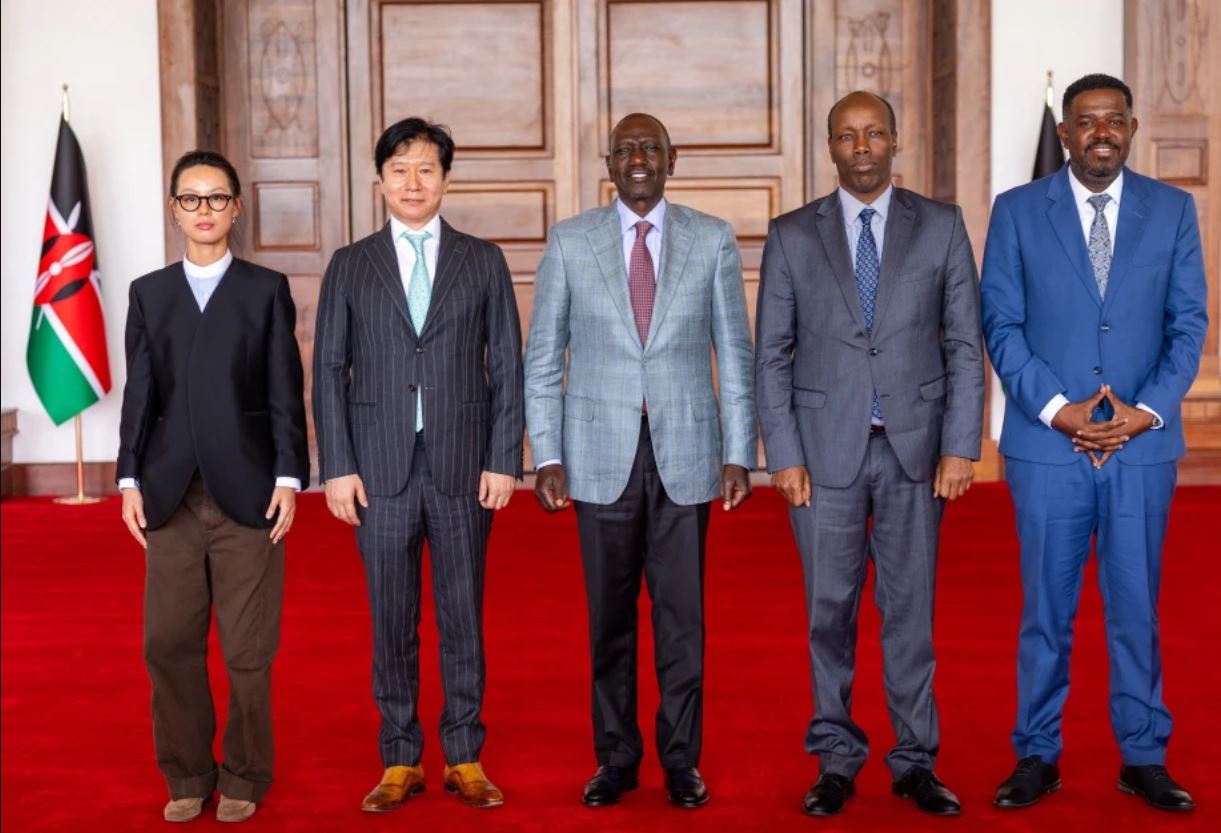
Kenya signed a memorandum of understanding with Endelevu Enterprise Corporation for a proposed US$3 billion, approximately KSh390 billion, investment in electric vehicle manufacturing and green mobility infrastructure, opening a potentially significant new chapter in the country’s industrialization drive. Signed at State House in Nairobi, the framework provides for electric vehicle and two-wheeler production, solar-powered charging infrastructure and a digital mobility platform, bringing manufacturing, renewable energy and technology into a single proposed investment ecosystem.
President William Ruto witnessed the signing at State House in Nairobi as the Government stepped up efforts to attract investment into emerging industries, create new manufacturing opportunities and position Kenya as a regional centre for electric mobility. The proposed project brings together vehicle manufacturing, solar-powered charging infrastructure and digital technology in an integrated investment framework.
Under the proposal, Kenya would establish an electric vehicle assembly plant with an annual production capacity of 50,000 four-wheel vehicles, alongside a second plant capable of producing 100,000 two-wheelers and other light electric vehicles each year. The proposed facilities would give the country a significantly expanded production base in a rapidly developing area of the global automotive industry.
The project would also provide for 1,000 solar-powered charging hubs, creating infrastructure to support the wider use of electric vehicles as manufacturing capacity develops. A digital platform capable of managing up to 100,000 electric vehicles is also proposed, adding a technology component to the project and providing a platform for vehicle management, charging coordination and related mobility services.
The Government has positioned the investment within its wider push to increase local manufacturing and retain more economic value within the country. The proposed factories could create opportunities for Kenyan companies to participate in supply chains covering components, engineering, logistics, maintenance, technology, renewable energy and other services as the electric mobility industry develops.
The two-wheeler component is particularly significant for a market where motorcycles play an important role in everyday transport, delivery services and small-business operations. The proposed capacity of 100,000 electric two-wheelers and other light electric vehicles could provide a platform for local production of vehicles serving both individual consumers and commercial operators, subject to market demand and successful implementation.
The proposed solar-powered charging network would further strengthen the project by linking transport manufacturing with Kenya’s renewable energy ambitions. Instead of focusing only on assembling vehicles, the investment framework seeks to build supporting infrastructure that can make electric mobility more practical as the market expands.
The digital platform would provide another layer to the proposed ecosystem, connecting vehicles, charging infrastructure and operators through technology. This could support the growth of fleet management, mobility services, maintenance and other businesses that are expected to emerge alongside electric vehicle adoption.
The investment could also open a new front for skills development in Kenya. Expansion of electric vehicle manufacturing would create demand for engineers, technicians and specialists in electronics, software, battery systems, vehicle maintenance, renewable energy and other technical fields. Kenyan enterprises could similarly gain opportunities to develop capabilities around the new industry if implementation proceeds.
The proposed investment comes as Kenya seeks to strengthen its automotive manufacturing base and participate more actively in the transition towards electric mobility. Moving into electric vehicles would give local manufacturers and suppliers an opportunity to develop capabilities around newer automotive technologies while creating space for innovation and entrepreneurship in transport, energy and technology.
The regional market provides an additional opportunity. Kenya’s established role as an East African commercial, transport and technology hub could support the development of electric mobility businesses serving markets beyond the country. If production becomes commercially competitive and regional market conditions support expansion, local manufacturing could eventually contribute to wider regional supply chains and distribution networks.
For the Government, attracting investment into sectors that combine manufacturing, technology, renewable energy and infrastructure is part of the broader effort to diversify the economy and expand industrial activity. The proposed project reflects that approach by bringing several areas of economic development together under one investment framework.
The US$3 billion, approximately KSh390 billion, figure represents the proposed scale of the investment and does not mean that the money has already been invested, financed or disbursed. The MoU provides a framework for the proposed project, with financing, definitive agreements, construction, production and rollout of the charging network still dependent on subsequent stages of implementation.
That distinction notwithstanding, the signing at State House marks an important development in Kenya’s effort to attract private-sector investment into emerging industries. The next phase will be to translate the framework into the agreements, infrastructure and production capacity required to establish the proposed electric mobility industry.
The Government’s continued engagement with Endelevu Enterprise Corporation will therefore be important in moving the proposal towards implementation and ensuring that the investment, if advanced, delivers the broader industrial benefits expected from a project of its proposed scale. These include stronger local supply chains, specialized skills, technology development and opportunities for Kenyan businesses.
The proposed investment also comes at a time when countries are seeking to establish positions in the emerging electric vehicle industry and attract manufacturing associated with new transport technologies. For Kenya, securing a foothold in this sector could complement its established automotive, technology, financial and logistics capabilities while opening another avenue for industrial growth.
If successfully advanced, the proposed US$3 billion, approximately KSh390 billion, project would give Kenya the opportunity to build an integrated electric mobility ecosystem covering four-wheel vehicle production, two-wheeler manufacturing, solar-powered charging hubs and digital services. It would also strengthen the country’s efforts to attract investment into advanced manufacturing and develop the skills and businesses needed for the next generation of mobility.
The memorandum therefore provides a framework for Kenya to pursue a larger role in electric mobility, with the opportunity to turn emerging technology into local manufacturing, new business opportunities, specialized skills and stronger industrial capacity. The focus now shifts to implementation and the Government’s ambition of turning investment commitments into productive economic activity on the ground.