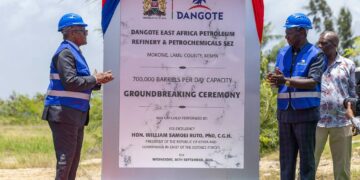
President William Ruto has announced that Kenya has reached an agreement with Nigerian industrialist Aliko Dangote to invest in a crude oil pipeline linking Turkana to Lamu, a project expected to significantly strengthen Kenya’s energy infrastructure and accelerate the country’s industrial transformation. The pipeline will provide a dedicated route for transporting Turkana crude to the Coast, supporting plans to commence oil extraction by December and creating a foundation for expanded petroleum-related economic activity.
The Turkana-Lamu pipeline carries major economic significance because it would connect Kenya’s oil-producing region with the country’s emerging maritime and energy infrastructure at Lamu. President Ruto said the pipeline would enable Kenya to transport crude regardless of initial production volumes, ensuring that even relatively small quantities can reach Lamu. This could improve the commercial viability of domestic oil production while positioning Lamu as an increasingly important centre for petroleum logistics, storage, processing and regional trade.
The scale of the planned investment also points to wider economic benefits. The government has secured 9,000 acres in Lamu and plans to acquire another 3,000 acres for the project, while a 5,000-acre Special Economic Zone is also planned alongside the refinery development. Ruto estimates that the planned facility could represent about 12 percent of Kenya’s GDP, underlining the potential magnitude of the investment. The government also expects the project to contribute to higher foreign direct investment, potentially helping Kenya attract between $6 billion and $7 billion in FDI next year.
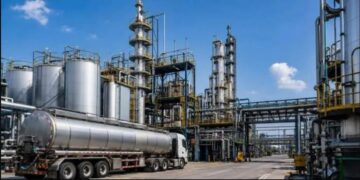
Beyond oil transportation, the project could become a major catalyst for industrialisation. Establishing petroleum infrastructure at Lamu would create opportunities for storage facilities, engineering services, logistics, fabrication, construction, maintenance and other supporting industries. The proposed Special Economic Zone could further encourage investors to establish manufacturing and processing enterprises around the energy corridor, enabling Kenya to move beyond exporting raw resources toward greater domestic value addition and industrial production.
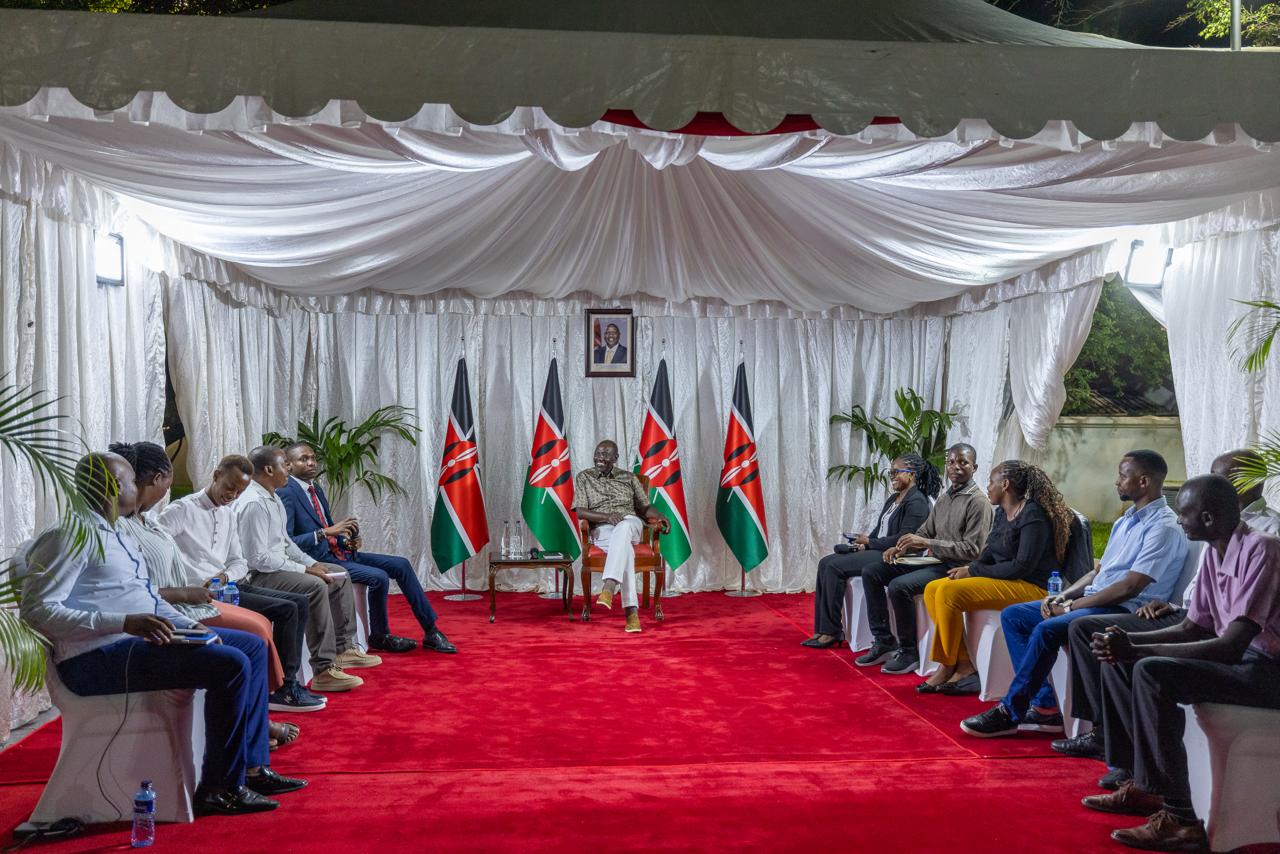
Employment opportunities could emerge across the project’s entire value chain. Construction of the pipeline, associated infrastructure and industrial facilities would require workers ranging from engineers, technicians and construction specialists to transport operators, security personnel and other service providers. Once operational, the energy and Special Economic Zone ecosystem could support longer-term employment in manufacturing, logistics, maritime services, petroleum operations and business services. Ruto has also stressed the need to expand employment opportunities for young Kenyans through ICT, services and overseas employment as the economy seeks to generate more jobs.
The Turkana-Lamu oil corridor therefore represents more than a pipeline project; it could form part of a broader economic transformation linking natural resources, energy, maritime infrastructure, industrial investment and employment. Ruto has also emphasised that Kenya’s minerals should be processed locally rather than exported unprocessed, reinforcing the government’s value-addition agenda. If implemented effectively, the pipeline, refinery and Special Economic Zone could strengthen Lamu’s role in Kenya’s industrial economy while enabling Turkana’s oil resources to contribute more directly to national economic growth.