President William Ruto’s commissioning of the KSh2.7 billion 132kV Machakos–Konza–Isinya–Namanga transmission project marks another major step in the Government’s wider effort to accelerate development, expand economic opportunities and strengthen infrastructure across the country.
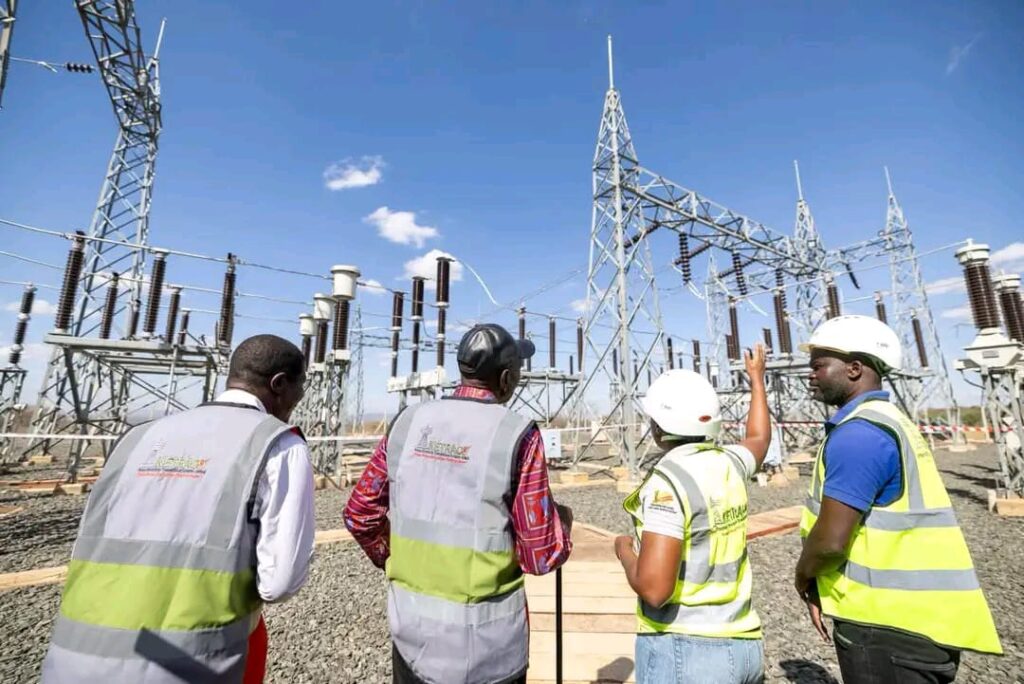
The 109-kilometre high-voltage transmission corridor, implemented by the Kenya Electricity Transmission Company Limited (KETRACO), is expected to significantly improve electricity supply across Machakos and Kajiado counties. By reinforcing the national grid along the Machakos–Konza–Kajiado–Namanga economic corridor, the project creates a stronger foundation for industrial, commercial and residential expansion.
The infrastructure is supported by 132/33kV substations in Machakos, Konza, Isinya and Namanga, providing additional capacity to meet rising electricity demand. Although implemented in phases, the entire project is now operational, with the 15-kilometre Machakos–Konza section energised in 2016 and the 94-kilometre Isinya–Namanga section connected to the grid in February 2024.
For the Ruto administration, reliable electricity is not simply an energy-sector investment but a catalyst for economic transformation. Stable and affordable power is critical to attracting investors, supporting enterprises, lowering operational disruptions and enabling industries to increase production. The strengthened grid therefore has the potential to translate directly into jobs, businesses and new economic opportunities.
The project is particularly significant for the rapidly developing Konza–Namanga corridor. Konza Technopolis, industrial parks, commercial centres and other major investments require dependable electricity to operate effectively. Strengthening the transmission network gives investors greater confidence that the region has the infrastructure necessary to support large-scale and energy-intensive enterprises.
Industries such as cement manufacturing, ceramics, tile production and other factories stand to benefit from improved power quality and increased transmission capacity. Hotels, lodges, tourism facilities and other service-sector businesses along the corridor are similarly positioned to benefit from a more reliable electricity supply, strengthening the region’s capacity to attract investment and support employment.
The improved power infrastructure also complements other major national investments, including Konza Technopolis and the Standard Gauge Railway. By connecting electricity infrastructure with transport, technology and industrial investments, the Government is creating an integrated development platform capable of supporting production, trade and urbanisation beyond Nairobi and other traditional economic centres.
President Ruto’s commissioning of the project also underscores his administration’s emphasis on completing infrastructure projects and converting government plans into tangible assets. The President has maintained that Government agencies and development partners must work efficiently to ensure projects are completed and their benefits reach ordinary Kenyans.
Energy and Petroleum Cabinet Secretary Opiyo Wandayi similarly described the investment as evidence of the Government’s commitment to infrastructure capable of unlocking investment and expanding productive capacity. Reliable electricity is particularly important to the Bottom-Up Economic Transformation Agenda (BETA), whose success depends heavily on strengthening productive sectors and enabling businesses to grow.
The project further elevates Namanga’s strategic economic importance as a major gateway between Kenya and Tanzania. A stronger electricity network can support businesses operating around the border while facilitating cross-border commerce and regional integration. The investment therefore carries benefits extending beyond the immediate communities to the wider East African economy.
The KSh2.7 billion project also demonstrates how national development can continue despite the increasingly noisy political environment. While political opponents continue to trade rhetoric, criticism and competing narratives, the Ruto administration is pointing to physical infrastructure, expanded energy capacity and other development programmes as evidence of a governing agenda focused on transforming the country.
Financed through the Export-Import Bank of India’s Line of Credit, together with Government of Kenya funding, and implemented by KETRACO in partnership with Shyama Power Limited, the project represents cooperation between Government institutions and international development partners. Its commissioning strengthens Kenya’s electricity backbone and provides another foundation for industrialisation, investment and job creation.
Ultimately, the Machakos–Konza–Isinya–Namanga transmission project reflects the Government’s broader ambition to spread development across the country rather than concentrate economic activity in a few established centres. As Kenya continues investing in energy, transport, manufacturing, technology and other productive sectors, projects such as this power line can help unlock new economic frontiers, strengthen local economies and turn emerging corridors into engines of national growth.