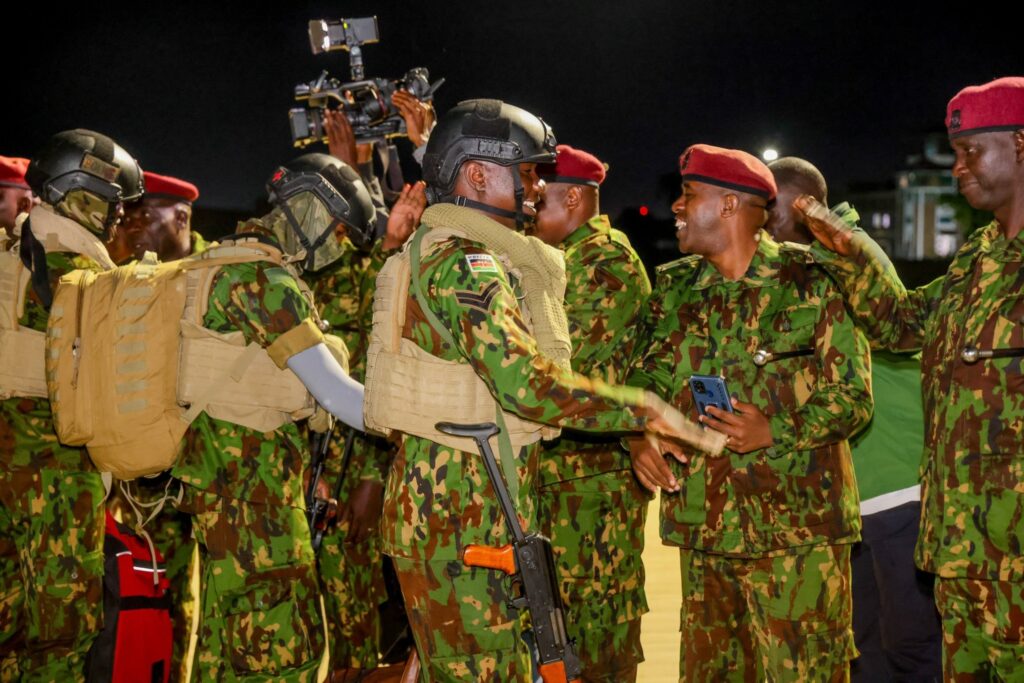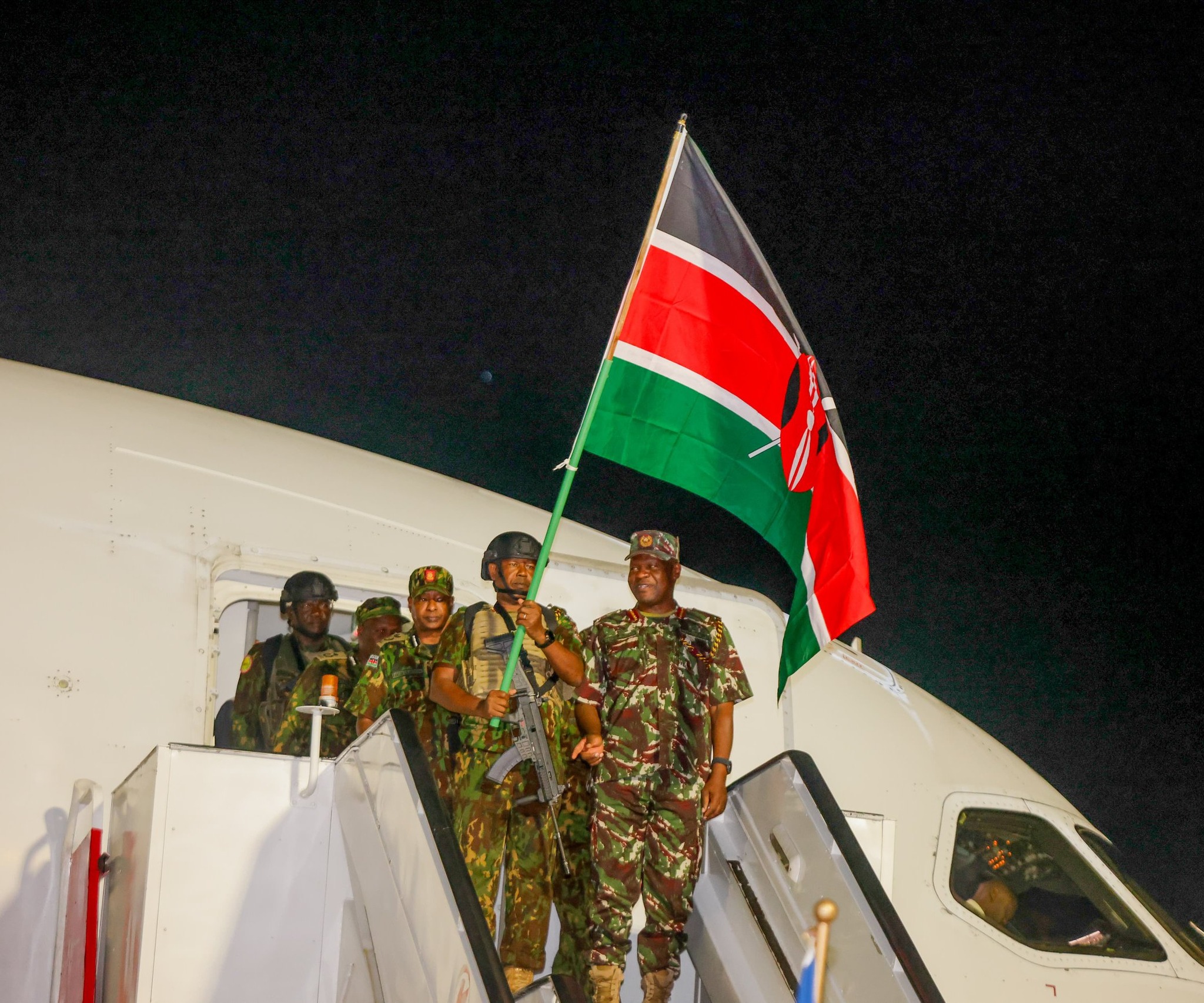
Kenya’s security deployment in Haiti is approaching its final stage, with the return of another group of officers signaling steady progress in the mission’s structured exit. A fourth contingent of 150 police officers arrived back at Jomo Kenyatta International Airport after completing their assignment under the Multinational Security Support framework, marking a key step in the ongoing drawdown.
The officers were received by senior security leadership, including Inspector General Douglas Kanja and National Security Advisor Joseph Boinett, reflecting the significance attached to the mission both operationally and diplomatically. The team was led by Deputy Inspector General Gilbert Masengeli, who had been in Haiti overseeing coordination efforts and engaging with local and international partners during the transition phase.
Kenya’s deployment, launched in 2024, was designed to help stabilize Haiti at a time when armed gangs had overwhelmed large parts of Port-au-Prince. Over the course of the mission, Kenyan officers worked alongside the Haitian National Police to secure major infrastructure, reopen transport routes, and improve overall security conditions in volatile urban zones. Their presence contributed to restoring some level of public order and enabling humanitarian operations in affected communities.
With the latest return, hundreds of Kenyan personnel have now completed their tours, underscoring a phased withdrawal strategy tied to conditions on the ground. The mission is now shifting toward a broader international arrangement under a United Nations-backed Gang Suppression Force, which is expected to expand personnel contributions and sustain security gains made so far.
Despite these advances, the situation in Haiti remains fragile. Reports from several regions indicate that some communities have attempted to block the departure of Kenyan officers, fearing that their exit could trigger a resurgence of gang violence. In certain cases, security teams had to rely on air evacuation due to unsafe ground conditions, highlighting the volatility that persists beyond the mission’s formal achievements
The transition period presents a critical test. While the MSS mission succeeded in disrupting criminal networks and strengthening local policing capacity, deeper institutional weaknesses in Haiti continue to pose risks. The incoming Gang Suppression Force, projected to include thousands of personnel from multiple countries, is expected to build on existing progress, though full deployment is still months away.
For Kenya, the mission has reinforced its role as an emerging contributor to global peace operations. It has also provided officers with experience in complex urban security environments, which could influence future policing strategies at home. At the same time, attention is shifting to the reintegration of returning personnel, including addressing the psychological and operational impact of serving in high-risk conditions.
As the drawdown nears completion, the return of this contingent highlights both the measurable gains achieved and the uncertainty that remains. The success of the next phase will depend on whether international partners can maintain momentum and prevent a relapse into instability once the Kenyan-led presence fully concludes.