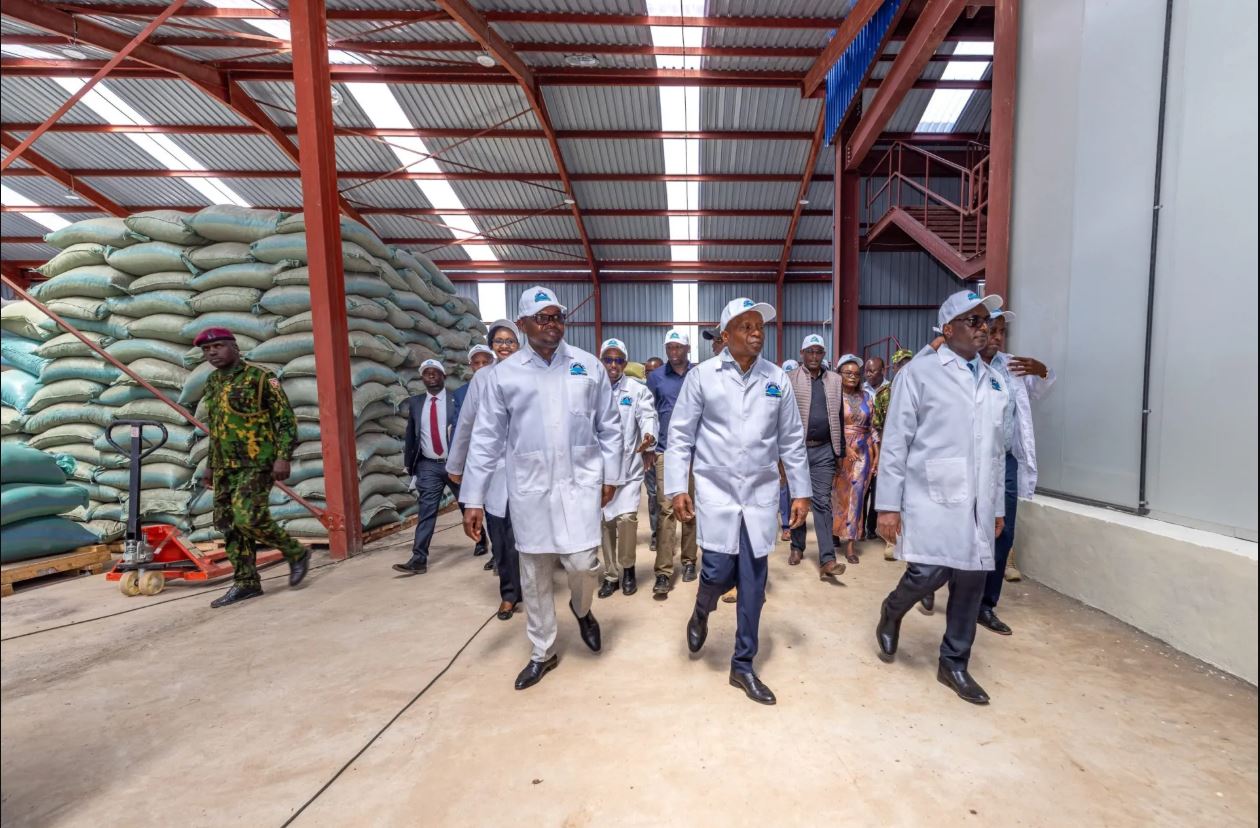
Kenya’s journey toward building a modern, competitive and farmer-driven agricultural economy has reached another important milestone with the commissioning of the KSh500 million Meru Maziwa Millers Feed Mill in Mitunguu, Meru County. More than a new manufacturing facility, the investment represents a strategic shift toward lowering production costs, strengthening value addition and creating a more profitable future for thousands of dairy farmers.
Built through a partnership between the Government of Kenya and the Meru Central Dairy Cooperative Union, the project demonstrates the growing impact of collaboration between public institutions and farmer cooperatives in transforming agriculture from subsistence production into a commercially competitive enterprise. The Government invested KSh200 million while dairy farmers mobilized KSh300 million, reflecting a shared commitment to building long-term prosperity across one of Kenya’s most important agricultural value chains.
The launch comes at a time when the dairy sector continues to emerge as one of the country’s strongest drivers of rural incomes, food security and agro-industrial growth. By addressing the high cost of livestock feed, the new mill directly tackles one of the biggest constraints limiting dairy productivity and profitability.
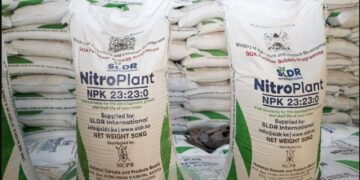
The facility will manufacture high-quality dairy feeds at approximately KSh2,800 per 50-kilogram bag, significantly below the prevailing market price of around KSh3,200. The reduction is expected to ease financial pressure on farmers, allowing them to invest more resources in herd improvement, animal health and increased production while retaining higher earnings.
The gains do not end with lower feed prices. Farmers supplying the Meru Central Dairy Cooperative Union will begin receiving KSh52 per liter of milk from August, up from KSh50, further strengthening farm incomes. Combined with affordable feeds and continued government support for improved breeding technologies, the measures are expected to create a more productive and financially sustainable dairy industry.
The Government has also dramatically reduced the price of sexed semen from KSh7,000 to KSh1,400, making superior genetics accessible to more farmers. The intervention is expected to accelerate herd improvement, increase milk yields and strengthen the long-term competitiveness of Kenya’s dairy sector.
Recognizing the strategic importance of the project, the Government has already committed an additional KSh100 million for the second phase of the feed mill and another KSh100 million through the supplementary budget for Phase Three. The planned expansion will introduce an additional production line together with modern silos and drying facilities, enabling the plant to store larger volumes of raw materials and meet rising demand across Meru and neighboring counties.
The investment reflects a broader vision of agricultural industrialization where value addition begins within farming communities instead of relying on external suppliers. Producing livestock feeds locally strengthens supply chains, creates manufacturing jobs, stimulates local enterprise and keeps more economic value within rural economies.
The transformation of the Meru Central Dairy Cooperative Union illustrates what sustained investment and sound cooperative management can achieve. Membership has grown from just over 11,000 farmers in 2023 to more than 161,000 today, while affiliated cooperative societies have increased from 139 to 168. Daily milk deliveries have risen from 287,000 liters to approximately 670,000 liters, demonstrating expanding production capacity and growing farmer confidence.
Commercial performance has followed the same upward trajectory. Annual sales have more than doubled from KSh9.3 billion in 2023 to KSh20.1 billion in 2025, with projections indicating revenues could exceed KSh25 billion next year if current momentum continues. The processing plant, which currently handles up to 720,000 liters of milk daily, is already approaching full capacity, reinforcing the need for continued investment and expansion
Beyond production, the cooperative has become a major economic engine supporting more than 161,000 farmers, employing 1,350 workers and sustaining an estimated five million people across the dairy value chain. Its recent export of milk to the Comoros further demonstrates the growing competitiveness of Kenyan dairy products and signals expanding opportunities in regional and international markets.
Plans to introduce quality-based milk payments will encourage higher production standards while rewarding farmers who invest in quality improvement. Together with modern feed production, affordable breeding technologies and expanded processing capacity, these reforms are laying the foundation for a dairy industry capable of competing with the best in Africa.
The Meru feed mill is also a powerful example of how investment in agricultural infrastructure delivers benefits that extend far beyond the farm gate. Lower production costs increase household incomes, stronger cooperatives create resilient rural economies, expanded processing generates employment and higher productivity strengthens national food security while supporting export growth.
As Kenya continues investing in strategic agricultural infrastructure, projects such as the Meru Maziwa Millers Feed Mill demonstrate that empowering farmers with modern production tools is central to building a resilient and globally competitive agricultural economy. By combining public investment, cooperative leadership and farmer participation, the initiative is setting a new benchmark for value chain development and rural industrialization.
The commissioning of the KSh500 million feed mill therefore marks far more than the opening of a new factory. It signals the emergence of a more productive, innovative and commercially driven dairy sector that is creating wealth for farmers, strengthening food security and positioning Kenya as one of Africa’s leading dairy producers.