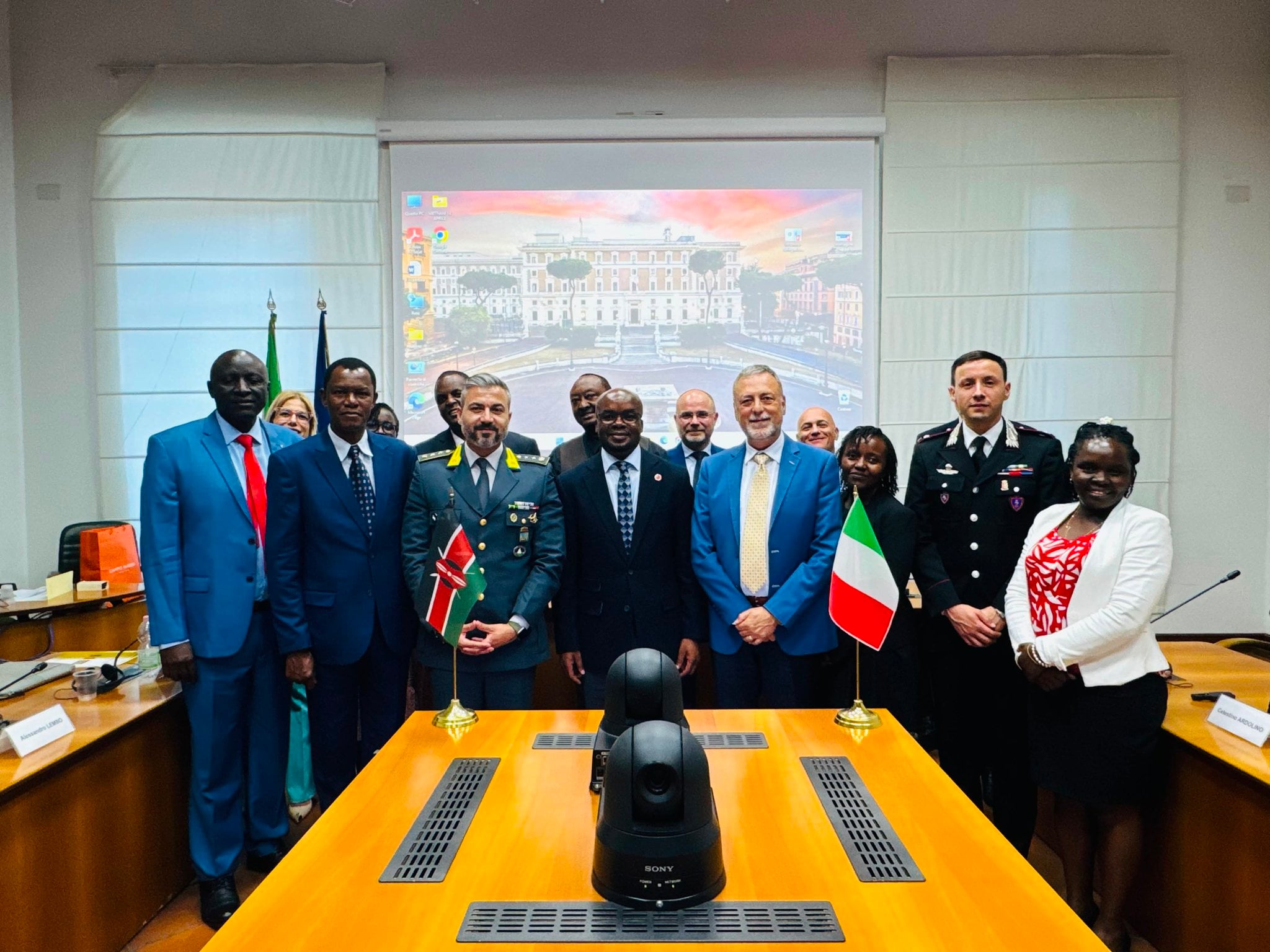
Kenya’s drive to build a safer, smarter and more secure urban environment has received fresh momentum following Principal Secretary for Internal Security and National Administration Dr. Raymond Omollo’s strategic visit to the Questura di Roma operations center, one of Italy’s most advanced command and emergency response facilities. The benchmarking mission forms part of the government’s broader effort to modernize Nairobi’s emergency response systems and strengthen the technological backbone of urban security management.
The visit underscores the Kenya Kwanza administration’s commitment to investing in modern security infrastructure capable of responding to the demands of a rapidly growing metropolitan region. As Nairobi continues to expand as East Africa’s leading economic, diplomatic and innovation hub, the need for integrated emergency management systems that deliver rapid, coordinated and effective responses has become increasingly important.
At the Questura di Roma, Dr. Omollo and the Kenyan delegation toured the operations room responsible for coordinating emergency calls, monitoring extensive CCTV surveillance networks and maintaining real-time communication between field officers, command personnel and emergency service providers. The facility provided a practical demonstration of how technology, data and coordinated command structures can work together to enhance public safety and improve operational efficiency.
One of the key lessons drawn from the Rome model is the value of integrating multiple security functions within a single command center framework. The operations room brings together incident monitoring, patrol coordination, dispatch services, traffic management and emergency response oversight under one platform, allowing decision makers to maintain a comprehensive view of security situations as they unfold.
The Rome experience demonstrated how advanced surveillance systems can serve as force multipliers in urban security operations. Through extensive camera networks, intelligent monitoring platforms and rapid communication systems, authorities are able to detect incidents quickly, coordinate responses effectively and safeguard critical infrastructure and public spaces. Such capabilities have become increasingly important in modern cities where security threats continue to evolve in complexity and scale.
For Nairobi, the insights gained from the benchmarking mission are expected to play an important role in shaping planned upgrades to emergency response and command center capabilities. Government officials are keen to develop a system that enhances situational awareness, supports intelligence-led operations and enables faster deployment of emergency services whenever incidents occur.
The visit also complements ongoing government efforts to establish the Nairobi Metropolitan Police Unit, a specialized security structure intended to strengthen public safety, improve crime prevention and enhance coordination among agencies operating within the Nairobi Metropolitan Area. By studying successful international models, Kenya is ensuring that the proposed framework is informed by proven global best practices while remaining responsive to local realities.
The broader benchmarking mission in Italy has provided valuable exposure to one of Europe’s most respected multi-agency security systems. Beyond the Questura di Roma operations center, the delegation engaged with Italian security institutions to understand approaches to metropolitan policing, public order management, intelligence coordination, organized crime prevention, cybercrime response and critical infrastructure protection.
These engagements reflect the government’s recognition that modern security challenges require modern solutions. Rapid urbanization, increasing population density, growing transport networks and emerging criminal threats demand integrated systems capable of supporting real-time decision making and seamless collaboration among agencies.
A modernized command center offers significant potential benefits for Nairobi residents and businesses. Faster emergency response times, improved coordination between security agencies, better traffic incident management and enhanced disaster response capabilities can collectively improve the quality of life while strengthening confidence in public institutions. Such systems also provide authorities with greater ability to anticipate risks, allocate resources efficiently and respond proactively to emerging threats.
Technology-driven policing is increasingly becoming a cornerstone of effective urban governance across the world. The integration of surveillance infrastructure, communication platforms, data analytics and centralized command systems allows security agencies to operate with greater precision and effectiveness. For Kenya, adopting these capabilities aligns with broader national objectives of improving public safety, protecting economic assets and supporting sustainable urban development.
The modernization agenda extends beyond security operations alone. Enhanced command and control systems can support disaster preparedness, emergency medical response, traffic management, public event coordination and the protection of strategic national infrastructure. As Nairobi continues to attract investment and strengthen its position as a regional business hub, resilient security and emergency management systems will remain essential components of its growth trajectory.
The government’s continued investment in international benchmarking demonstrates a deliberate commitment to learning from successful global experiences while developing solutions tailored to Kenya’s unique environment. Recent engagements with security institutions in New York, London and Rome reflect a comprehensive approach to building a world-class urban security architecture capable of meeting present and future challenges.
Dr. Omollo’s visit to the Questura di Roma therefore represents more than a routine study tour. It marks another important milestone in Kenya’s journey toward establishing a modern, technology-driven command and emergency response ecosystem. As lessons from Rome are incorporated into ongoing reforms, Nairobi moves closer to acquiring the sophisticated security infrastructure needed to support safer communities, stronger institutions and more effective urban governance. The mission reinforces the government’s long-term commitment to building secure, resilient and globally competitive cities equipped to protect citizens and drive national development.