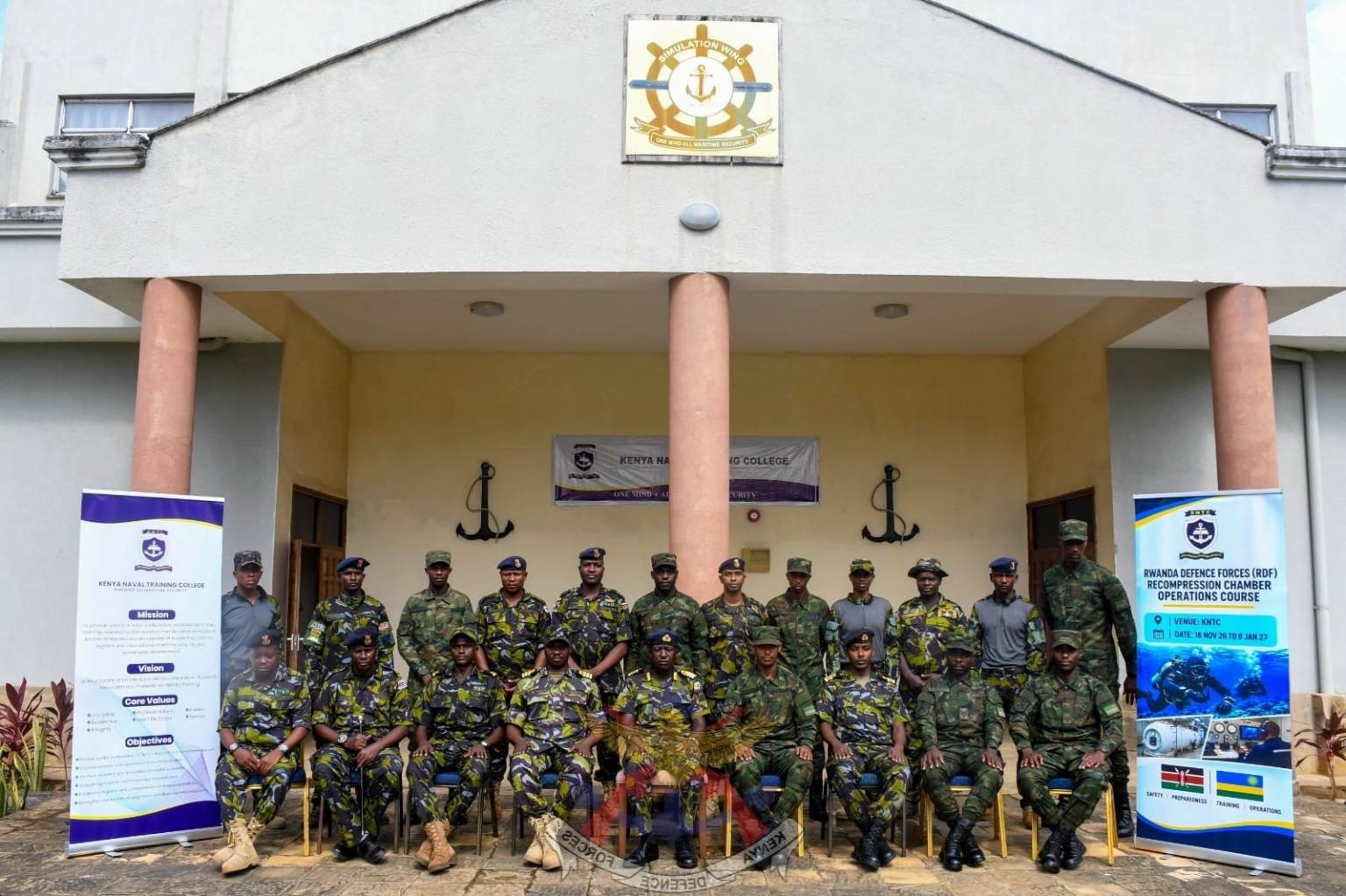
The Kenya Navy is conducting a Recompression Chamber Operations Course for Rwanda Defense Force personnel at the Kenya Naval Training College (KNTC) in Mtongwe, Mombasa. The initiative demonstrates Kenya’s ability to provide specialized military instruction and share technical expertise with regional partners, positioning its naval training institutions as important platforms for developing professional defense capabilities in the region.
Kenya is strengthening its position as a regional military training powerhouse through a specialized naval programme equipping Rwanda Defense Force personnel with critical skills in underwater safety and emergency response, reinforcing the country’s growing contribution to defense capacity-building across East Africa.
The training comes at a time when modern military operations increasingly demand more than conventional combat readiness. Naval forces must possess specialized personnel capable of undertaking demanding underwater assignments, managing operational risks and responding effectively when emergencies arise. By developing these capabilities, Kenya is demonstrating the importance it places on professional military preparedness, technical excellence and the protection of personnel.
At the centre of the programme is the operation of recompression chambers, specialized facilities used to treat divers suffering from decompression-related illnesses and other underwater emergencies. These facilities provide a controlled environment where pressure can be carefully managed to help address potentially life-threatening complications arising from diving activities. Their effective operation requires trained personnel who can respond quickly, follow established procedures and provide the necessary emergency support.
The ability to manage such emergencies is an important measure of professional military preparedness. Underwater operations expose personnel to risks that require specialized knowledge, appropriate equipment and a reliable emergency response system. Developing expertise in this area strengthens the ability of defense forces to protect their personnel while sustaining the demanding responsibilities associated with naval and maritime operations.
For Kenya, the significance of the initiative extends beyond the technical skills being taught. It showcases the country’s capacity to contribute to regional military development by providing specialized instruction in areas that require professional expertise and dedicated training facilities. The ability to host and train personnel from another country’s defense force reflects the growing importance of Kenya’s military education institutions in supporting regional cooperation.
The participation of Rwanda Defense Force personnel also highlights the value of Kenya-Rwanda defense relations. Through specialized training exchanges, the two countries are creating opportunities for professional interaction, institutional learning and the sharing of military expertise. These engagements help strengthen relationships between defense institutions while encouraging common approaches to personnel safety, technical proficiency and operational preparedness.
Such cooperation is particularly important in a region where security challenges increasingly require capable, professional and well-prepared defense institutions. Military partnerships are strengthened not only through diplomatic engagements and joint activities but also through the practical exchange of knowledge that improves the skills of individual personnel and builds institutional capacity.
The Kenya Naval Training College is central to this contribution. By providing a platform for specialized naval instruction, the institution reinforces Kenya’s ability to support professional military development beyond its national borders. Its role demonstrates how investment in military education can serve both national defense interests and wider regional cooperation objectives.
For the Kenya Navy, developing specialized expertise is also an important part of strengthening its professional standing. Modern naval power is not measured exclusively by the size of a fleet or the sophistication of its equipment. It also depends on the quality of personnel, the depth of technical knowledge, the ability to manage emergencies and the capacity to sustain operations under challenging conditions.
Kenya’s willingness to share this expertise with regional partners strengthens its profile as a defense institution capable of contributing to specialized military training. It also reinforces the country’s broader ambition to remain an influential security partner in East Africa, where professional military cooperation and institutional capacity are increasingly important to regional stability.
The programme further highlights the connection between military readiness and personnel welfare. Forces that invest in specialized emergency response training are better positioned to manage operational risks, protect their personnel and maintain the professional standards required for demanding assignments. These capabilities are essential in ensuring that military effectiveness is supported by the safety and preparedness of those entrusted with national and regional security responsibilities.
Through the Recompression Chamber Operations Course, Kenya is demonstrating that its contribution to regional security extends beyond its own military operations. By sharing specialized knowledge, strengthening professional relationships and supporting the development of partner forces, the Kenya Navy is helping build a stronger foundation for defense cooperation in East Africa.
The training is another illustration of the strategic value of Kenya’s military education institutions and their potential to enhance the country’s regional influence through professional expertise, technical training and defense partnerships.