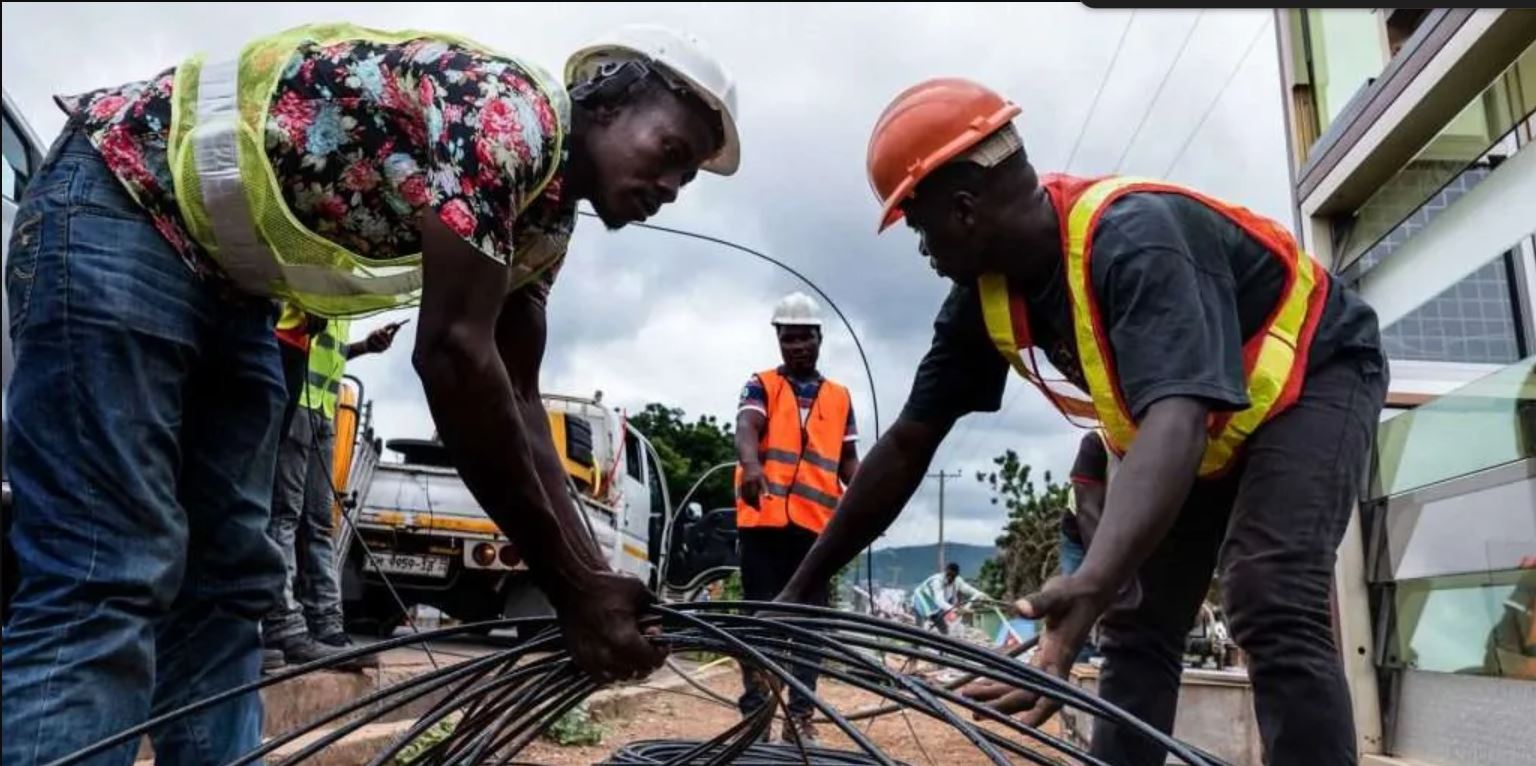
Kenyan Government has unveiled a KSh13 billion investment to expand Kenya’s national fiber-optic network and bring fixed broadband within reach of more than 8 million households that already have electricity, opening a new front in the country’s drive to build a connected, competitive and inclusive digital economy. The initiative is designed to attract matching private-sector investment, strengthen internet infrastructure and make it easier for service providers to extend reliable connectivity beyond major towns and commercial centers.
The investment places digital infrastructure at the center of Kenya’s development agenda, recognizing that internet access is increasingly essential to education, business, employment, innovation and access to public services. By expanding the network that carries internet traffic across the country, the Government aims to create the foundation for more households, enterprises and institutions to participate in an economy increasingly shaped by digital technology.
The programme falls under the Kenya Digital Economy Acceleration Project (KDEAP) and targets gaps in national backbone, middle-mile and cross-border fiber infrastructure. These networks form the underlying connections that carry data between regions, towns and telecommunications networks before internet service providers extend it to individual customers. Leveraging existing power transmission frameworks could help widen the reach of fiber infrastructure and improve the links between communities and the national telecommunications network.
Information and Communications Technology Principal Secretary John Tanui outlined the investment during a pre-bid session in Nairobi on October 13, 2026, focused on extending national backbone and cross-border links. The proposed expansion is expected to cover at least 27,000 kilometers of additional fiber infrastructure, with public support intended to mobilize corresponding private investment. The Government plans to use a competitive Multi-Round Reverse Auction to allocate support, encouraging industry participation while seeking greater value from public funds.
The scale of the ambition becomes clearer against existing connectivity figures. Communications Authority sector statistics for April to June 2026 put fixed internet subscriptions at approximately 2.84 million, including about 1.57 million fiber connections. While both categories have been growing, the figures illustrate the considerable distance between current fixed broadband adoption and the ambition to reach more than 8 million electricity-connected households. Subscriptions and households are not directly equivalent measures, but the comparison highlights the scope of the infrastructure expansion being pursued.
The Government’s approach also recognizes that extending the fiber network requires substantial participation from telecommunications companies and other infrastructure providers. Public investment can help establish the wider network links that operators may otherwise find expensive to build, particularly in areas where customer numbers are lower and commercial returns take longer to materialize. Private providers will remain essential in extending local networks, installing connections and delivering services to homes and businesses.
For households, reliable fixed broadband could transform how people learn, work and access information. Students and teachers could benefit from online learning resources, while researchers and families could access educational materials and digital information services more easily. For young people and professionals, better connectivity could widen access to remote employment, software development, online training and technology-enabled work that is no longer confined to major urban centers.
Small businesses and entrepreneurs also stand to benefit from a wider and more reliable broadband network. Traders, professionals and home-based enterprises could use digital payment systems, reach customers through online platforms, manage operations more efficiently and explore markets beyond their immediate locations. Agricultural communities could gain better access to market prices, farming advice, digital financial services and information that helps farmers make more informed commercial decisions.
The expansion could also strengthen access to digital government services where online platforms are available, making it easier for citizens to obtain information and complete transactions without unnecessary travel. Schools, healthcare facilities and community organizations could use improved connectivity to support digital services, although practical benefits will depend on suitable devices, digital skills, service availability and dependable internet connections.
Beyond individual households, stronger broadband infrastructure could reinforce Kenya’s position as a regional destination for technology businesses and digital services. Reliable connectivity is important for cloud computing, digital commerce, artificial intelligence, software development and data-driven enterprises. By improving the reach and capacity of its networks, Kenya can strengthen the infrastructure needed to attract investment, support innovation and compete for opportunities in regional and international markets.
The expansion could generate employment across fiber construction, installation, network maintenance and telecommunications services, while enabling businesses to establish or grow operations that depend on internet access. Rural communities could gain particular advantages as better connectivity complements electricity access, roads, education and financial inclusion, helping reduce geographical barriers to economic participation.
However, extending the national fiber network is a foundation for household connectivity, not a guarantee of immediate internet access for every eligible home. Electricity availability provides an important starting point, but individual connections still require last-mile infrastructure, installation, suitable equipment and an affordable subscription. Service reliability, consumer choice, coordination between public agencies and private operators, and effective use of public investment will determine how far the benefits reach ordinary Kenyans.
The KSh13 billion investment therefore represents an important opportunity to bring digital infrastructure closer to the communities that need it. If implementation delivers wider network coverage alongside affordable and reliable last-mile services, the initiative could expand opportunities in education, business, employment and innovation while supporting rural development. Turning the ambition of reaching more than 8 million electricity-connected households into meaningful internet access will be central to Kenya’s pursuit of a more connected, inclusive and competitive digital economy.