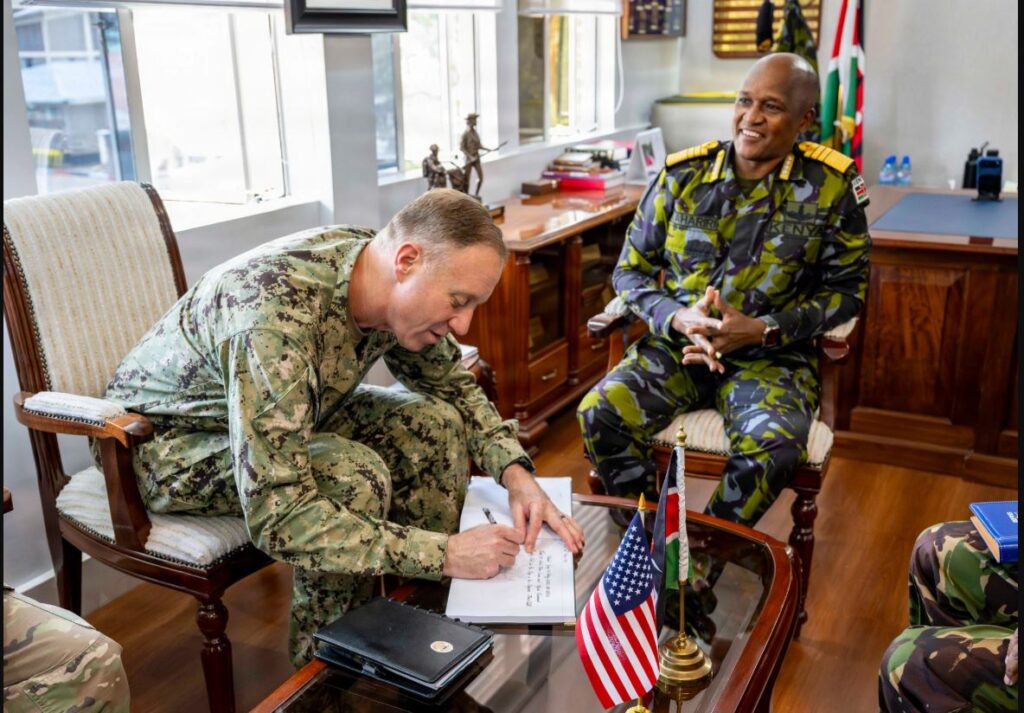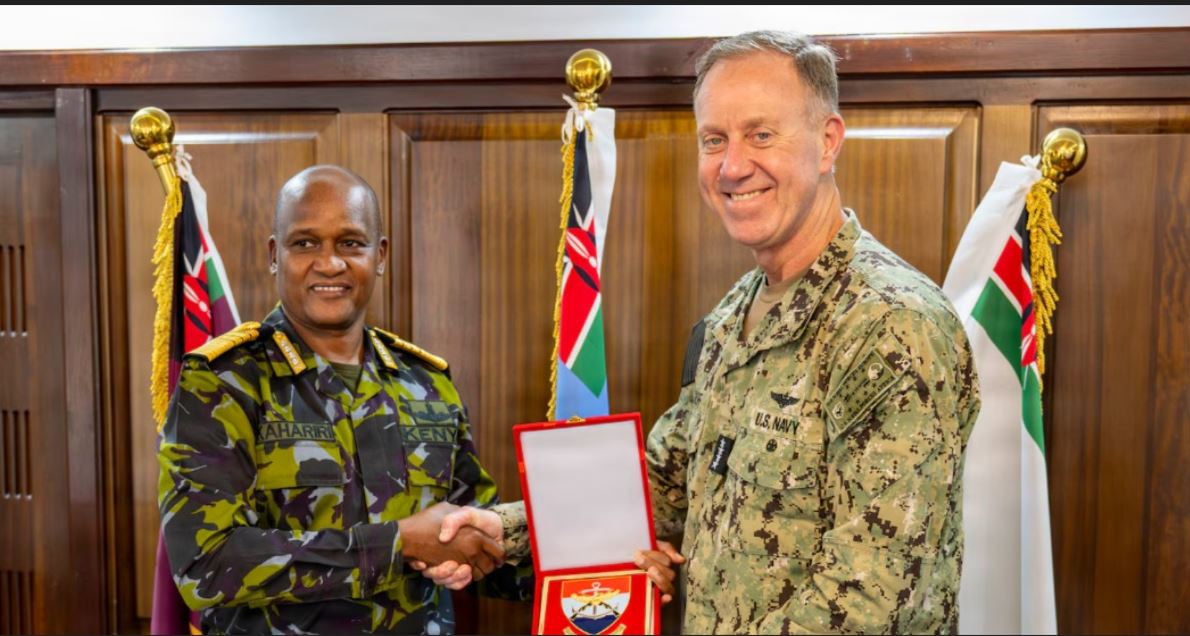
Kenya’s defense partnership with the United States is entering a more operational and strategic phase, marked by high-level engagements and targeted infrastructure investments that reflect the country’s growing importance in regional and global security frameworks. Recent discussions between military leadership from both nations have focused on counterterrorism coordination, maritime security, and Kenya’s evolving role as a stabilizing force across East Africa and the Western Indian Ocean.
At the center of this shift is a $750,000 naval training facility at Mtongwe in Mombasa, designed to enhance the operational readiness of Kenya’s marine commandos. The facility represents more than a standalone project. It signals a broader commitment by Washington to strengthen Kenya’s capacity to respond to complex maritime and coastal threats, including piracy, smuggling, and insurgent activity along littoral zones linked to instability in Somalia.
This investment comes alongside expanded cooperation at installations such as Manda Bay Airfield, where the United States has been deepening its counterterrorism footprint. Together, these initiatives point to a deliberate strategy to anchor security cooperation in infrastructure, training, and interoperability rather than short-term deployments.
Economically, the partnership opens new avenues for Kenya’s defense sector and adjacent industries. Infrastructure development linked to military modernization creates opportunities for local contractors, engineering firms, and service providers to participate in high-value projects. The construction and maintenance of specialized facilities such as naval training ranges and surveillance systems can stimulate local economies, particularly in coastal regions where unemployment remains a persistent challenge. Over time, such investments may also catalyze public-private partnerships in logistics, ship maintenance, and maritime technology.
Strategically, the collaboration enhances Kenya’s ability to project security beyond its borders. With improved training facilities and closer integration with advanced naval forces, the Kenya Defense Forces are better positioned to conduct joint operations, participate in multinational exercises, and respond to transnational threats. This strengthens Kenya’s credibility as a frontline state in counterterrorism efforts targeting extremist networks operating across the Horn of Africa.
The maritime dimension is especially significant. Kenya sits along critical shipping lanes that connect the Indian Ocean to global trade networks. Securing these routes is not only a national priority but also a global economic imperative. Enhanced surveillance capabilities and specialized marine training enable Kenya to safeguard these corridors more effectively, reducing risks to trade flows and reinforcing its role as a guardian of regional maritime stability.
Geopolitically, the deepening partnership reflects intensifying competition among global powers seeking influence in Africa’s strategic corridors. The Western Indian Ocean has become a focal point due to its proximity to energy routes, emerging offshore resources, and fragile coastal states. By investing in Kenya’s defense capacity, Washington is reinforcing its presence while positioning Nairobi as a reliable partner capable of balancing external interests.
For Kenya, this alignment translates into increased diplomatic leverage. As its military capabilities expand and its role in regional security frameworks becomes more pronounced, Nairobi gains greater influence within institutions such as the East African Community and broader Africa-wide counterterrorism initiatives. This influence can be leveraged to shape regional security agendas, attract further investment, and strengthen its voice in multilateral forums.
The benefits extend to human capital development. Advanced training facilities and joint exercises expose Kenyan personnel to modern combat techniques, intelligence systems, and maritime operations. This accelerates skills transfer and builds a more professional, technologically adept force. Over time, such capacity-building efforts can reduce reliance on external support while enabling Kenya to take a leadership role in regional missions.
At the operational level, improved interoperability between Kenyan and allied forces enhances collective response capabilities. Joint exercises and shared training environments create common standards and communication protocols, allowing for faster and more coordinated responses to crises ranging from terrorist attacks to maritime disruptions. This is particularly relevant in a region where security threats are increasingly interconnected and transnational.
The long-term implications of this partnership extend beyond defense. A more secure maritime environment can boost investor confidence, particularly in sectors such as shipping, energy, and tourism. Coastal infrastructure linked to security operations can also support civilian uses, creating dual-use benefits that contribute to broader economic development.
Kenya’s positioning as a regional security anchor is therefore both a strategic and economic asset. By anchoring defense cooperation in infrastructure, training, and long-term capacity building, the partnership with the United States is reshaping the country’s security architecture while reinforcing its role as a gateway to East Africa.
As global attention shifts toward securing critical trade routes and countering emerging threats, Kenya’s importance is set to grow. The convergence of military modernization, geopolitical alignment, and economic opportunity places the country at the center of a rapidly evolving security landscape, with ripple effects likely to be felt across the region in the form of enhanced stability, stronger institutions, and expanded economic prospects.