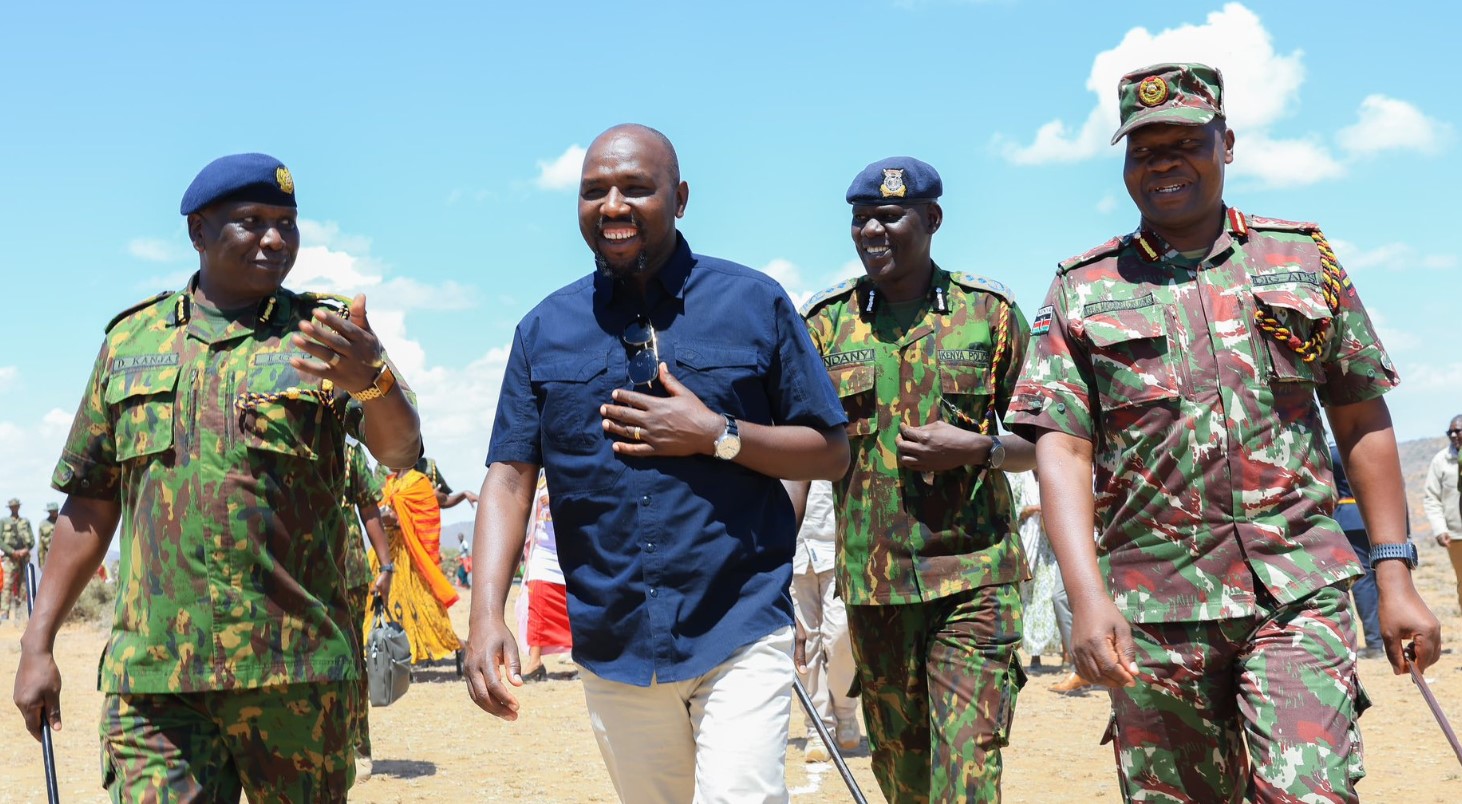
The Government of Kenya has launched a coordinated, intelligence led security operation to stabilize Mukogodo Forest and surrounding areas along the Laikipia Isiolo border, signaling a renewed push to dismantle entrenched bandit networks and restore state authority in one of the country’s most volatile frontier zones.
Announced following a high-level security consultative meeting in Laikipia North, the operation brings together national security agencies, regional administrators, local leaders, and community representatives under a unified command framework. The focus is on actionable intelligence, rapid response deployment, and sustained inter agency coordination to counter livestock raids, illegal firearms proliferation, and cross border criminal movements that have recently escalated in the area.
At its core, the Mukogodo operation reflects a deliberate shift away from reactive patrols toward intelligence driven policing and targeted enforcement. Security agencies are prioritizing surveillance, intelligence fusion, and joint operational planning to identify criminal supply chains, movement corridors, and local enablers that have allowed armed groups to exploit the forest terrain as a sanctuary. This approach aims not only to apprehend perpetrators but also to dismantle the logistical and financial networks that sustain banditry.
The economic stakes are significant. Persistent insecurity in Mukogodo has disrupted pastoral livelihoods, displaced households, and undermined livestock markets that underpin the regional economy. By targeting cattle rustling and firearm trafficking, the operation seeks to stabilize production systems, restore confidence among herders, and protect trade routes linking Laikipia, Isiolo, and neighboring counties. Security planners view economic normalization as essential to preventing the recurrence of violence once deployments scale down.
Strategically, the operation reinforces Kenya’s broader national security agenda across the North Rift and Upper Eastern regions. Mukogodo sits at the intersection of multiple county borders, making it a critical node for criminal spillover if left ungoverned. Securing the forest limits cross border mobility for armed groups, protects infrastructure investments, and safeguards nearby conservancies and public land assets that are increasingly vulnerable during drought driven resource competition.
Operationally, the deployment underscores deeper integration among the National Police Service, Administration Police, specialized units, and supporting military assets where required. Enhanced mobility, improved communications coverage, and the rehabilitation of security access roads are intended to compress response times and sustain presence in remote areas. The strengthening of National Police Reservists further reflects an effort to blend formal security capacity with locally grounded support structures.
Community engagement remains a central pillar of the operation. Authorities are positioning residents not as passive beneficiaries but as active partners in intelligence sharing and early warning. This reflects lessons drawn from previous interventions where exclusion or heavy-handed enforcement eroded trust and weakened long term outcomes. By anchoring the operation in local leadership structures and civic cooperation, the government aims to align enforcement with inclusive governance.
The Mukogodo deployment also sits within Kenya’s regional security responsibilities, particularly in managing trans county and inter communal conflict dynamics intensified by climate stress. As drought pressures heighten competition over pasture and water, intelligence led security is being framed as a stabilizing tool that complements development interventions rather than substituting for them.
Ultimately, the Mukogodo Forest operation illustrates Kenya’s evolving security doctrine. It signals a commitment to proactive, intelligence driven action supported by legal frameworks, structured planning, and multi stakeholder collaboration. By integrating technology, local knowledge, and coordinated command, the government is positioning the operation not as a short-term crackdown but as a model for securing rural and frontier regions while safeguarding citizens, livelihoods, and national assets.
Deputy President Kithure Kindiki has reaffirmed his unwavering commitment to supporting President William Ruto in delivering transformative development projects across the country, as he embarked on an extensive...
Read moreDetails