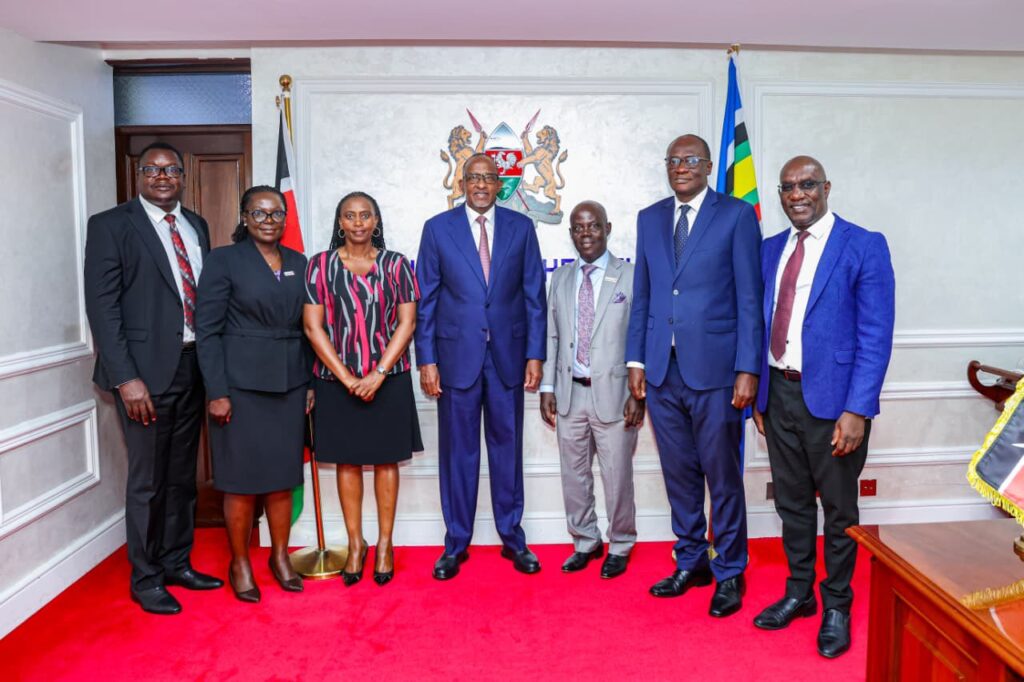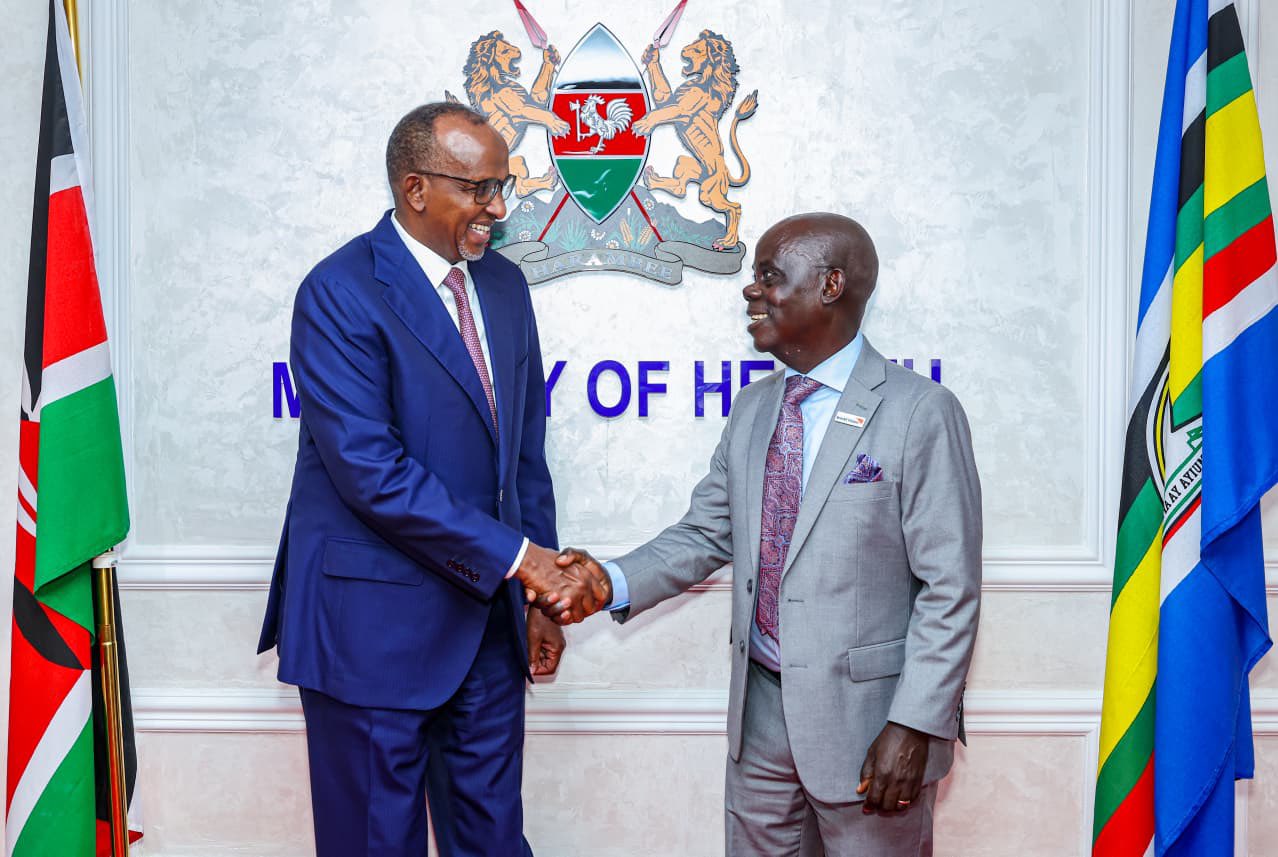
Kenya has reaffirmed its commitment to accelerating Universal Health Coverage (UHC) through strengthened partnerships with development actors, as the government deepens efforts to make healthcare affordable, accessible, and equitable for all citizens. This commitment was underscored during a high-level engagement between the Ministry of Health and World Vision Kenya, reflecting a shared vision of building a healthy nation anchored on resilient, people-centered health systems.
Health Cabinet Secretary Aden Duale met with World Vision Kenya leadership led by National Director Gilbert Kamanga, where both parties reiterated their dedication to fast-tracking UHC through community-driven approaches. The discussions highlighted the importance of collaboration in strengthening primary healthcare delivery and ensuring that reforms translate into tangible benefits for households across the country.
The engagement recognized World Vision Kenya’s longstanding contribution to community development and health service delivery, with programmes currently spanning 33 counties and supporting 288 public health facilities. CS Duale noted that the partnership has evolved beyond traditional donor support, positioning World Vision as a long-term co-builder of sustainable, grassroots health systems aligned with national priorities.
CS Duale further observed that the global health landscape is shifting toward country-led and sustainable financing models, a direction Kenya has firmly embraced. He emphasized that the government’s health reforms are anchored in the Bottom-Up Economic Transformation Agenda (BETA), which prioritizes nationally driven, scalable solutions over fragmented and short-term interventions, while strengthening health sovereignty and accountability.

Primary Health Care was underscored as the cornerstone of ongoing reforms, with the deployment of more than 107,000 Community Health Promoters and the establishment of 267 Primary Care Networks already underway. The CS called on partners, including World Vision, to support the completion of remaining networks to achieve full national coverage and ensure no community is left behind.
On maternal and newborn health, Duale reaffirmed the government’s resolve to reduce preventable deaths, particularly in the 25 counties bearing the highest burden. Through the Every Woman, Every Newborn, Everywhere initiative, he urged stronger collaboration to expand community-based interventions, improve facility readiness, and sustain investments in nutrition, water, sanitation and hygiene (WASH), and school health as foundations for long-term human capital development.
In the face of escalating climate shocks and drought risks, especially in arid and semi-arid lands (ASALs), the CS stressed the urgency of climate-resilient and coordinated community responses to safeguard health gains, including progress in reducing stunting to 18 percent. He called for multi-year, system-strengthening partnerships aligned with national and county priorities under a One Plan, One Budget framework, noting that deeper alignment and joint action are essential to delivering equitable and sustainable Universal Health Coverage.