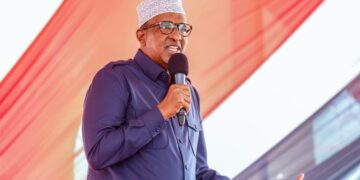
Kenyans have been urged to uphold peace and unity as a key pillar for national stability and development. Speaking during a bursary fundraiser in Kajiado Central Constituency, top government officials, led by Deputy President Prof. Kithure Kindiki, emphasized that fostering peace creates a conducive environment for growth, investment, and progress. The leaders called on citizens to resolve their differences through lawful and non-violent means in order to protect the country from instability and economic stagnation.
Deputy President Kindiki reminded Kenyans that while it is within their constitutional right to criticize the government, such expression must remain peaceful and lawful. He issued a firm warning that the government will not tolerate any form of violence or destruction under the guise of protest. “Those who differ with the government have a right to do so, but let it be done peacefully. Kenya must remain a safe, united country where investors feel secure,” Kindiki stated.
President William Ruto and Deputy President Kindiki reiterated their administration’s determination to unite Kenyans and strengthen democratic engagement. Kindiki singled out the residents of Kajiado Central for maintaining peace, despite unrest in surrounding areas. He praised their commitment to dialogue over violence, positioning the constituency as a model of responsible civic engagement.
Prime Cabinet Secretary Musalia Mudavadi echoed these sentiments, stressing that peace is essential for any meaningful development. Citing the tragic post-election violence of 2007 which claimed 1,400 lives, Mudavadi cautioned against repeating past mistakes. “The Constitution provides for peaceful protest—not destruction or death,” he said, warning that leaders must stop inciting youth and instead model the virtues of patriotism and national unity.
Mudavadi also urged citizens to respect and uphold the sanctity of key institutions such as the Executive, Judiciary, and Legislature, arguing that these pillars are central to Kenya’s democratic stability. He called on fellow leaders to build bridges through dialogue and reject confrontational and tribal politics that divide the nation along ethnic lines.

Defense Cabinet Secretary Soipan Tuya added her voice to the calls for peace, warning that divisive and tribal politics derail development. She challenged Kenyans to focus on building a cohesive society where every citizen plays a role in advancing the national agenda. She emphasized that tribalism and violence should not define the country’s political culture.
The leaders condemned opposition elements who, rather than offering tangible policy alternatives, resort to divisive rhetoric as they seek political relevance ahead of the 2027 elections. The plea was clear: for Kenya to realize its potential, leaders must unite in their message of peace and steer the country away from dangerous, self-serving political agendas.