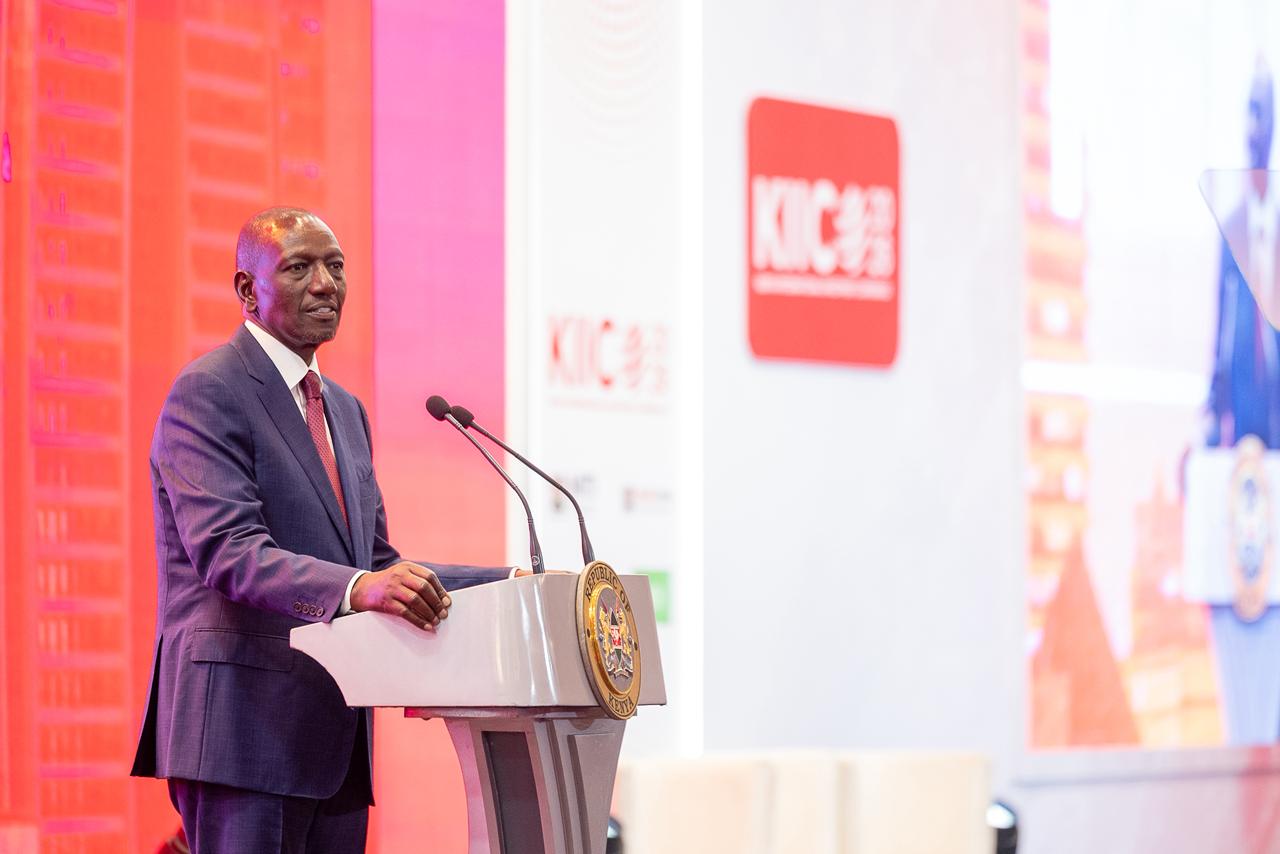
President William Ruto has unveiled a pipeline of more than $2.9 billion in new investment commitments, a move that places Kenya at a critical inflection point between policy ambition and large-scale economic execution. Spanning agriculture, manufacturing, ICT, energy, healthcare, real estate, and business process outsourcing, the 20 deals signal a coordinated attempt to translate macroeconomic stability into tangible industrial growth and job creation.
The scale of the announcement, projected to generate 63,000 quality jobs, reflects more than a numerical milestone. It represents a strategic consolidation of investor confidence at a time when global capital is increasingly selective, supply chains are being reconfigured, and African economies are competing to attract long-term investment anchored in production rather than extraction.
At the core of the investment push lies a deliberate effort to accelerate Kenya’s transition from a consumption-driven economy to a production and export-oriented industrial hub. The heavy allocation toward agriculture and manufacturing suggests a recalibration toward value addition, with agribusiness investments expected to deepen agro-processing capacity, reduce post-harvest losses, and expand Kenya’s export basket beyond raw commodities. This aligns closely with the long-term blueprint of Vision 2030, which prioritizes industrialization as the backbone of sustained growth.
The deals also reinforce pillars of the Big Four Agenda, particularly in manufacturing, food security, and affordable housing. By directing capital into production ecosystems and infrastructure, the government is attempting to unlock multiplier effects across supply chains, where each large-scale investment stimulates downstream activity among small and medium enterprises.
A key differentiator in this investment wave is the policy architecture supporting it. Reforms targeting tax administration, export incentives, and digital facilitation point to a shift toward a more predictable and investor-friendly environment. Measures such as improved VAT refund mechanisms, zero-rating of exported services, and the removal of equity restrictions in ICT are designed to enhance liquidity and attract technology-driven capital. These changes are particularly significant for Kenya’s digital economy, which is increasingly positioned as a gateway for global firms seeking African market access.
Public-private partnerships and joint ventures are expected to play a central role in translating these commitments into operational projects. Infrastructure expansion across roads, rail, ports, and energy systems is not only a supporting factor but a strategic enabler of industrial clustering. Special economic zones and export processing zones, now being more closely aligned, are likely to emerge as focal points for manufacturing and logistics integration.
Regionally, the implications are substantial. As investments flow into logistics corridors and industrial hubs, Kenya is strengthening its position within the East African Community and the broader African Continental Free Trade Area framework. Enhanced infrastructure and production capacity could allow Kenyan firms to scale into regional markets more competitively, reducing reliance on imports while boosting intra-African trade flows.
This positioning is particularly relevant in the context of ongoing global disruptions that continue to strain traditional supply chains. By anchoring production closer to emerging markets, Kenya can leverage its geographic and logistical advantages to become a redistribution hub for goods across East and Central Africa. Investments in energy competitiveness further strengthen this trajectory by addressing one of the most persistent constraints on industrial growth.
The socio-economic implications extend beyond headline job creation. For SMEs, the expansion of industrial ecosystems presents opportunities to integrate into formal value chains as suppliers, service providers, and innovation partners. Agribusinesses stand to benefit from improved processing infrastructure and market access, while youth entrepreneurs may find new entry points in technology, outsourcing, and manufacturing-linked services.
Human capital development is emerging as a parallel priority. As investments scale, demand for skilled labor in engineering, digital services, and industrial operations is expected to rise sharply. This creates both an opportunity and a pressure point, requiring alignment between education systems and industry needs to ensure that job creation translates into inclusive employment rather than skills shortages.
From a macroeconomic perspective, the investment surge reinforces Kenya’s positioning in global capital markets. Steady growth, controlled inflation, a stable currency, and strong foreign exchange reserves have created a foundation of credibility that is now being leveraged to attract long-term investors. Rising foreign direct investment inflows indicate that Kenya is increasingly viewed as a stable entry point into African markets, particularly for sectors linked to production and technology.
However, the real test lies in execution. Converting commitments into operational projects requires sustained policy consistency, efficient regulatory processes, and coordination across national and county governments. Delays in infrastructure delivery, bureaucratic bottlenecks, or shifts in the regulatory environment could undermine investor confidence and slow momentum.
If effectively implemented, the Sh376 billion investment wave could mark a structural shift in Kenya’s economic model. It has the potential to deepen industrialization, expand export capacity, and strengthen regional integration while generating employment at scale. More broadly, it positions Kenya to exert greater influence within continental trade and investment flows, enhancing its strategic leverage in an increasingly competitive global economy.
The coming years will determine whether this investment drive evolves into a transformative economic cycle or remains an ambitious but unevenly realized agenda. The foundations are in place, but the outcome will depend on execution discipline, institutional capacity, and the ability to sustain investor confidence in a rapidly changing global landscape.
President William Ruto has challenged African nations to take charge of financing their own development by mobilising domestic resources, strengthening continental financial institutions and reducing dependence on external...
Read moreDetails