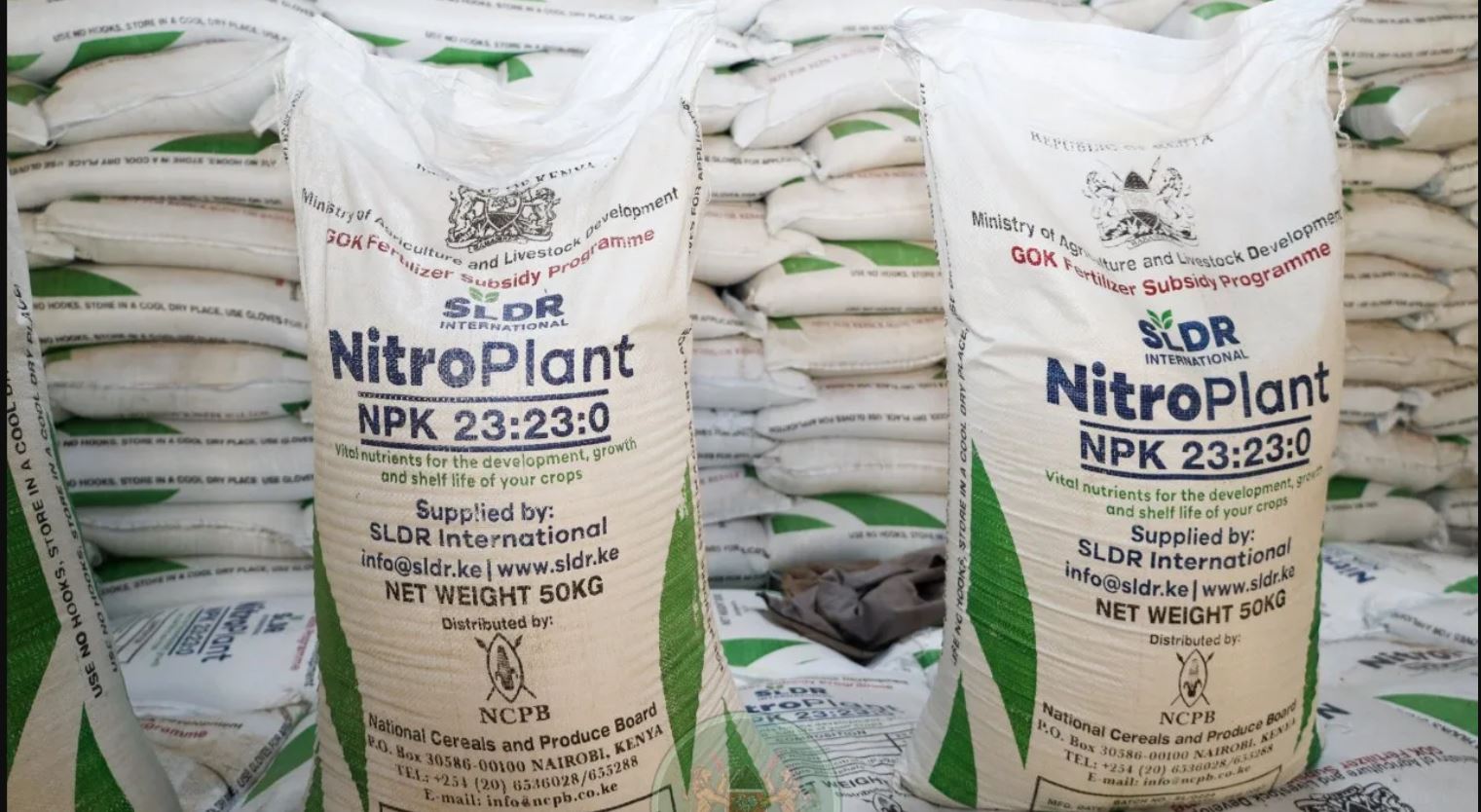
President William Ruto has announced further reductions in subsidized fertilizer and maize seed prices, with a 50kg bag of fertilizer set to cost Sh2,000, down from Sh2,500, and a 2kg packet of maize seeds retailing at Sh150 from November 2026. The measures, backed by a planned Sh5 billion government subsidy injection, are aimed at easing the cost of farming, improving access to essential inputs and strengthening domestic food production as Kenya intensifies efforts to improve food security.
The President made the announcement during a church service at St. Mark’s Catholic Church in Likuyani, Kakamega County, reaffirming the government’s commitment to supporting farmers and making agricultural production more affordable. The latest price reductions are expected to provide additional relief to farmers preparing for the next planting season, particularly small-scale producers who must balance spending on farm inputs against household needs, labor and land preparation.
Under the new prices, farmers will save Sh500 on every 50kg bag of subsidized fertilizer purchased. For farmers cultivating several acres, the savings could reduce the amount of money required to prepare their land and establish crops, leaving more resources available for other essential operations. The reduction could also make it easier for farmers to purchase the quantities of fertilizer recommended for their crops, provided the inputs are readily available and other production costs remain manageable.
The reduction in maize seed prices is equally significant. At Sh150 for a 2kg packet, the announced price is intended to improve access to quality planting material, helping farmers plan their purchases and prepare for planting without facing the full cost of seeds. Timely access to suitable seed is particularly important because delays in planting can expose crops to less favorable growing conditions and complicate farm management. Ensuring that affordable seed reaches farmers before planting periods will therefore be central to achieving the intended benefits of the new prices.
The planned Sh5 billion subsidy injection underscores the role of public investment in addressing the financial barriers that can prevent farmers from producing at their full potential. By reducing the cost of essential inputs, the government is seeking to make farming more accessible and economically viable, especially for producers with limited savings or access to affordable credit. The intervention could also support farmers recovering from drought-related losses by lowering the initial financial burden of returning to production.
Maize remains central to Kenya’s food economy, serving as a staple for households and an important ingredient in livestock feed. Its production also supports grain traders, millers, transport operators, agricultural input dealers and other businesses that depend on farming activity. Measures that help farmers plant and maintain their crops could therefore generate benefits beyond individual farms, sustaining rural commerce and supporting incomes across agricultural supply chains.
Greater affordability of fertilizer and seed could contribute to stronger harvests and more stable food supplies if accompanied by favorable weather, sound farming practices and effective crop management. Increased domestic production could ease pressure on household food budgets and reduce exposure to supply disruptions and fluctuations in food prices. However, lower input costs alone cannot guarantee higher yields or cheaper food at retail level. Rainfall, soil conditions, access to extension services, storage capacity and functioning markets will continue to influence production and the prices consumers ultimately pay.
The latest announcement also highlights the importance of treating agricultural transformation as a broader undertaking rather than relying on input subsidies alone. Farmers need practical advice on appropriate fertilizer application, suitable seed varieties and crop management, alongside reliable markets where they can sell their harvests. Better storage and transport infrastructure can help reduce post-harvest losses and ensure that increased production translates into greater food availability and improved farm incomes. Supporting other food crops alongside maize will also remain important in strengthening the country’s overall resilience to weather shocks and changing market conditions.
For the subsidy programme to deliver its intended impact, implementation will be as important as the announced prices. Farmers must be able to obtain the subsidized inputs at the stated costs, through accessible and transparent distribution channels. Clear delivery arrangements, effective oversight and accountability in the use of public funds will be necessary to ensure that the Sh5 billion allocation translates into practical benefits rather than remaining an announcement on paper.
Predictable input prices can also help farmers prepare seasonal budgets, make planting decisions and plan their use of available land and labor with greater confidence. Where growing conditions and market opportunities are favorable, lower production costs could encourage continued investment in farming, strengthen rural incomes and support the wider economy through employment, food processing and domestic trade.
The November 2026 price reductions mark a further effort by the government to ease the financial pressures facing farmers and improve access to the inputs needed for food production. By lowering fertilizer and maize seed prices and backing the measures with a planned Sh5 billion subsidy injection, the administration is seeking to strengthen the foundations of a more productive agricultural sector. The priority now is to ensure timely access, transparent implementation and sustained support for farmers so that lower input costs can contribute to stronger harvests, more resilient rural livelihoods and improved food security across Kenya.