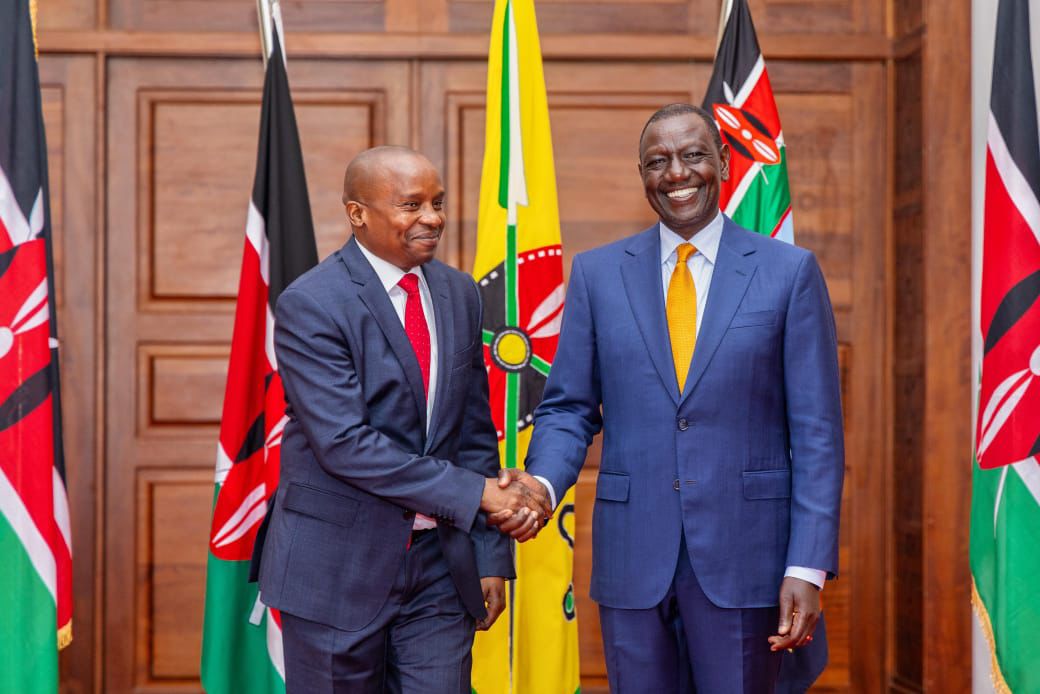
President William Ruto has appointed Deputy President Kithure Kindiki to chair a government committee that will coordinate engagement with private investors and employers on the proposed Sh2.2 trillion East African oil refinery project, marking a decisive step toward implementing one of the largest and most strategically significant investments in Kenya’s history.
The appointment signals the government’s determination to move beyond planning and into structured implementation of a flagship industrial project expected to reshape Kenya’s energy landscape while reinforcing the country’s position as a preferred destination for large scale investment. By placing the Deputy President at the centre of government coordination, the administration has demonstrated the strategic importance it attaches to the refinery and its commitment to ensuring seamless collaboration between the public and private sectors.
The newly constituted committee will provide a high-level platform for coordinating government engagement with investors, employers and key stakeholders as preparations advance toward construction. Its mandate is expected to enhance policy coordination, accelerate investment facilitation, align regulatory processes and ensure that implementation progresses efficiently through close cooperation across government institutions and the private sector.
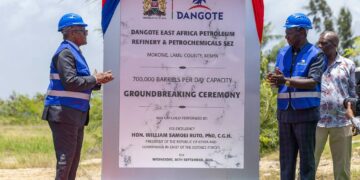
President Ruto indicated that preparations for the landmark investment have reached an advanced stage, with the government already identifying a groundbreaking date. The announcement reflects growing momentum behind the project and illustrates the administration’s confidence that the refinery is steadily progressing toward implementation after months of technical consultations and investor engagement.
The proposed refinery represents one of Kenya’s most ambitious industrial ventures and is expected to transform the country’s energy sector by substantially expanding domestic petroleum processing capacity. Once operational, the facility is projected to reduce dependence on imported refined petroleum products, strengthen fuel supply security and enhance Kenya’s resilience against global energy market disruptions while supporting long term price stability.
The project also reinforces the government’s broader industrialization agenda by promoting value addition within the petroleum sector instead of relying primarily on imported finished products. By processing crude oil closer to regional markets, Kenya stands to capture greater economic value, strengthen industrial production and support the growth of downstream manufacturing industries.
The refinery is expected to generate thousands of direct and indirect employment opportunities throughout its construction and operational phases. Demand for engineers, technicians, construction workers, logistics providers and skilled professionals is likely to stimulate workforce development while encouraging technology transfer and specialized training that will strengthen Kenya’s industrial capabilities for decades to come.
Beyond employment, the investment is expected to create significant opportunities for local enterprises supplying goods and services across construction, engineering, manufacturing, transport, maintenance and support industries. The multiplier effects are anticipated to strengthen domestic supply chains, increase business activity and expand opportunities for Kenyan firms participating in one of the country’s largest infrastructure developments.
The project also highlights the growing importance of public private partnerships in delivering transformative national investments. By combining government leadership with private sector capital, technical expertise and operational experience, the refinery demonstrates how collaborative investment models can accelerate the delivery of strategic infrastructure while attracting long term domestic and international investment.
The government’s structured engagement with investors reflects an increasingly predictable investment environment designed to provide confidence for major infrastructure projects. Coordinated leadership under the Deputy President is expected to facilitate faster decision making, improve stakeholder coordination and ensure that regulatory processes support timely implementation while maintaining accountability and transparency.
The appointment builds upon months of engagement between the government and potential investors following proposals by Dangote Industries to establish a major refinery serving the East African market. Discussions have continued alongside technical assessments undertaken by government teams studying refinery models across the continent to ensure Kenya adopts internationally competitive approaches for the project.
With Lamu identified as the preferred location for the refinery, the investment is expected to complement existing strategic infrastructure including the Lamu Port and the LAPSSET Corridor. The integration of world class transport and logistics infrastructure with large scale petroleum processing has the potential to position Kenya as a regional energy and logistics hub capable of serving domestic demand while supplying neighboring markets across East Africa
The refinery is also expected to strengthen regional economic integration by supporting cross border fuel supply, improving energy reliability and enhancing trade within the East African region. Increased refining capacity could reduce the region’s dependence on imported fuels while creating new export opportunities that reinforce Kenya’s role as a leading industrial and commercial gateway.
As one of the country’s largest planned investments, the refinery is expected to enhance investor confidence by demonstrating Kenya’s ability to attract and coordinate complex, capital intensive projects through strong government leadership and effective partnerships with the private sector. The initiative aligns with the administration’s broader agenda of accelerating industrial growth, expanding infrastructure and positioning Kenya as a competitive destination for global investment.
The appointment of Deputy President Kithure Kindiki to chair the refinery implementation committee underscores the government’s commitment to delivering a transformative energy investment that will strengthen industrial capacity, mobilize private capital, create employment, deepen public private collaboration and establish Kenya as a leading regional centre for petroleum processing, energy security and long-term economic growth.