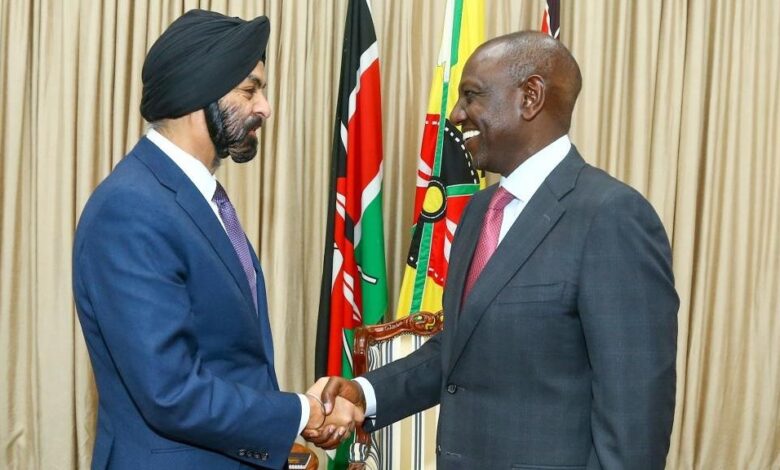
The World Bank has approved a US$750 million financing package for Kenya to support fiscal reforms, governance improvements, and economic resilience measures in a move expected to strengthen public finances and reinforce the country’s broader reform agenda. The facility, equivalent to about KSh97 billion, comes as the government intensifies efforts to improve transparency, enhance public financial management, and stabilize the economy amid rising debt obligations and continued global economic pressures.
The financing package arrives at a critical moment for the Kenyan economy as the government navigates heavy debt servicing obligations, constrained revenue growth, and external economic pressures linked to global market volatility, inflationary trends, and climate-related shocks. The approval therefore provides important fiscal breathing room while enabling the government to sustain reforms designed to improve transparency, accountability, and prudent public financial management.
The package consists of a US$340 million loan from the International Bank for Reconstruction and Development and an additional US$410 million in concessional financing from the International Development Association. Part of the concessional support will also strengthen assistance programmes for refugees and host communities, reflecting Kenya’s broader humanitarian and regional stabilization role.
The approval is being viewed as a significant vote of confidence in Kenya’s economic management efforts and institutional reform agenda. International development partners increasingly place emphasis on governance quality, fiscal discipline, and accountability frameworks when extending budget support financing. The World Bank’s decision therefore signals growing confidence in the government’s commitment to implementing reforms that strengthen the credibility and effectiveness of public institutions
Central to the programme are reforms targeting governance and anti-corruption measures. The financing supports implementation of Kenya’s Conflict of Interest Act and the 2026 regulations that introduce stricter disclosure requirements, clearer accountability mechanisms, and tougher penalties aimed at preventing abuse of public office for private gain. The reforms are intended to strengthen integrity within public institutions while reducing financial leakages that undermine service delivery and economic efficiency.
The programme also supports the rollout of the Treasury Single Account, one of the government’s most important public finance reform initiatives. By consolidating government cash resources into a centralized framework, the Treasury Single Account is expected to improve oversight of public funds, reduce unnecessary borrowing costs, and strengthen expenditure management across ministries, departments, and agencies. The reforms are designed to enhance efficiency in resource allocation while ensuring public finances are managed in a more coordinated and transparent manner.
Further reforms under the programme focus on expanding electronic government procurement systems to improve transparency and competitiveness in public tenders. Increased digitization of procurement processes is expected to reduce corruption risks, strengthen audit trails, and improve accountability in the use of taxpayer resources. Stronger procurement systems are also likely to improve investor confidence by reinforcing perceptions of fairness, predictability, and institutional credibility in government contracting processes.
The facility additionally supports the strengthening of Kenya’s social protection architecture through improvements to the Enhanced Single Registry. The digital platform is expected to improve identification of vulnerable households, reduce duplication, and ensure social assistance programmes are delivered more efficiently and transparently. Enhanced targeting mechanisms are increasingly becoming critical as governments seek to protect vulnerable populations while maintaining fiscal sustainability.
Economists and policy analysts view the World Bank approval as an important stabilizing measure for Kenya’s broader macroeconomic environment. Sustained fiscal and governance reforms are expected to strengthen investor confidence, support exchange rate stability, improve access to development financing, and create a more predictable environment for private sector investment. Stronger confidence in public institutions also plays a critical role in attracting long-term capital needed to support infrastructure development, industrial growth, and job creation.
The financing also reflects the growing importance of resilience-focused economic reforms in an increasingly uncertain global environment. Kenya, like many developing economies, continues to face exposure to external shocks ranging from commodity price fluctuations and tightening global financial conditions to droughts, food insecurity, and climate-related disruptions. Strengthening fiscal management systems and governance structures is therefore increasingly viewed as essential to improving the country’s ability to withstand economic shocks while protecting development gains.
The latest approval further reinforces the expanding partnership between Kenya and the World Bank in supporting the country’s transformation agenda. Over recent years, the institution has remained one of Kenya’s most significant development financing partners, supporting infrastructure, housing, agriculture, urban development, climate resilience, and fiscal reform programmes. Continued engagement with international financial institutions is helping Kenya maintain access to affordable financing while supporting reforms aimed at strengthening economic competitiveness and institutional performance.
Beyond the immediate fiscal benefits, the reforms supported under the programme are expected to have broader long-term implications for governance, economic efficiency, and national development planning. Improved public financial management can strengthen service delivery, ensure more effective utilization of public resources, and support implementation of key development priorities under the government’s economic transformation agenda. Stronger governance systems also contribute to greater institutional credibility, which remains essential for sustaining investor trust and economic confidence.
The World Bank’s approval of the US$750 million facility therefore represents more than short-term financial support. It signals international recognition of Kenya’s reform trajectory and reinforces confidence in the country’s capacity to implement difficult but necessary fiscal and governance measures. As the government continues pursuing institutional reforms and economic stabilization efforts, the financing provides an important foundation for strengthening resilience, supporting sustainable growth, and advancing Kenya’s long-term development ambitions.