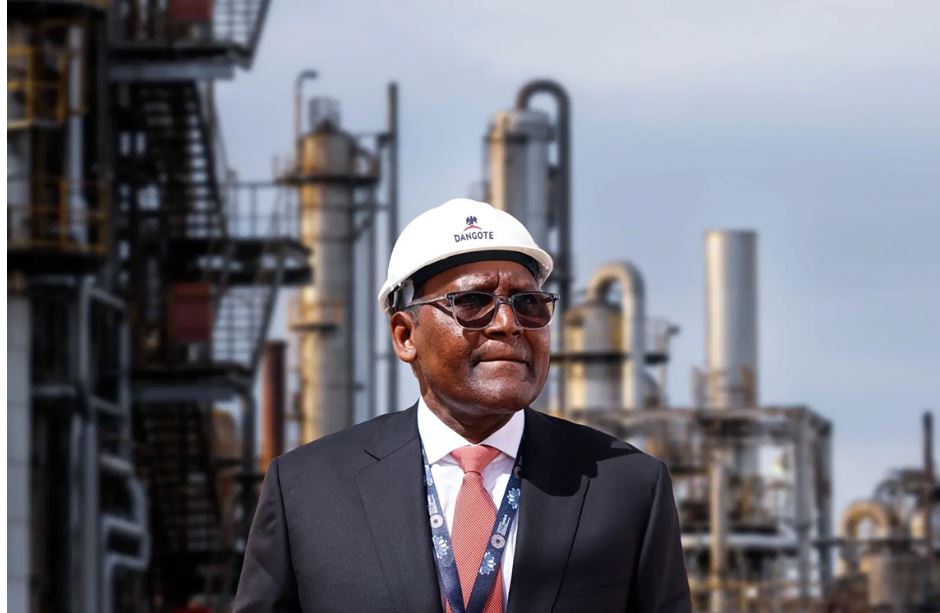
Kenya is set to host one of the largest private industrial investments ever proposed in East Africa after Dangote Industries unveiled a financing plan for its planned US$17 billion (about KSh2.2 trillion) oil refinery in Lamu. The proposed 700,000-barrel-per-day facility is expected to become East Africa’s largest refinery and Africa’s second largest by processing capacity, marking a major step toward positioning Kenya as a regional centre for petroleum refining, energy security and industrial development while reinforcing growing investor confidence in the country’s strategic location and investment environment.
The proposed 700,000-barrel-per-day refinery represents one of the largest private industrial investments ever planned in East Africa and marks Dangote Industries’ biggest refining venture outside Nigeria. The company intends to finance the project through a combination of internally generated cash, bond issuances and proceeds from a planned initial public offering of its refining business, reflecting confidence in the commercial viability of one of Africa’s most ambitious energy infrastructure projects.
The financing framework demonstrates that global investors continue to view large-scale energy investments as commercially attractive despite challenging international market conditions. By combining internal resources with capital market financing, Dangote Industries is pursuing a diversified funding approach that highlights strong market confidence in the refinery’s long-term profitability and strategic importance
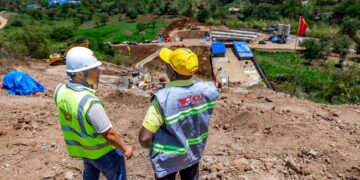
The refinery is planned for Lamu Island, where site selection has been completed while soil testing, engineering and design activities are already progressing. Its location aligns with Kenya’s long-term vision of transforming the Lamu Corridor into a globally competitive logistics, transport and industrial gateway capable of serving domestic, regional and international markets.
Once operational, the facility is expected to process up to 700,000 barrels of crude oil daily, making it the largest refinery in East Africa and the second largest on the African continent by nameplate capacity. The additional refining capacity would significantly expand the region’s ability to process crude oil locally, reducing dependence on imported refined petroleum products while strengthening fuel supply resilience across East Africa
The project is expected to reshape the regional energy landscape by positioning Kenya at the centre of petroleum refining and distribution. Increased domestic refining capacity would improve the reliability of fuel supplies, reduce exposure to external supply disruptions and support more competitive pricing for industries that rely heavily on petroleum products.
Beyond its contribution to energy security, the refinery has the potential to become a powerful catalyst for industrialization. Construction and operation of the mega facility are expected to generate thousands of direct and indirect employment opportunities while creating demand for engineers, technicians, contractors, logistics providers, manufacturers and numerous local suppliers. The scale of the investment also presents significant opportunities for technology transfer, advanced technical training and workforce skills development that could strengthen Kenya’s industrial capabilities for decades.
The project is equally expected to stimulate broader economic activity through increased demand for construction materials, transport services, engineering expertise and supporting manufacturing industries. Local enterprises are likely to benefit from participation in supply chains associated with the development and long-term operation of the refinery, creating multiplier effects across multiple sectors of the economy.
The investment further reinforces the strategic importance of the Port of Lamu and the wider Lamu Port South Sudan Ethiopia Transport Corridor. Expansion of supporting infrastructure around the refinery is expected to enhance the region’s attractiveness for logistics, storage, shipping and industrial investments while strengthening Kenya’s position as a gateway for trade across Eastern and Central Africa.
Enhanced refining capacity would also support regional economic integration by supplying petroleum products to neighboring countries, strengthening cross-border trade and deepening regional value chains. As African economies continue implementing the African Continental Free Trade Area, investments of this magnitude have the potential to accelerate industrial collaboration, improve supply chain efficiency and enhance the competitiveness of manufacturers throughout the region.
The decision by Dangote Industries to establish its largest refining investment outside Nigeria in Kenya sends a strong signal to international investors regarding the country’s investment climate. Kenya continues to attract large-scale capital into strategic sectors through its stable business environment, expanding infrastructure, improving connectivity and access to regional markets.
The refinery also complements Kenya’s broader industrial transformation agenda by supporting value addition, expanding domestic manufacturing capacity and positioning the country to capture greater value within Africa’s evolving energy supply chain. Increased refining capability could stimulate investment in petrochemicals, downstream manufacturing and related industries, creating new opportunities for industrial diversification and export growth.
As planning and preparatory activities continue, the proposed refinery stands out as a transformative investment capable of redefining East Africa’s energy future. By strengthening refining capacity, enhancing energy security, supporting infrastructure development and creating extensive employment and business opportunities, the project has the potential to accelerate Kenya’s emergence as a continental centre for energy, logistics and industrial production. If successfully implemented, the US$17 billion investment will not only strengthen Kenya’s economic foundations but also unlock new opportunities for regional trade, foreign direct investment, industrial expansion and sustainable long-term growth across East Africa.