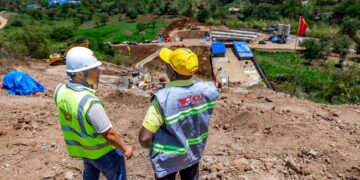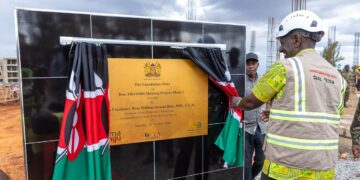
The ongoing reconstruction and modernization of Ithookwe Airstrip in Kitui County marks a significant milestone in Kenya’s broader infrastructure transformation agenda under President William Ruto. The project reflects the National Government’s deliberate effort to ensure that every region of the country benefits from strategic public investments aimed at enhancing connectivity, unlocking economic opportunities, and integrating historically underserved areas into Kenya’s national development framework.
Transport infrastructure remains one of the most critical pillars of economic growth and regional integration. By improving mobility and reducing logistical barriers, modern transport systems create new opportunities for trade, tourism, investment, and service delivery. The modernization of Ithookwe Airstrip demonstrates the government’s recognition that counties such as Kitui require efficient transport infrastructure to fully realize their economic potential and strengthen their contribution to the national economy.
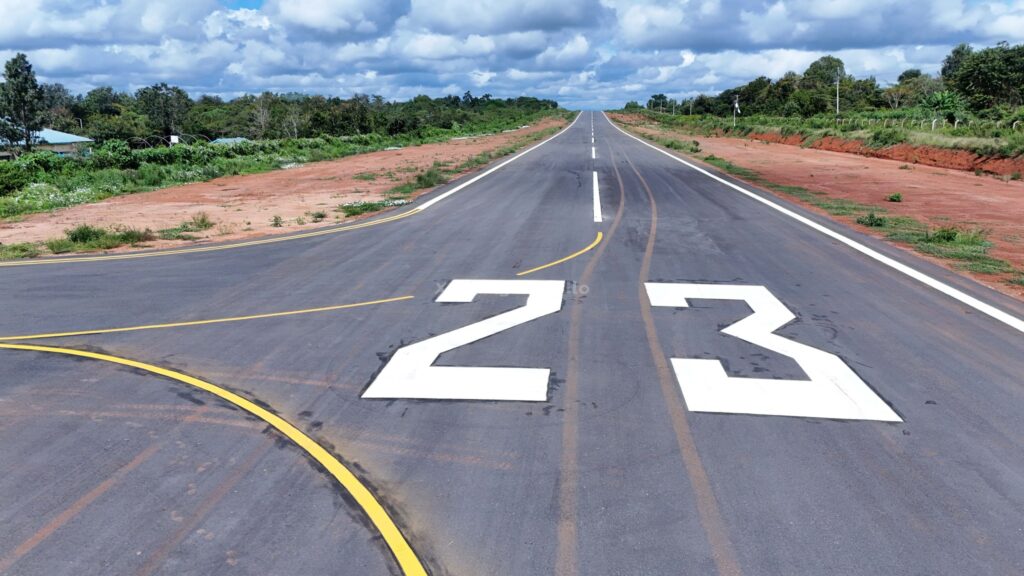
Now in its final stages, the upgraded Ithookwe Airstrip has undergone a major transformation designed to meet modern aviation standards. The project includes a newly paved 950-metre asphalt runway (Runway 05/23), approximately 15 metres wide, featuring proper grading, compaction, and high-quality surface finishing to enhance operational safety and efficiency. The improvements are expected to significantly boost the airstrip’s capacity to handle light aircraft and improve reliability for aviation operations in the region.
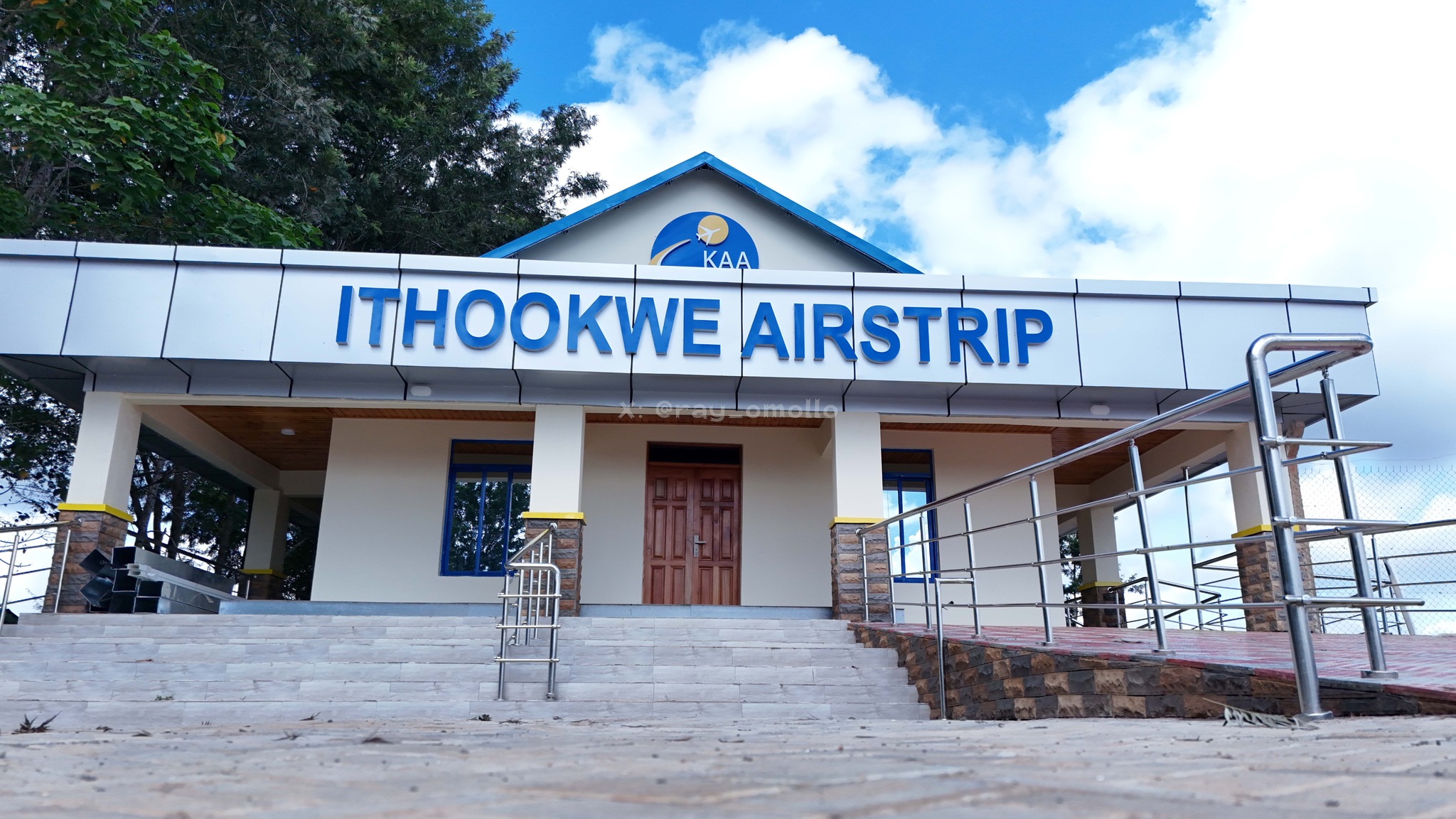
The modernization works also feature a modern terminal building equipped with a VIP reception area and passenger lounges tailored for dignitaries, investors, business travellers, and tourists. Additional supporting infrastructure includes a secure perimeter fence, a bitumen-standard parking area, and an internal access driveway designed to improve movement within the facility. The expanded and clearly marked apron will further enhance aircraft maneuverability, ensuring smoother parking and ground operations for helicopters and fixed-wing aircraft.
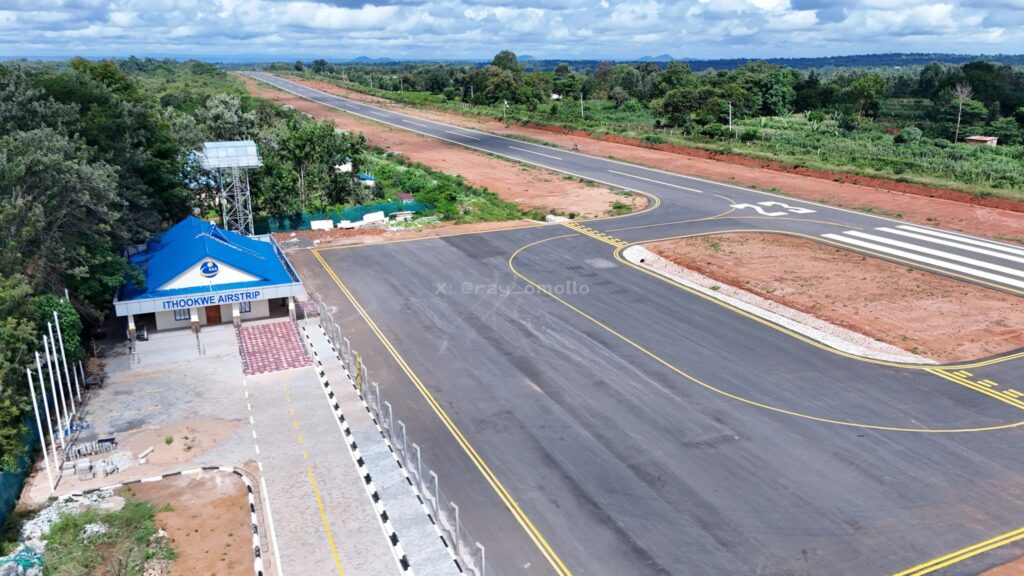
The upgraded airstrip is already transforming travel efficiency for residents and investors by dramatically reducing travel time between Kitui and major cities such as Nairobi and Mombasa to approximately 35 minutes. This represents a significant improvement compared to the lengthy and often unpredictable road journeys that have historically affected mobility in the region. Improved accessibility is expected to encourage faster business transactions, attract new investment, and enhance emergency response capabilities.
Strategically positioned, Ithookwe Airstrip is set to become a vital regional aviation hub linking Kitui County with Nairobi, Mombasa, Garissa, and Wajir. The facility is also expected to play a critical role in supporting the county’s growing mining sector, boosting tourism to the South Kitui National Reserve, and strengthening emergency medical evacuation services. The improved infrastructure is likely to attract regular commercial light-aircraft operations, further stimulating trade, tourism, employment creation, and local economic activity.
The project highlights the National Government’s broader commitment to inclusive development by ensuring that infrastructure expansion is not limited to major urban centers alone. Under President Ruto’s administration, strategic investments in roads, airports, housing, energy, and digital infrastructure are increasingly targeting counties and rural regions that have historically faced development gaps. The Ithookwe Airstrip upgrade therefore symbolizes a wider effort to spread economic opportunities equitably across Kenya and accelerate grassroots transformation.
The Ministry of Interior and National Administration, through the State Department for Internal Security and National Administration, has played a central role in coordinating the smooth implementation and operationalisation of the project. The Ministry has overseen security coordination, administrative support, and operational planning to ensure the facility meets both aviation and safety standards. Through controlled and closely monitored entry and exit points, the Department continues to strengthen security around the airstrip while ensuring safe, efficient, and uninterrupted operations that will support long-term regional development and public confidence in the facility.