Kenya’s transition into a digital-first economy is steadily gaining momentum, with data increasingly recognized as the new goldmine driving growth, innovation, and global competitiveness. Under the Bottom-Up Economic Transformation Agenda (BETA), the government’s Digital Superhighway pillar is deliberately expanding digital infrastructure and opportunities, positioning young people at the center of this transformation.
A key manifestation of this strategy is the Jitume Digital Programme, which is actively establishing digital hubs across the country to equip youth with practical, income-generating skills. These hubs are not symbolic projects but deliberate interventions aimed at tackling unemployment, empowering communities, and integrating Kenya into the global digital economy.
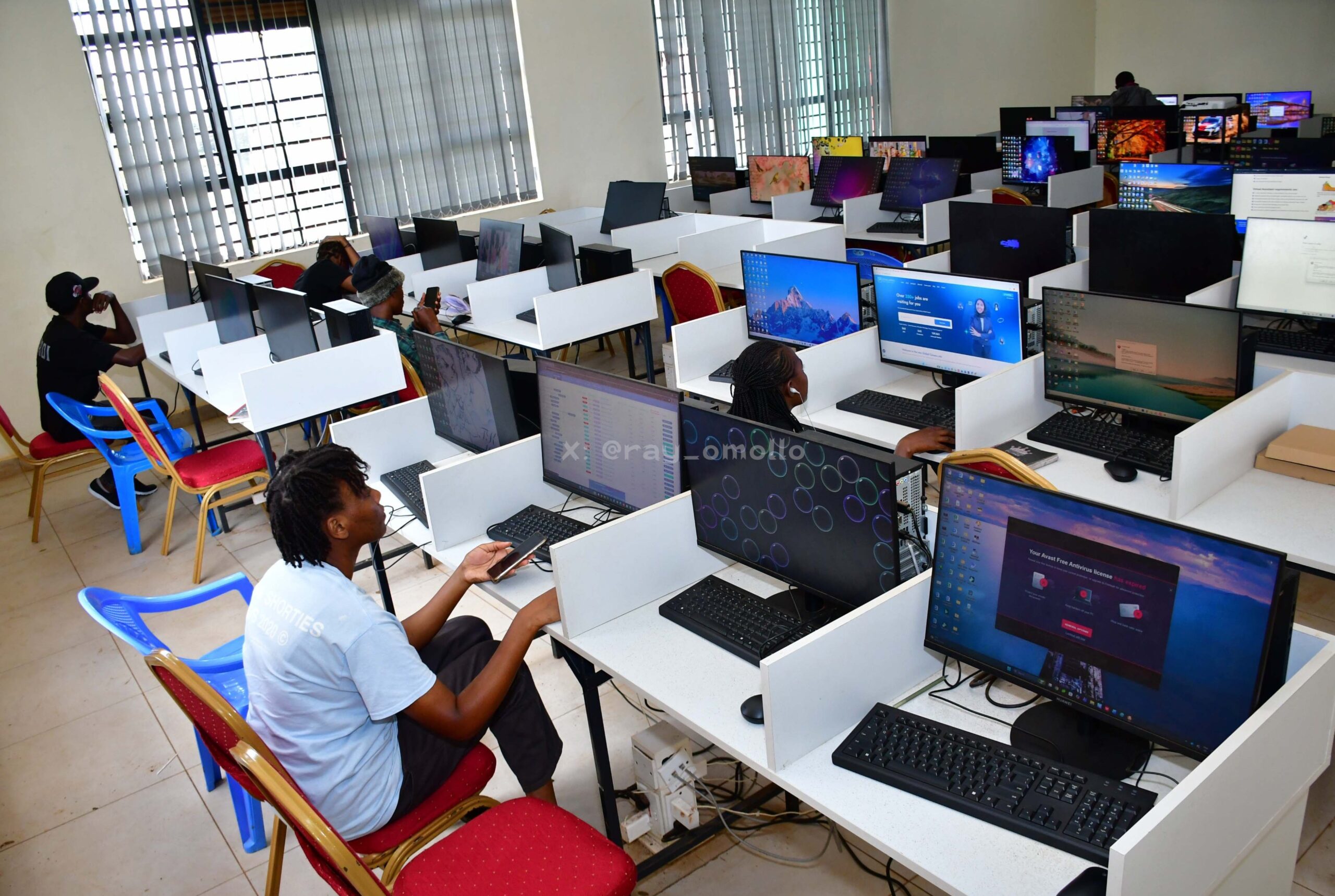
In Kiambu County, the Ndumberi Jitume Digital Hub in Kiambu Town Constituency stands out as a model of this vision in action. Established under the Jitume programme and powered by Konza Technopolis in collaboration with the Ministry of Information, Communications and the Digital Economy (MICDE) and the ICT Authority (ICTA), the hub reflects a coordinated government effort to decentralize opportunity and bring digital resources closer to the grassroots.
The facility, equipped with 80 fully functional computers, has already demonstrated tangible impact. Now in its third training cohort, it has reached over 1,500 young people, many of whom have transitioned into sustainable income streams. This progress highlights a clear shift from job-seeking to job creation, offering a structured pathway away from crime, drug abuse, and other social challenges that have historically affected the region.
Central to this success is the integration of the Ajira Digital Programme, which provides a structured curriculum tailored to market needs. Through Ajira, youth are trained in high-demand digital skills such as graphic design, digital marketing, web development, transcription, forex trading, and content creation. This approach ensures that training is not theoretical but directly aligned with real earning opportunities in both local and global digital markets.
The concept driving these initiatives is simple yet transformative: moving youth from “learners to earners.” With free, walk-in access, reliable internet connectivity, and modern infrastructure, Jitume hubs are lowering entry barriers and democratizing access to digital work. This has enabled many young Kenyans to tap into freelancing, remote work, and online entrepreneurship, fundamentally changing livelihoods.
Importantly, the rollout of similar Jitume Digital Hubs across multiple counties underscores the government’s deliberate effort to ensure equitable access to opportunities nationwide. Kiambu’s success is therefore not isolated but part of a broader national blueprint aimed at scaling digital empowerment and reducing regional disparities.
Complementing these efforts, the Ministry of Interior, through the State Department for Internal Security and National Administration, plays a critical role in safeguarding the digital ecosystem. By strengthening cybersecurity frameworks and mitigating online threats, the Ministry ensures that the digital space remains secure, trustworthy, and conducive for youth to thrive. Together, these coordinated efforts signal a government firmly committed to leveraging digital innovation as a cornerstone of economic transformation and youth empowerment.