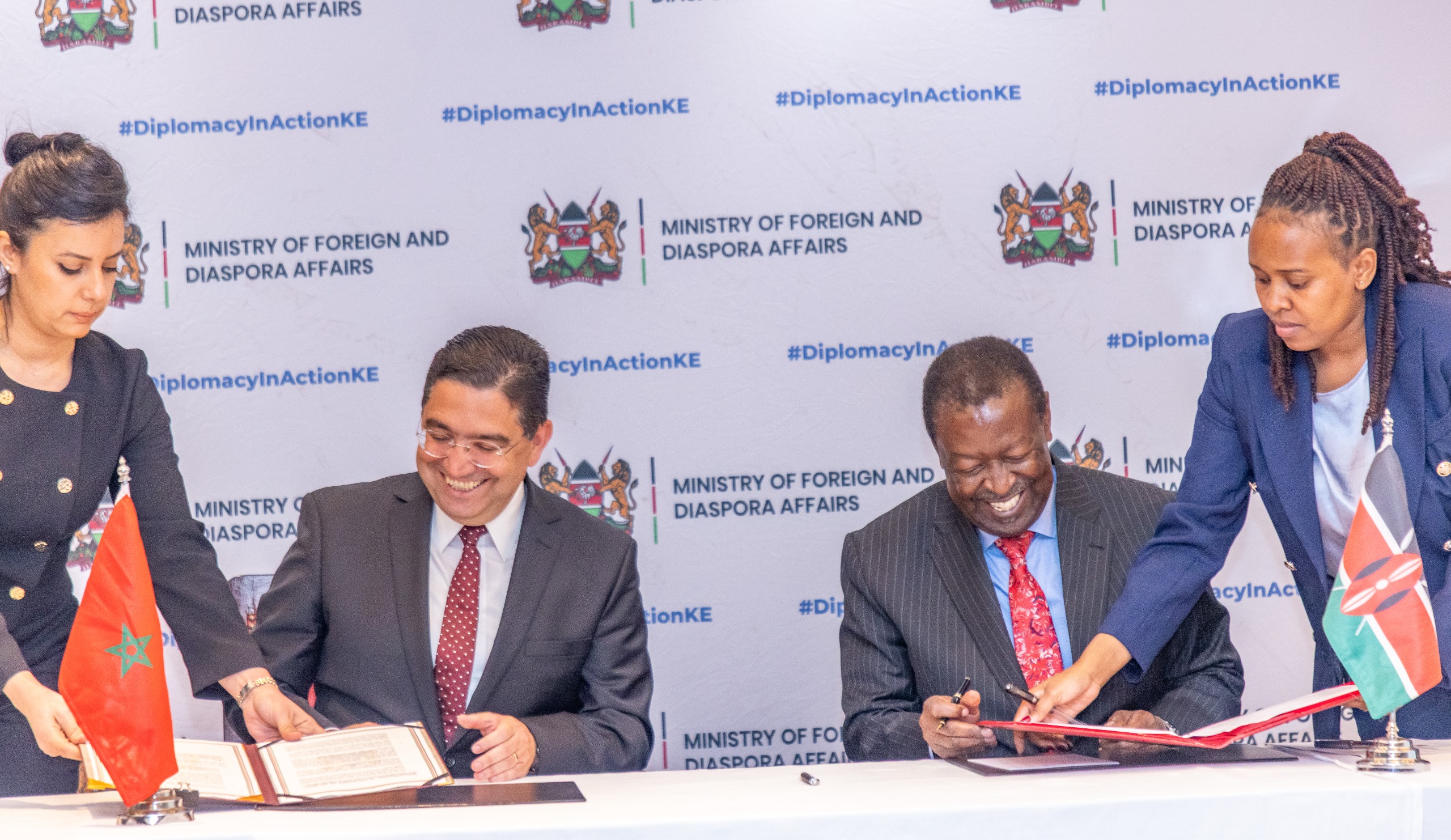
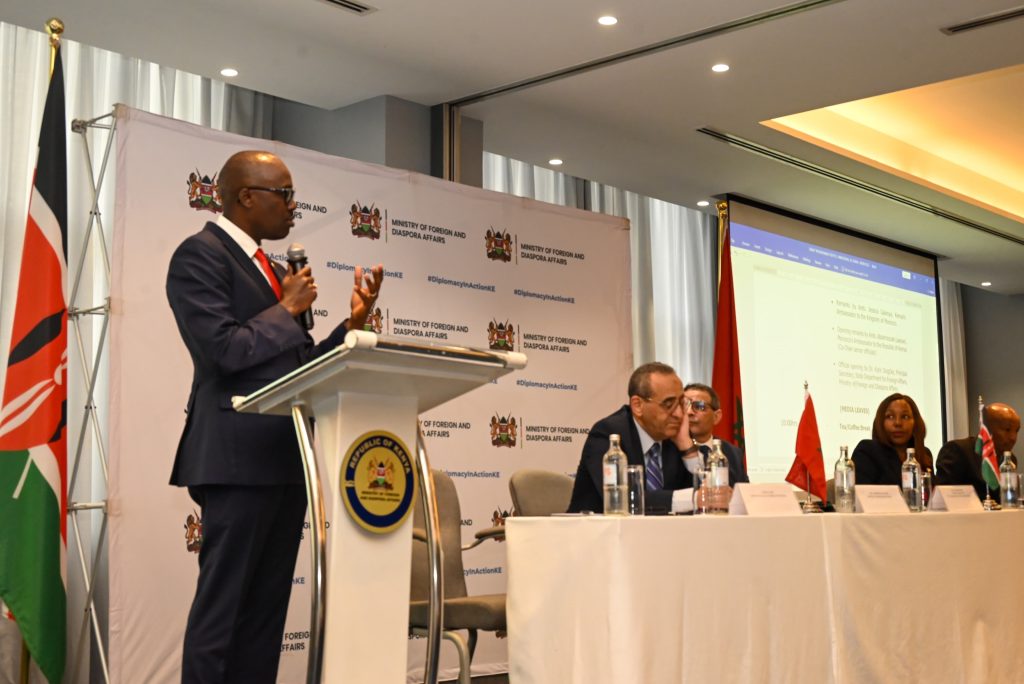
Kenya has taken a significant step in strengthening its diplomatic and economic footprint in North Africa after signing 11 bilateral agreements with Morocco. The deals signal a renewed commitment to deepen cooperation, expand trade flows, and unlock investment opportunities between the two countries. The agreements were formalized during the inaugural Joint Commission for Cooperation (JCC) held in Nairobi, marking a milestone in bilateral relations.
The agreements were signed by Musalia Mudavadi and Nasser Bourita, reflecting high-level political goodwill on both sides. The JCC session brought together senior government officials and technical teams, underscoring the seriousness with which both nations are approaching this partnership. It also highlighted a shift toward more structured and results-oriented diplomacy.
The 11 instruments span a wide range of sectors critical to economic transformation. These include agriculture, health, higher education, blue economy, fisheries, justice, gender empowerment, and culture. By targeting such diverse areas, both Kenya and Morocco aim to create a comprehensive cooperation framework that addresses development needs while fostering innovation and knowledge exchange.
Trade and investment are at the core of the agreements, with both nations seeking to leverage their strategic geographic positions in East and North Africa. Enhanced collaboration is expected to boost exports, attract foreign direct investment, and stimulate industrial growth. Improved air connectivity is also expected to facilitate business travel and tourism, further strengthening economic ties.
In the agriculture and blue economy sectors, the agreements hold particular promise for Kenya. Collaboration in fisheries, aquaculture, and sustainable marine resource management could help Kenya maximize its coastal and inland water resources. Similarly, partnerships in agriculture may improve food security through technology transfer and best practices from Morocco’s advanced farming systems.
On the social front, cooperation in education, scholarships, and skills exchange is expected to benefit young people in both countries. These initiatives will promote human capital development and cultural exchange, fostering stronger people-to-people ties. Programs focusing on gender and women’s empowerment also signal a shared commitment to inclusive growth.
Korir Sing’oei emphasized that the JCC provides a structured framework for sustained engagement, policy coordination, and long-term collaboration. He noted that Kenya–Morocco relations have steadily expanded across economic, political, and cultural spheres, and the new agreements will accelerate this trajectory.
Ultimately, the success of these agreements will depend on effective implementation and monitoring, as highlighted by Mudavadi. Both countries have expressed optimism that the deals will translate into tangible outcomes, driving shared prosperity. With strong diplomatic backing and clear strategic focus, the Kenya–Morocco partnership is poised to become a key pillar of inter-African cooperation.