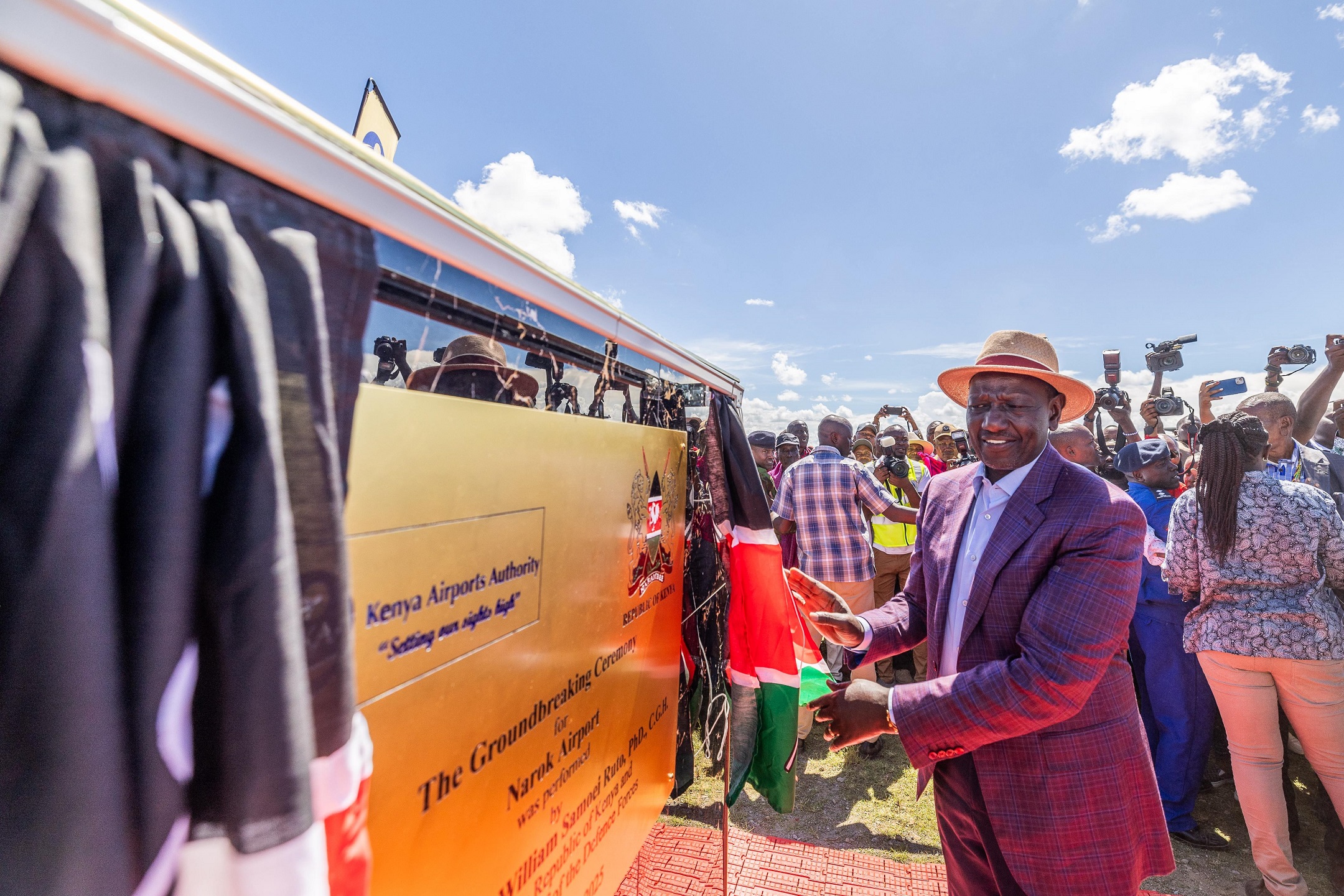
Construction of the Sh677 million Narok Airport is expected to be completed within the next two months, President William Ruto has announced, setting the stage for the opening of a major aviation facility expected to improve access to the Maasai Mara National Reserve and strengthen Narok’s position as a key tourism gateway. The announcement places the project among the Government’s latest infrastructure investments aimed at improving connectivity to major economic destinations while creating conditions for tourism, enterprise and employment to expand beyond traditional centers.
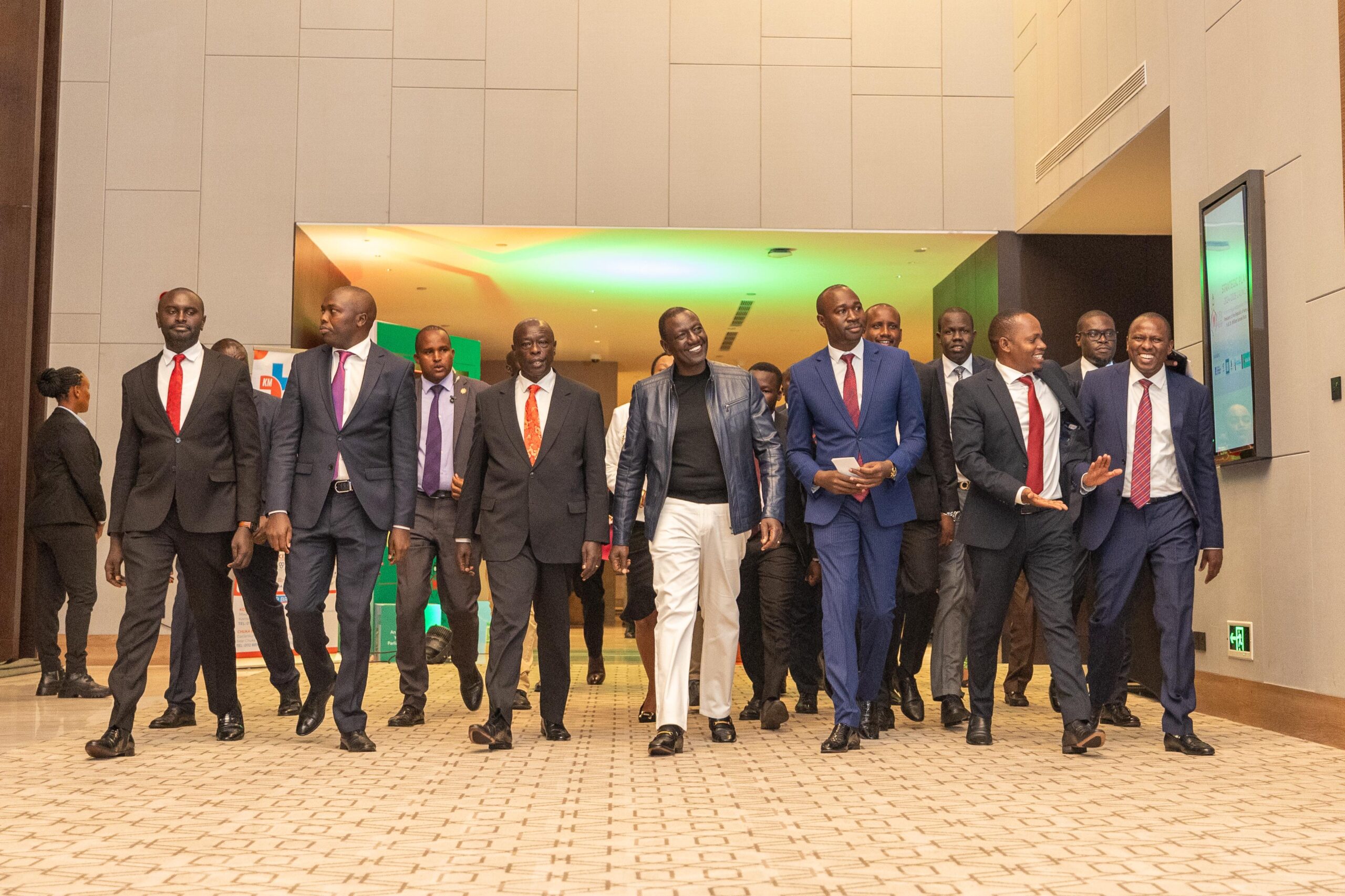
Speaking on Tuesday during the first day of his two-day tour of Narok County, President Ruto said the airport would improve access to the Maasai Mara and support the growth of tourism in the region. The facility is expected to serve both domestic and international passengers, while scheduled weekly flights linking the Maasai Mara through Nairobi’s Wilson Airport are expected to provide travelers with an additional and more convenient connection between the capital and one of the world’s best-known safari destinations.
The nearing completion of the airport is significant because the Maasai Mara’s global appeal is closely linked to the ease with which visitors can reach it. For international travelers arriving in Nairobi, improved aviation connections can simplify onward journeys into the tourism circuit, while domestic visitors would have greater options for planning trips to Narok. A more seamless connection between Nairobi and the Maasai Mara could also help tourism operators package the two destinations more effectively, giving visitors an opportunity to combine urban, wildlife and cultural experiences within a single itinerary.
For Narok, the investment is expected to have implications extending well beyond the movement of tourists. Aviation infrastructure can act as a catalyst for economic activity by bringing visitors closer to businesses that depend on tourism and by improving access for investors, professionals and commercial operators. Hotels, lodges, tour companies, restaurants, vehicle operators, cultural enterprises and other service providers stand to benefit if improved connectivity results in increased visitor activity and longer stays within the county.
The wider economic opportunity lies in ensuring that tourism spending reaches local communities and businesses. Greater visitor activity can increase demand for locally produced food, crafts, transport services, cultural experiences and other supplies, creating opportunities for small enterprises to participate in the tourism value chain. With the right supporting environment, the airport could therefore contribute to employment, skills development and new business opportunities for residents whose livelihoods depend directly or indirectly on the tourism economy.
The project also strengthens the infrastructure supporting Kenya’s position as a leading global safari destination. Wildlife and conservation remain the foundation of the Maasai Mara’s appeal, but the competitiveness of a tourism destination increasingly depends on the quality of the entire visitor experience. Reliable transport connections can complement accommodation, conservation and hospitality investments by reducing travel difficulties and making it easier for visitors to access attractions within the available time.
The proposed weekly flights through Nairobi’s Wilson Airport could be particularly important in this regard. By strengthening the link between the capital and the Maasai Mara tourism circuit, the service could give travelers greater flexibility while helping tourism operators connect international arrivals with destinations in Narok. The potential to accommodate both domestic and international passengers would further broaden the range of travel options available to visitors, although the full economic benefits will depend on successful completion, operationalization and reliable aviation services.
The airport’s role should also be viewed within the broader transformation of Narok’s transport network. President Ruto announced that the Kilgoris Airstrip has been completed and is expected to complement the Narok Airport by improving air connectivity across the expansive county. The two aviation facilities, supported by road infrastructure, have the potential to make movement within Narok more efficient and strengthen links between tourism areas, communities and commercial centers.
This infrastructure push is taking place alongside major road investments across the county. The Government is implementing about 300 kilometers of roads in Narok at a cost of Sh6 billion, including the Enengetia-Olkurto-Olposimoru road and several other corridors intended to improve movement between communities and markets. Such investments are important to the airport’s eventual impact because aviation connectivity is most effective when passengers and goods can move efficiently between airports, tourism facilities, towns, farms and local enterprises.
Improved connectivity can also help broaden Narok’s economic base beyond tourism. Better access to the county can make it easier for investors and businesses to assess opportunities, while professionals and residents can benefit from stronger links to Nairobi and other economic centers. The airport could consequently form part of a wider transport network that integrates Narok’s rural economy with national markets and creates a stronger platform for investment.
For the tourism industry, this integration is particularly important as Kenya seeks to increase visitor numbers and strengthen tourism earnings. President Ruto has set a target of raising visitor numbers from the current 2.7 million to five million by 2028, an ambition that will require continued investment in destinations, transport infrastructure, hospitality and the wider tourism supply chain. Expanding access to established attractions such as the Maasai Mara can help ensure that growth in tourism is supported by infrastructure capable of handling increased demand.
The investment also fits into the Government’s broader Bottom-Up Economic Transformation Agenda, which places infrastructure development at the center of efforts to unlock economic opportunities and create jobs. Rather than concentrating development around major urban centers, projects such as the Narok Airport are intended to improve the ability of counties to participate in national economic growth by connecting local resources, businesses and communities to wider markets.
The airport’s eventual impact will, however, depend on how effectively it is integrated into Narok’s tourism and economic ecosystem after construction. Completing the facility is an important milestone, but sustained benefits will require reliable operations, convenient flight connections, effective ground transport and continued investment in tourism services. It will also be important for local communities and enterprises to secure meaningful opportunities as tourism activity expands.
For the Maasai Mara, the expected improvement in air access could enhance the visitor experience while complementing the reserve’s existing accommodation, conservation and tourism infrastructure. For Narok, the airport can provide another foundation for investment and enterprise, linking the county more closely to Nairobi and international markets. For Kenya, it represents an opportunity to strengthen the infrastructure behind one of its most valuable tourism assets.
The approaching completion of the Sh677 million Narok Airport therefore marks an important stage in the Government’s wider effort to use infrastructure to unlock economic potential. If successfully completed and operationalized, the facility can improve access to the Maasai Mara, strengthen Narok’s tourism gateway role, expand opportunities for local businesses and communities, and support the country’s ambition to remain a premier global destination for wildlife and tourism.