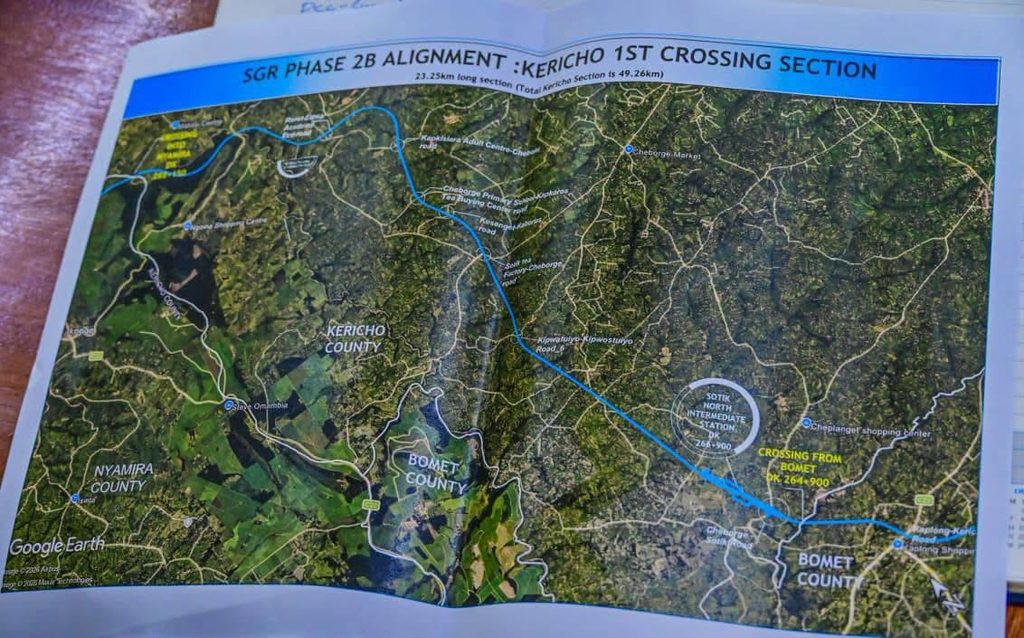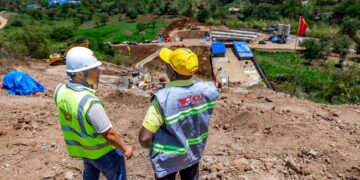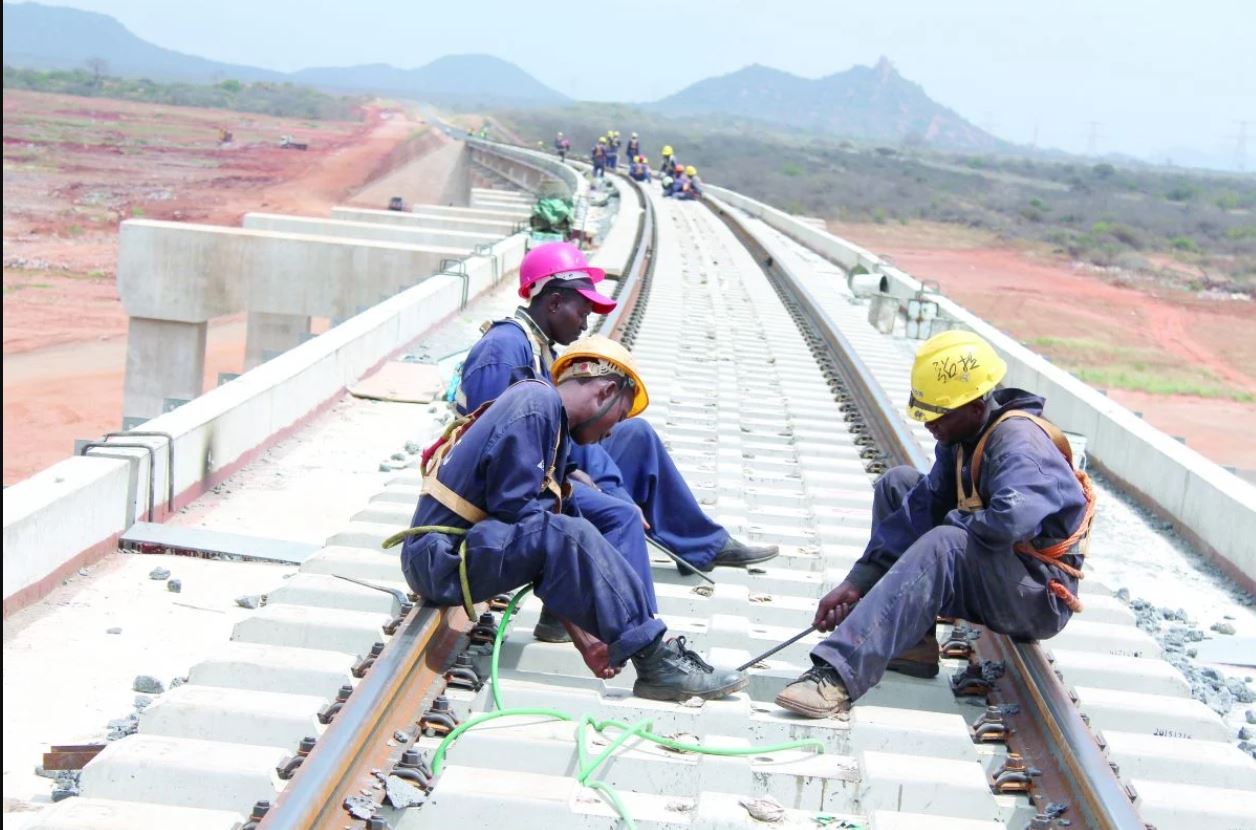
Kenya Railways has intensified preparations for the Standard Gauge Railway expansion in Kericho County, conducting public participation and route validation exercises in Bureti as the multibillion-shilling project moves into a critical phase of implementation. The engagement is giving residents an opportunity to review the proposed railway alignment, raise concerns over land acquisition and compensation, and seek clarity on the location of key railway facilities expected to shape the county’s future transport and economic landscape.
The exercise comes as preparations for the Kericho section of the Naivasha-Kisumu-Malaba SGR corridor advance, with the railway expected to traverse more than 49 kilometres through Bureti, Belgut and Soin Sigowet sub-counties. Kenya Railways has identified Tiriitab-Moita in Bureti Sub-County as the proposed location of the main Kericho station, bringing greater clarity to an issue that has attracted considerable attention from residents and local leaders as consultations over the route continue.
For Kericho, the development represents a potentially significant shift in the county’s connectivity and economic prospects. The railway is expected to provide a modern link for the movement of passengers and cargo, strengthening connections between the county’s productive areas, commercial centres and wider national markets. With Kericho’s economy heavily linked to agriculture and trade, improved rail infrastructure could provide businesses with an additional transport option and help position the county more strongly within Kenya’s emerging logistics network
The public participation exercise is particularly important because the success of major infrastructure projects depends not only on engineering and construction but also on the confidence and cooperation of communities along the corridor. By engaging residents before subsequent stages of implementation, Kenya Railways can provide greater clarity on the proposed alignment, explain the requirements of the railway corridor and allow communities to raise practical concerns affecting their land, property, access and livelihoods. Such engagement can also help identify issues early and reduce the risk of misunderstandings that could complicate implementation later.
Land acquisition and compensation remain central to this process, particularly for residents whose properties may fall within the railway wayleave corridor. Kenya Railways has indicated that the National Lands Commission will oversee valuation and compensation for project-affected persons. The transparency of this process will be critical in building public confidence, with affected residents requiring clear information on valuation, acquisition procedures and the steps involved before land required for the railway is taken over for project purposes.
The proposed station at Tiriitab-Moita also gives the project an important economic dimension for Bureti and the wider county. Railway stations can become focal points for commercial activity when they are supported by roads, markets, industrial facilities and other public infrastructure. Businesses often follow improved connectivity, creating demand for transport services, warehousing, retail outlets, hospitality facilities and other services. The eventual impact of the station will therefore depend not only on its construction but also on how effectively surrounding infrastructure and local development planning are aligned with it.
Kericho is expected to have several railway facilities, including freight stations at Kapsorok in Soliat Ward and Tiriitab-Moita in Cheplanget Ward, a freight cargo facility at Ngoina in Kisiara Ward and a passenger terminal at Tabaita in Kaplelartet Ward. If developed as planned, these facilities could provide the county with a stronger logistics network, making it easier for farmers, traders and businesses to move goods while creating opportunities for new commercial activity around railway-linked centres.
The freight component could be particularly important for an agricultural county. Improved rail connections can provide producers and businesses with more efficient access to domestic and regional markets, while helping reduce dependence on road transport for some long-distance cargo movements. Farmers, processors, wholesalers and exporters could potentially benefit from a more integrated transport system that connects production areas with commercial centres and major trade corridors.
The benefits would extend beyond agriculture. Manufacturers and other businesses could use improved rail connectivity to strengthen supply chains, while traders could gain better access to markets and distribution networks. The development of logistics facilities around railway stations could also attract investment and encourage the emergence of new commercial centres, particularly where county and national authorities coordinate railway development with roads, markets, industrial areas and other essential infrastructure.
The construction phase itself is expected to create opportunities for local participation. The project’s local-content framework provides for the engagement of regional technicians, engineers and general labourers, creating a pathway for communities along the corridor to benefit from economic activity generated during implementation. Beyond construction, a functioning railway network can support longer-term employment and enterprise opportunities in transport, logistics, hospitality, retail, maintenance and other sectors that depend on the movement of people and goods.
The wider importance of the Kericho extension lies in its potential to strengthen Kenya’s national transport network. A modern railway connecting western Kenya to the wider SGR system can improve the movement of goods between productive regions, urban centres and major trade routes, while giving businesses greater choice in how they move cargo. A stronger combination of rail and road transport can also improve logistics efficiency and contribute to a more competitive national economy.
The current stage, however, remains focused on route validation, public participation and other preparatory processes, and the anticipated economic benefits will depend on successful implementation of subsequent phases. Continued coordination between Kenya Railways, the National Lands Commission, national and county authorities, local communities and other stakeholders will therefore remain essential as the project progresses.
For Bureti residents, the ongoing consultations provide an opportunity to seek clarity before the project advances further, while for the Government they offer a chance to strengthen community confidence around one of Kenya’s major infrastructure programmes. Addressing concerns early, communicating clearly on land acquisition and compensation, and ensuring that railway facilities are integrated with surrounding infrastructure can help minimise implementation challenges and establish stronger foundations for delivery.
The public participation and route validation exercise in Bureti thus marks an important milestone in the expansion of modern railway infrastructure into Kericho. With careful planning, transparent engagement and effective coordination, the project has the potential to strengthen connectivity, expand trade opportunities, attract investment and support employment, while contributing to a more integrated transport system and a broader distribution of economic opportunity across Kenya.