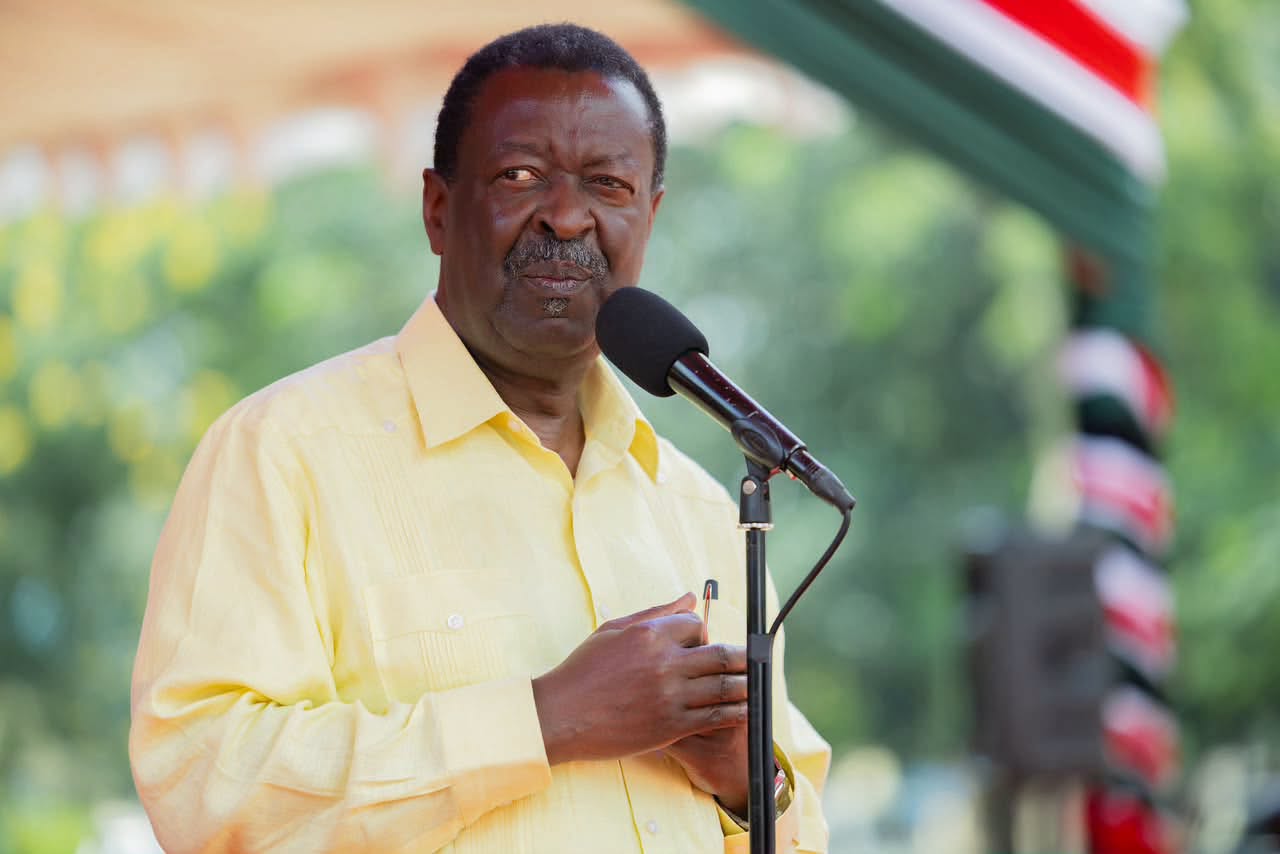
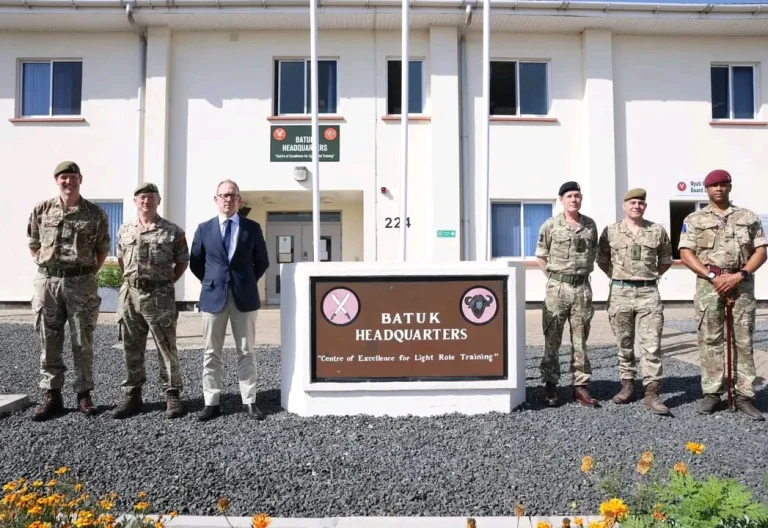
The Government has firmly dismissed claims that the British Army Training Unit Kenya (BATUK) has ceased operations or that Kenya’s long-standing defence partnership with the United Kingdom has come to an end, reaffirming that bilateral military cooperation remains intact. Prime Cabinet Secretary and Cabinet Secretary for Foreign and Diaspora Affairs Musalia Mudavadi clarified that the Kenya-United Kingdom Defence Cooperation Agreement is still undergoing the constitutionally required parliamentary review process, making reports of BATUK’s exit inaccurate and misleading.
Mudavadi emphasized that Kenya and the United Kingdom continue to enjoy a strategic defence relationship built over decades, with cooperation spanning military training, counter-terrorism operations, capacity building, intelligence collaboration, and regional security initiatives. He noted that the partnership has significantly enhanced the professionalism of the Kenya Defence Forces while also contributing to regional peace and stability in the Horn of Africa.
The Government maintained that speculation surrounding BATUK’s future does not reflect the actual status of diplomatic engagements between Nairobi and London. Officials reiterated that Parliament is currently examining the Defence Cooperation Agreement as required by law before any final decisions are reached, underscoring that the ongoing legislative process should not be misconstrued as the termination of the bilateral arrangement.
Beyond security cooperation, the Government highlighted the wider economic and social benefits generated through BATUK’s presence, particularly for communities hosting military training exercises. The partnership has supported local businesses, created employment opportunities, improved infrastructure, and strengthened people-to-people ties between Kenya and the United Kingdom, demonstrating that the relationship extends well beyond defence matters.
The clarification also serves to counter what the Government views as attempts by sections of the political opposition to exploit the issue for political gain. Leaders allied to the opposition, including former impeached Deputy President Rigathi Gachagua, have sought to portray the parliamentary review process as evidence of collapsing relations between Kenya and the United Kingdom. Government officials argue that such assertions are misleading and are intended to create unnecessary public anxiety rather than reflect the facts surrounding the ongoing legislative procedure.
The Government stressed that responsible leadership requires accuracy when addressing sensitive matters touching on national security and international relations. Officials cautioned against politicizing diplomatic engagements, noting that defence partnerships are founded on long-term strategic interests rather than short-term political narratives. They maintained that Kenya’s foreign policy continues to prioritize stable international partnerships that enhance national security and economic development.
Mudavadi further affirmed that any outstanding issues arising from the defence partnership will continue to be addressed through established diplomatic and institutional channels. He expressed confidence that the parliamentary process would be concluded amicably, paving the way for continued implementation of the bilateral defence cooperation framework for the mutual benefit of both Kenya and the United Kingdom.
As Kenya continues to strengthen its position as a regional security anchor, the Government has reaffirmed its commitment to maintaining robust international partnerships that contribute to peace, stability, and national development. The latest clarification underscores that Kenya-UK defence ties remain strong, with both countries expected to continue collaborating on military cooperation, counter-terrorism, regional security, and broader strategic initiatives once the parliamentary review process is completed.