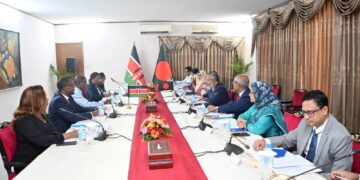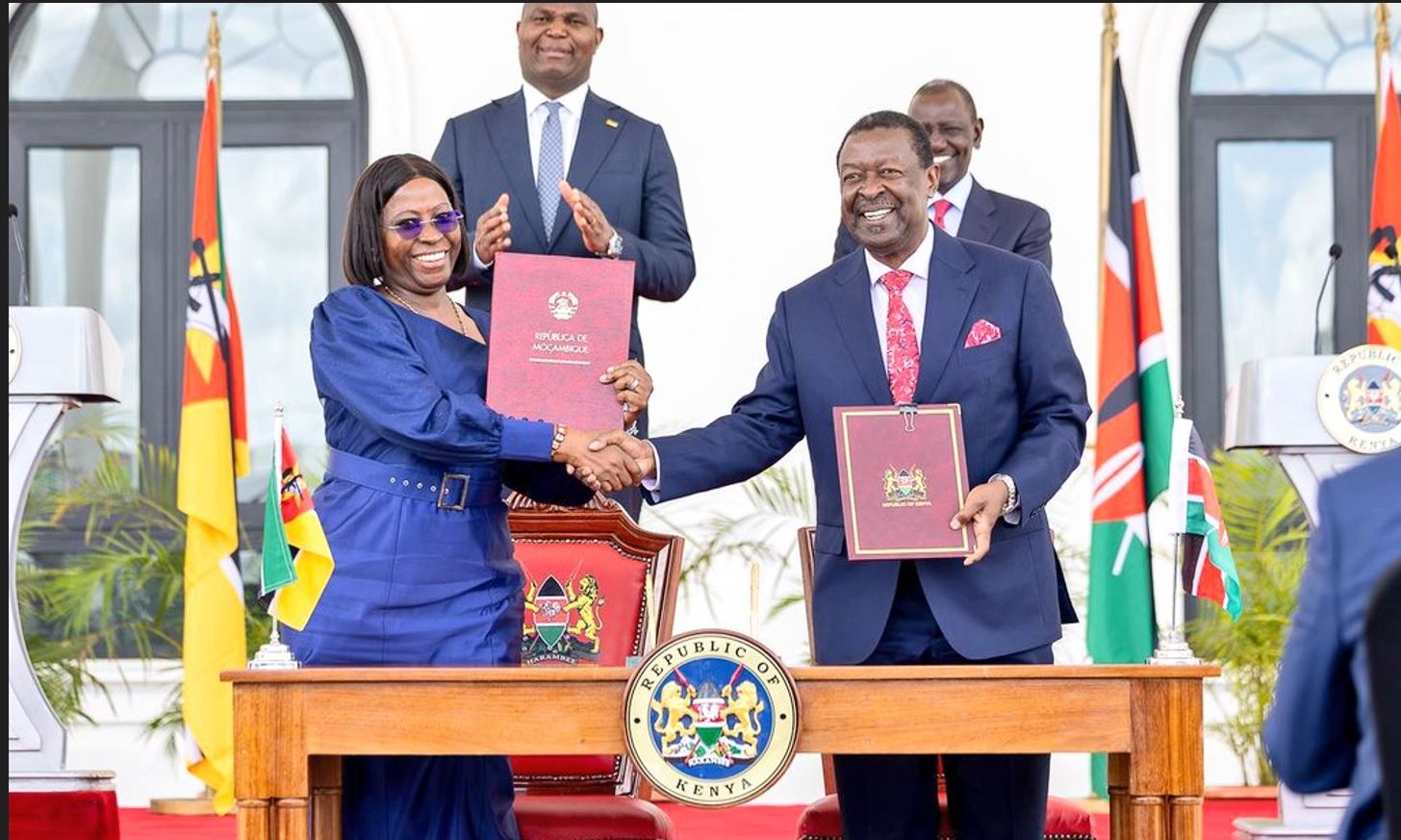
Kenya and Mozambique signed a series of Memoranda of Understanding (MoU) that signal a shift toward deeper economic and strategic cooperation, expanding ties beyond traditional diplomacy into trade, energy, infrastructure, and human capital development. The agreements, witnessed by William Ruto and Daniel Chapo, set the stage for closer alignment of the two countries’ development priorities while positioning Nairobi and Maputo to leverage their geographic and economic strengths within Africa’s evolving trade landscape.
At the core of the agreements lies a deliberate attempt to bridge Eastern and Southern Africa’s economic corridors. Kenya’s role as a logistics and financial hub in East Africa and Mozambique’s strategic position along the Southern African coastline create a natural axis for trade expansion under the African Continental Free Trade Area. This alignment offers Kenyan firms access to Southern African markets while enabling Mozambican exports to penetrate East Africa’s fast-growing consumer base. The outcome is a potential reconfiguration of regional trade flows, with reduced reliance on traditional north-south routes in favor of intra-African connectivity.
The economic implications are particularly significant in energy cooperation. Mozambique’s vast natural gas reserves present a critical opportunity for Kenya, which is seeking reliable and affordable energy sources to sustain industrialization under Vision 2030 and the Big Four Agenda. Structured partnerships in gas development, distribution, and downstream industries could lower production costs in Kenya’s manufacturing sector while attracting foreign direct investment into Mozambique’s energy value chain. This symbiotic relationship strengthens both countries’ positioning as emerging energy and industrial hubs.
Infrastructure and logistics development form another pillar of the MoUs. Enhanced collaboration between port systems such as Mombasa, Lamu, Maputo, Beira, and Nacala has the potential to streamline cargo movement across the Indian Ocean corridor. Improved maritime cooperation, coupled with expanded aviation links, could significantly reduce transit times and logistics costs. These efficiencies are critical for export competitiveness, particularly for time-sensitive goods such as horticulture, processed foods, and manufactured products.
The agreements also signal a renewed emphasis on industrialization through joint ventures and public-private partnerships. By aligning investment priorities across sectors such as manufacturing, agribusiness, and technology, both countries can attract capital into special economic zones and industrial parks. Kenyan firms with expertise in services, ICT, and finance can complement Mozambique’s resource-driven economy, creating integrated value chains that enhance productivity and export diversification.
For small and medium enterprises, the MoUs present a pathway to scale beyond domestic markets. Expanded market access under AfCFTA, combined with targeted capacity-building initiatives, can enable SMEs to participate in cross-border trade and regional supply chains. Agribusinesses stand to benefit from knowledge exchange in areas such as irrigation, crop diversification, and agro-processing, while youth-focused programs in sports, education, and entrepreneurship create channels for skills transfer and innovation.
The inclusion of diplomatic training, research collaboration, and youth development underscores a socio-political dimension that extends beyond immediate economic gains. These initiatives build institutional capacity and foster people-to-people linkages, which are essential for sustaining long-term bilateral cooperation. Exchange programs and scholarships contribute to the development of a skilled workforce capable of driving industrial and technological transformation in both economies.
Security cooperation, particularly in counter-terrorism and intelligence sharing, reinforces the economic agenda by addressing one of the primary risks to investment in the region. Stability in northern Mozambique and the broader East African corridor is critical for safeguarding infrastructure projects and ensuring uninterrupted trade flows. By integrating security into the broader cooperation framework, both countries are effectively de-risking their economic partnership.
Regionally, the agreements enhance Kenya’s strategic outreach beyond the East African Community while strengthening Mozambique’s engagement with Eastern markets. This cross-bloc collaboration complements frameworks such as the Southern African Development Community and COMESA, creating a more interconnected and resilient regional economy. It also positions both countries as key intermediaries in continental trade negotiations and investment flows.
The long-term implications extend to global positioning. As Africa seeks to attract greater shares of global capital, integrated bilateral partnerships such as this provide a blueprint for scaling investment-ready projects across borders. The Kenya-Mozambique axis could emerge as a competitive destination for multinational firms seeking access to diversified markets, natural resources, and improving infrastructure.
Ultimately, the MoUs reflect a pragmatic recalibration of foreign policy toward economic outcomes. If effectively implemented, they could accelerate industrial growth, expand export capacity, and generate employment across multiple sectors. More importantly, they signal a maturing phase in African diplomacy where strategic partnerships are increasingly defined by their ability to deliver tangible economic transformation and regional competitiveness.
President William Ruto has challenged African nations to take charge of financing their own development by mobilising domestic resources, strengthening continental financial institutions and reducing dependence on external...
Read moreDetails