Kenya is strengthening cooperation with the World Bank and the United Nations Office for Project Services in a renewed effort to expand irrigation and strengthen national food security. The discussions signal a broader push by the government of William Ruto to reduce the country’s reliance on rain-fed agriculture and build a more stable farming sector that can withstand the growing pressures of climate change.
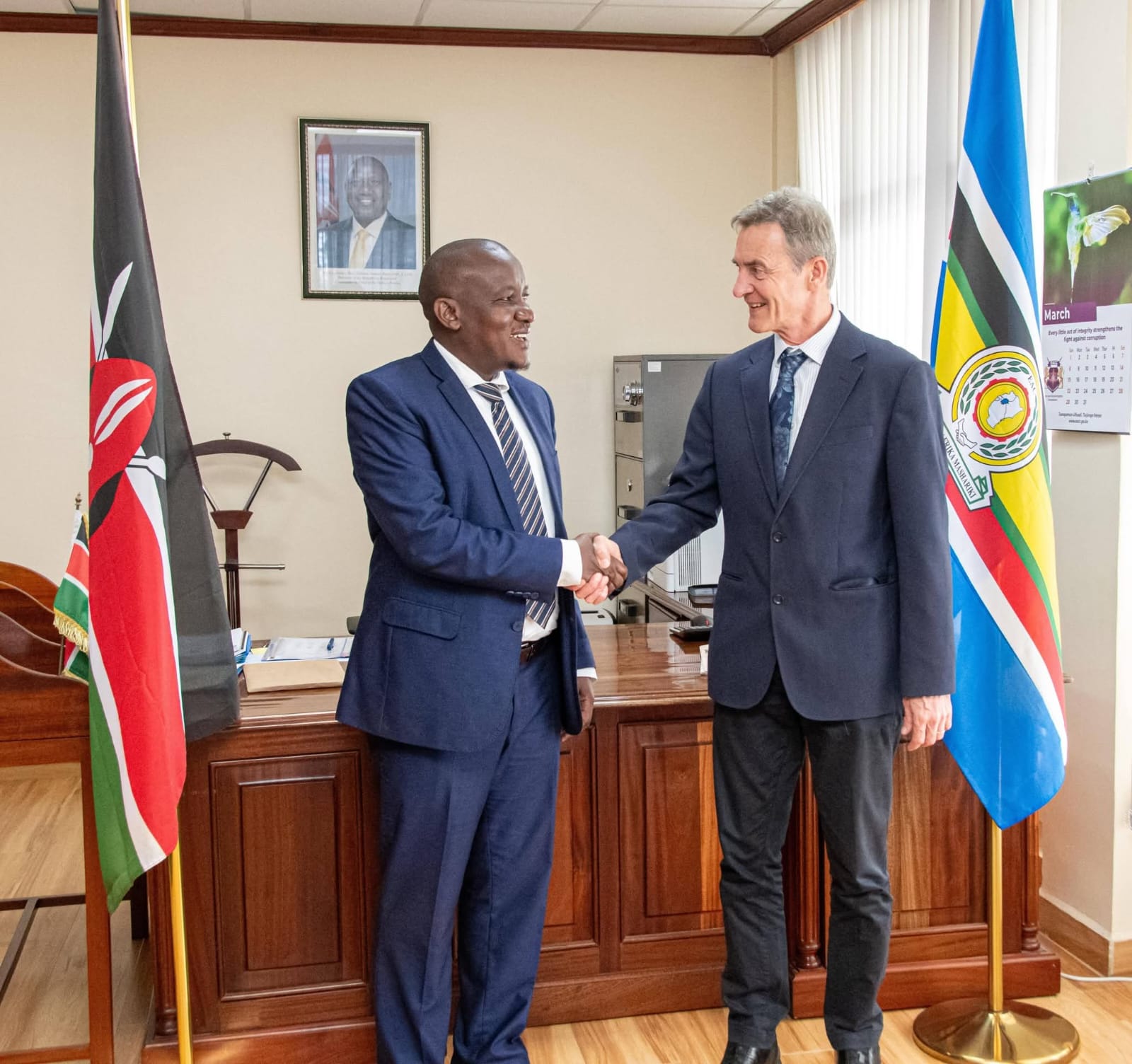
The engagements, led by Irrigation Principal Secretary Ephantus Kimotho, focused on accelerating irrigation projects across the country while improving how existing schemes are managed. Officials reviewed ongoing collaboration with the World Bank under the National Irrigation Sector Investment Plan, a framework designed to guide long-term investment in irrigation systems and agricultural water management.
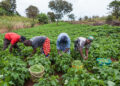
Kenya has long depended on rainfall to sustain its farming sector, yet changing weather patterns have made harvests increasingly unpredictable. With large parts of the country classified as arid or semi-arid land, irrigation is now viewed as essential for maintaining consistent food production. Expanding irrigation networks allows farmers to grow crops throughout the year, helping to stabilize food supply and reduce the risks associated with prolonged droughts.
Government officials say improving irrigation infrastructure could significantly increase productivity for both smallholder and commercial farmers. Reliable water access makes it possible to plant more frequently, diversify crops, and reduce losses during dry periods. These changes are expected to support rural livelihoods while also strengthening the country’s broader food system.
The talks with the World Bank also examined the proposed Kenya Resilient Irrigation for Sustainable Economy programme, which is designed to encourage farmer-led irrigation while improving the efficiency of existing schemes. The programme aims to introduce better water management techniques, support irrigation technology, and strengthen agricultural value chains so that farmers can increase production while using water more efficiently.
Beyond improving farm productivity, the irrigation drive is expected to stimulate growth in related sectors such as storage, processing, transport, and agricultural services. As more land comes under irrigation, agribusiness opportunities are likely to expand, creating employment in rural areas and increasing the flow of produce to local and export markets.
Separate discussions with UNOPS focused on strengthening the technical and institutional side of large water infrastructure projects. The agency is expected to support the government in areas such as project planning, procurement systems, and implementation oversight. These functions are considered essential for delivering complex irrigation projects on time and within budget.
The cooperation with UNOPS is also linked to the government’s 50 Mega Dams initiative, a plan aimed at expanding national water storage capacity while unlocking irrigation potential in dry regions. Several dam projects are expected to move forward in 2026, including developments in counties such as Turkana, Baringo, Embu, Isiolo, Kitui, Tharaka Nithi, Tana River, and Kilifi.
If completed as planned, these dams could open up vast areas of land for irrigated agriculture, allowing farmers to grow crops in regions that have historically struggled with water shortages. The expansion would mark a major shift in how Kenya manages its agricultural resources and could significantly boost national food production.
Officials say the long-term goal is to place at least 1.5 million acres of land under irrigation, a move that could transform farming in many parts of the country. Achieving this target will require a combination of government investment, development partner support, and participation from private investors interested in commercial agriculture.
As Kenya works toward these goals, the partnerships with the World Bank and UNOPS are expected to provide both financial and technical support to ensure projects are delivered effectively. For many farming communities, the success of these initiatives could mean more reliable harvests, improved incomes, and greater protection against the climate shocks that have increasingly shaped agriculture across the region.
President William Ruto personally inspected the ongoing rehabilitation of Itembe Airstrip in Bomet County, a powerful demonstration of the Government's unwavering commitment to reviving neglected infrastructure and unlocking...
Read moreDetails