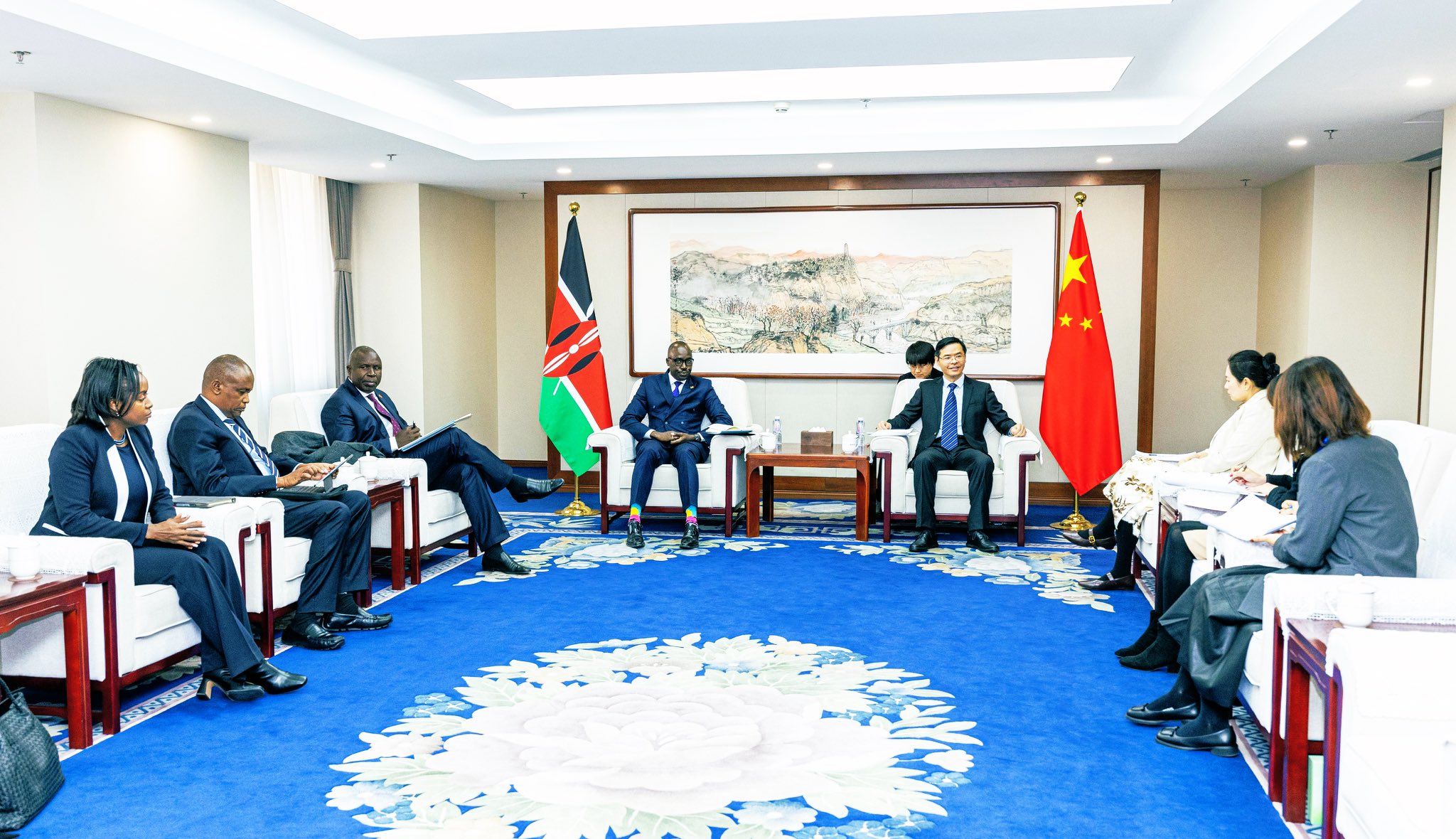
Kenya has taken a deliberate step to redefine how it finances large-scale infrastructure by opening high-level talks with China focused on innovative, risk-aware development funding. The engagement signals a strategic shift away from debt-heavy models toward structured financing arrangements designed to accelerate delivery while safeguarding long-term fiscal stability.
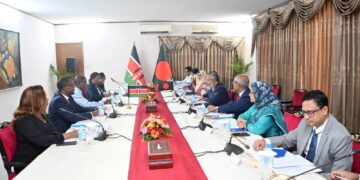
Foreign Affairs Principal Secretary Korir Sing’oei led discussions in Beijing with senior officials from the China Africa Development Fund, China Development Bank, the Export-Import Bank of China, and the Bank of China. The meetings brought together development financiers with deep experience in infrastructure investment, export credit, and blended finance, positioning Kenya to access capital that goes beyond traditional sovereign borrowing.
At the core of the talks was a shared interest in financing mechanisms that support flagship projects while aligning with Kenya’s Bottom-Up Economic Transformation Agenda. This approach places infrastructure at the center of productivity growth, trade expansion, and job creation, while ensuring that public investment directly improves everyday economic outcomes for citizens.
China’s potential role extends beyond capital provision. Its institutions bring project structuring expertise, phased financing models, and public-private collaboration frameworks that can shorten delivery timelines and reduce execution risks. For Kenya, this opens the door to infrastructure that is built faster, operated more efficiently, and better integrated into regional and global trade networks.
Improved transport corridors, modern logistics systems, smart urban mobility, and reliable energy and digital infrastructure are critical to Kenya’s ambition to evolve into a globally competitive, high-income economy. Strategic investment in these areas strengthens connectivity between production zones, ports, cities, and regional markets, lowering the cost of doing business and boosting export competitiveness.
The discussions also reflected a more cautious approach to debt exposure. With public debt having risen sharply over the past decade, the government is increasingly focused on financing structures that combine concessional funding, equity participation, and revenue-linked repayment models. Phased financing allows projects to generate economic returns before full capital exposure is realized, reducing pressure on public finances.
Risk management featured prominently, with emphasis on project viability, demand forecasting, and operational sustainability. This marks a departure from earlier infrastructure cycles where financing often preceded robust risk assessment. By embedding sustainability and performance benchmarks into financing agreements, Kenya aims to ensure that new infrastructure remains economically productive long after construction ends.
Engagements with the China International Development Cooperation Agency further reinforced alignment with the Forum on China-Africa Cooperation priorities, particularly in skills development, smart transport systems, and technology-driven service delivery. These complementary investments support the human capital and institutional capacity needed to maximize infrastructure returns.
For President William Ruto’s administration, the China talks reflect a broader recalibration of development strategy. The emphasis is shifting toward partnerships that deliver measurable economic value, strengthen domestic revenue generation, and crowd in private investment rather than relying solely on public borrowing.
If executed with discipline, the emerging financing framework could move Kenya closer to a Singapore-level economic model defined by efficient infrastructure, seamless trade facilitation, and strong public-private coordination. The Beijing engagement underscores Kenya’s intent to modernize its economy through global partnerships that prioritize sustainability, innovation, and citizen-centered growth.
Deputy President Kithure Kindiki has reaffirmed his unwavering commitment to supporting President William Ruto in delivering transformative development projects across the country, as he embarked on an extensive...
Read moreDetails