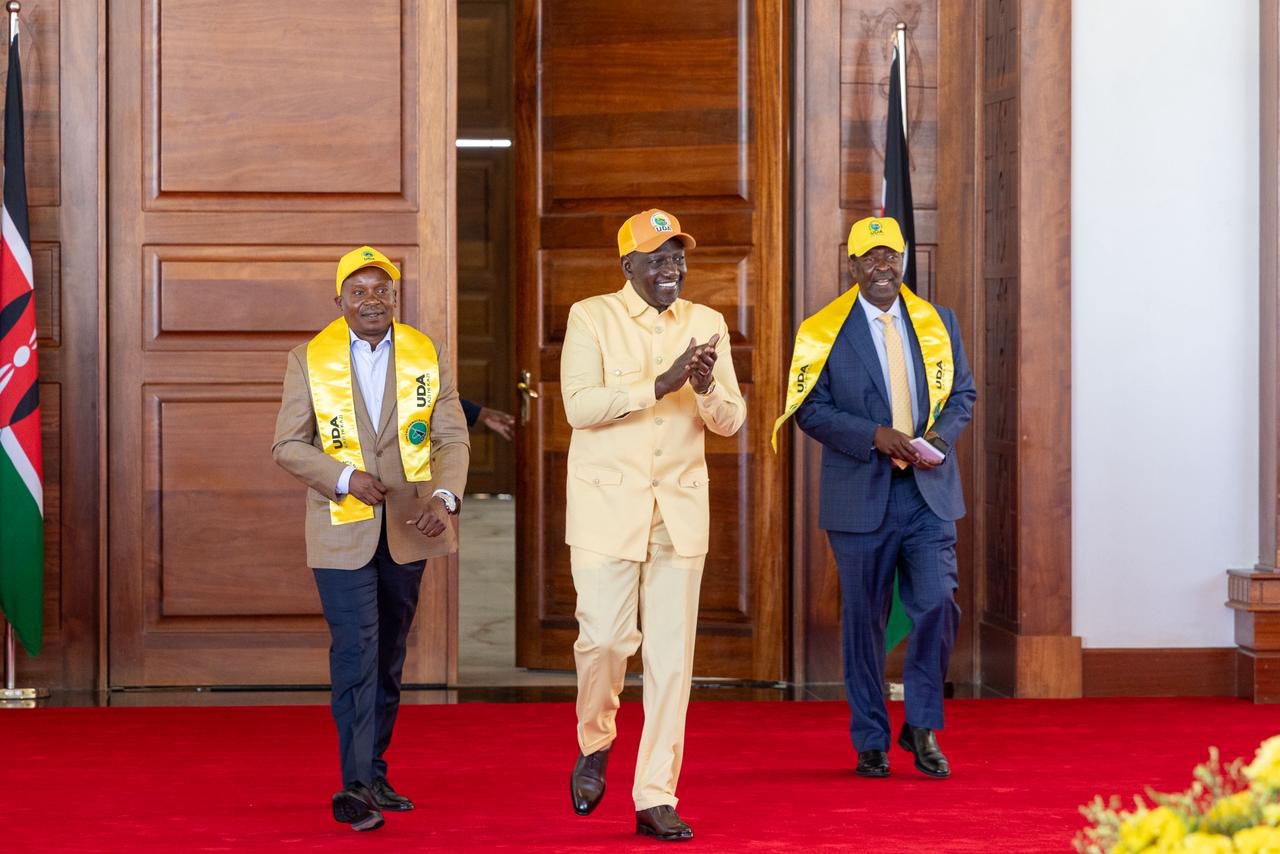
Since assuming office in 2022, President William Ruto, with the support of Deputy President Prof. Kithure Kindiki, has steered the Kenya Kwanza administration through a deliberate reform agenda anchored on the Bottom-Up Economic Transformation Agenda (BETA). The strategy prioritised stabilising the economy as a foundation for inclusive growth, reversing macroeconomic distress and restoring confidence. As a result, Kenya’s economy is now growing at 5 percent—above the global average—while inflation has dropped sharply from 9.6 percent to 4.5 percent, the shilling has strengthened, credit access restored and foreign exchange reserves risen beyond KSh1 trillion.
Economic stabilisation has created room for productivity-driven growth, with agriculture emerging as a central pillar of transformation. Over 7.1 million farmers have been registered on a government digital platform, enhancing access to subsidised inputs, extension services and markets. Affordable fertiliser interventions have reduced production costs and driven maize output from 44 million to over 75 million bags, while sugarcane, tea and milk production have surged, significantly improving farmer incomes and revitalising rural economies.
To address climate vulnerability, the administration has expanded irrigation through rehabilitated schemes, lined canals, water storage systems and solar-powered technologies. These investments have reduced dependence on rain-fed agriculture, enabling year-round food production, stabilising prices and ensuring consistent food availability. The result has been improved yields, higher incomes and greater resilience against climate shocks.
The livestock sector has also recorded strong gains through value-chain development, animal health programmes and expanded export markets. Dairy processing volumes have grown by over 20 percent, dairy exports by 92 percent and meat exports by 45 percent. Pastoral households have benefited from insurance payouts, restocking programmes and improved fodder systems, while expanded veterinary services and youth training have strengthened sustainability and livelihoods.
Healthcare reform stands out as a major social milestone under Kenya Kwanza. The transition from NHIF to the Social Health Authority (SHA) has expanded coverage to more than 28.5 million Kenyans, with 8.82 million households already enrolled. The government pays SHA contributions for 500,000 vulnerable families, while over 16,500 health facilities have been contracted, widening access to primary, emergency and chronic care services.
Social protection programmes have further strengthened household resilience. Through Inua Jamii, over 1.2 million elderly persons and persons with disabilities receive support, while cash transfers to orphans and vulnerable children have improved food security, healthcare access and school attendance. The sanitary towel programme now reaches 92 million girls, contributing to reduced absenteeism and improved dignity for school-going children.
The Affordable Housing Programme has emerged as both a social and economic driver. The government has completed 4,888 housing units and launched 17,686 more across 44 counties, creating jobs and stimulating local manufacturing. Over 262,000 youths have been engaged in construction-related work, while student villages and housing projects continue to energise local economies and expand home ownership for low-income Kenyans.
Support for MSMEs and financial inclusion has been scaled up through the Hustler Fund and digital economy initiatives. More than 26.6 million Kenyans have accessed affordable credit, with 7 million progressing to higher credit tiers and over 9 million repeat borrowers. These interventions have expanded entrepreneurship, boosted financial literacy and strengthened the Jua Kali and MSME sectors as engines of grassroots growth.
Job creation and digital transformation remain core to the administration’s youth agenda. Programmes such as NYOTA and KJET target one million jobs, while over 530,000 Kenyans have secured employment abroad and 300,000 digital jobs have been created through Jitume Labs. More than 23,000 government services have been digitised on the e-Citizen platform, with 14 million users benefiting from improved efficiency, transparency and access.
Overall, the Kenya Kwanza administration’s scorecard reflects a coordinated, results-driven approach to governance under President Ruto and Deputy President Kindiki. Through economic stabilisation, food security, social protection, job creation, digital inclusion, infrastructure expansion and security reforms, BETA has set Kenya on a path toward lower living costs, shared prosperity and long-term resilience—affirming a bottom-up transformation where growth begins with the citizen and rises to the nation.