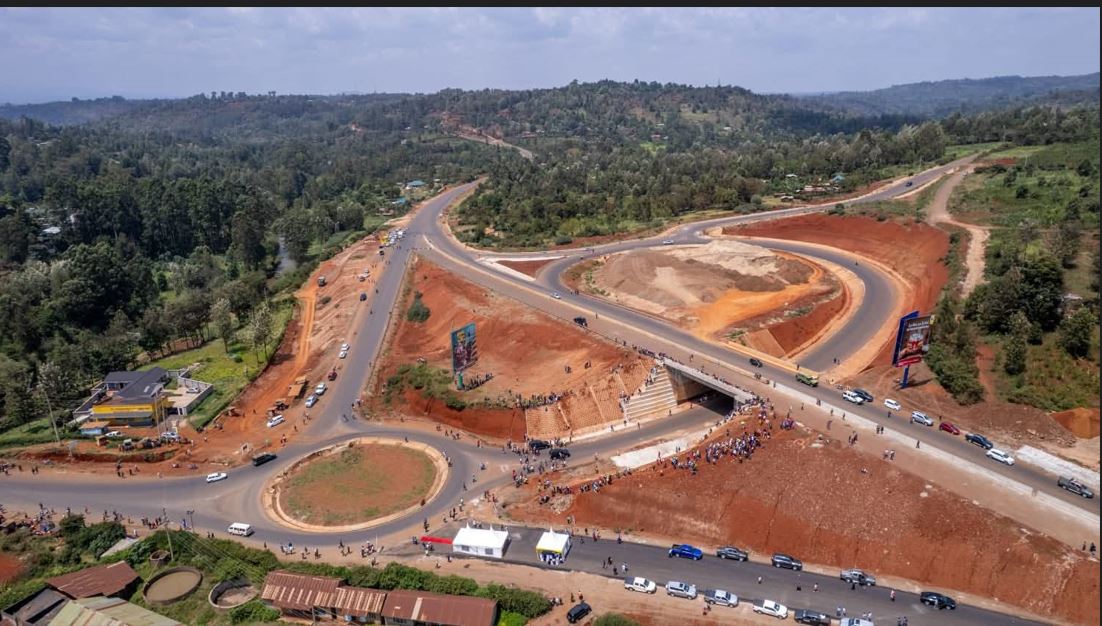
The Kenol-Sagana-Marua dual carriageway, now 93 percent complete, stands as a clear marker of Kenya’s renewed focus on infrastructure as a catalyst for economic transformation. President William Ruto’s inspection of the 84-kilometre project underscores a deliberate policy choice to prioritize transport corridors that unlock productivity, reduce regional inequality and strengthen national competitiveness.
As part of the Great North Road corridor and the wider Trans-Africa Highway network, the upgraded road is not merely a transport improvement but a strategic economic asset. By easing movement between Nairobi, Central and Eastern Kenya, and onward to the Ethiopian border through Moyale, the corridor reinforces Kenya’s role as a regional logistics and trade hub. Faster and more predictable travel times are expected to lower the cost of doing business for manufacturers, traders and farmers who rely on timely access to markets.
Operationally, the shift from a single carriageway to a modern dual highway addresses long-standing bottlenecks caused by congestion and high accident rates. Grade-separated junctions, improved pedestrian crossings and dedicated motorcycle infrastructure significantly enhance road safety along one of the country’s busiest routes. For commuters and freight operators, reduced delays translate into fuel savings, improved fleet efficiency and more reliable supply chains.
The economic implications extend well beyond transport. Central Kenya’s agricultural heartland depends on efficient road networks to move tea, coffee, dairy products and fresh produce to processing centres and export points. The upgraded highway strengthens these value chains while supporting emerging industrial nodes along the corridor. Improved access also encourages private investment in logistics parks, agro-processing facilities and roadside commercial developments.
Social infrastructure embedded within the project reflects a more citizen-centred approach to road development. Facilities such as the Sagana trauma centre, organized roadside markets, sanitation blocks and local access roads demonstrate how large-scale infrastructure can be designed to deliver direct community benefits. These interventions support livelihoods, improve public health outcomes and integrate local economies into national growth corridors.
The project’s alignment with the Bottom-Up Economic Transformation Agenda is evident in its emphasis on lowering transport costs for small producers, traders and transport operators. By connecting rural and peri-urban communities more efficiently to urban markets, the road supports inclusive growth rather than concentrating benefits in already developed centres. It also advances Vision 2030 objectives by modernizing core state infrastructure and improving regional connectivity.
Delivery progress reflects the importance of phased execution and structured project management. Clear sequencing of works, coordination with financiers and consistent oversight by KeNHA have helped keep the project on track despite its scale and complexity. Co-financing from the African Development Bank Group, the Africa Growing Together Fund and the Government of Kenya highlights the role of public-private and multilateral partnerships in closing Kenya’s infrastructure gap.
Environmental and resilience considerations have been integrated into the highway’s design and construction. Engineering standards account for varied weather conditions, drainage requirements and long-term durability. Tree planting initiatives and controlled roadside development aim to mitigate environmental impact while protecting the corridor’s lifespan. Technology-enabled traffic management and routine maintenance planning will be critical to preserving operational efficiency once the road is fully opened.
The planned expansion of the dual carriageway beyond Marua to Nyeri Town and Chaka further signals a long-term view that prioritizes continuity and network effects over isolated projects. Such extensions would deepen the economic impact by linking more communities and production zones to high-capacity transport infrastructure.
As the Kenol-Sagana-Marua dual carriageway enters its final phase, it offers a practical example of infrastructure-led development done with intent. The project demonstrates how targeted investment, disciplined execution and partnership-driven financing can translate policy into tangible gains for citizens, businesses and the wider economy. In doing so, it reinforces Kenya’s commitment to growth anchored in connectivity, resilience and shared prosperity.
Deputy President Kithure Kindiki has reaffirmed his unwavering commitment to supporting President William Ruto in delivering transformative development projects across the country, as he embarked on an extensive...
Read moreDetails