The Kenyan government’s early livestock support in Marsabit County marks a deliberate policy shift from emergency reaction to anticipatory economic protection in arid and semi-arid lands. As climate forecasts point to an impending dry spell, the coordinated rollout of fodder distribution, water provision, veterinary services, and emergency financing reflects a clear recognition that drought is not merely a humanitarian risk but a macroeconomic threat to rural livelihoods, food security, and national stability.
Marsabit’s pastoral economy sits at the frontline of climate stress. Livestock assets form the backbone of household incomes, nutrition, and local trade. When drought strikes without preparation, the result is predictable and costly: livestock mortality rises, household purchasing power collapses, malnutrition accelerates, and public spending is diverted into late-stage relief. Early intervention changes that equation by protecting productive assets before losses occur.
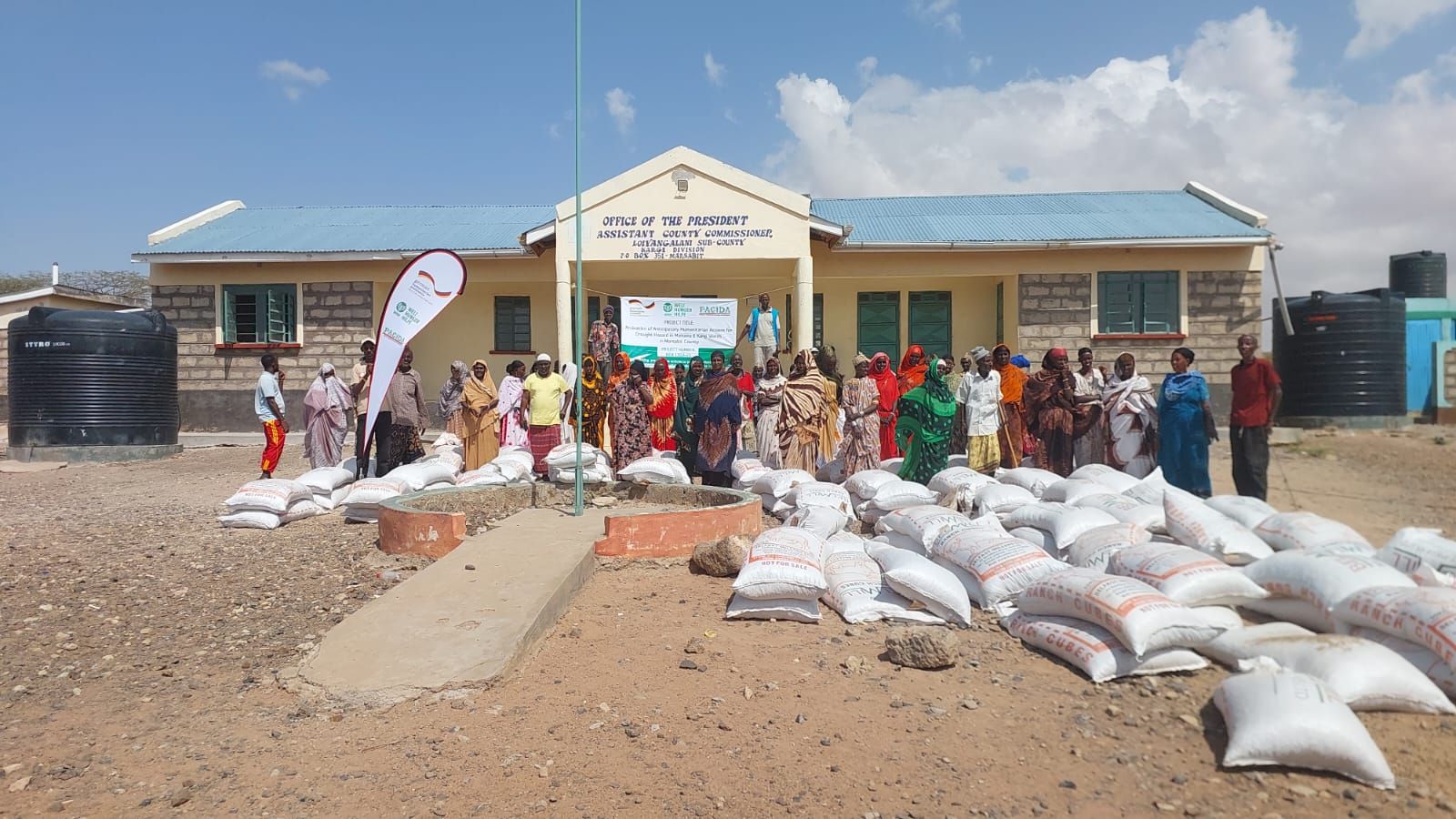
The ongoing anticipatory livestock support targeting vulnerable communities in Maikona and Kargi wards illustrates how prevention delivers higher economic returns than crisis response. By providing high-protein feeds, water access, and animal health services ahead of deteriorating rangeland conditions, the program stabilizes livestock body condition, sustains milk production, and preserves herd value. This directly supports household cash flow and food availability during a period when market prices typically spike and incomes fall.
Crucially, the intervention prioritizes households with lactating animals and those facing heightened nutrition risks, including female-headed families and marginalized groups. This targeting is not only socially sound but economically rational. Protecting productive female animals sustains milk supply for children and local markets, while preventing distress livestock sales that permanently erode household wealth.
From a policy standpoint, Marsabit’s early action aligns squarely with President William Ruto’s national strategy on drought resilience, food security, and sustainable development in ASAL counties. The administration has consistently emphasized resilience building, climate-smart investment, and protection of productive sectors rather than dependence on emergency relief. Livestock support ahead of drought operationalizes this agenda on the ground.
The broader economic implications are significant. Early livestock protection dampens volatility in pastoral incomes, stabilizes local consumption, and reduces pressure on national safety nets. It also limits rural to urban distress migration, which often strains urban services and labor markets during prolonged drought cycles. In this sense, anticipatory action functions as a stabilizer for both rural and national economies.
Public-private and community-level partnerships underpin the effectiveness of the Marsabit intervention. Collaboration between government, development partners, and local institutions ensures rapid delivery, credible targeting, and community buy-in. These partnerships also lay the groundwork for longer-term investments in livestock value chains, including veterinary services, feed markets, water infrastructure, and access to livestock trading hubs.
Climate-smart infrastructure and early warning systems are central to scaling this approach. Timely climate data allows government and partners to act before rangelands collapse and water sources dry up. Coupled with contingency financing and county-level preparedness plans, early warning transforms drought from an unpredictable disaster into a manageable economic risk.
The case for sustained investment in ASAL counties is compelling. Strengthening veterinary services improves herd productivity and disease control. Expanding water infrastructure reduces seasonal livestock losses and conflict over resources. Improving market access allows pastoralists to sell animals at fair value before conditions deteriorate, rather than during market gluts when prices crash. Together, these measures stimulate local economies and attract private sector participation in feed production, transport, meat processing, and export-oriented livestock products.
At the national level, resilient pastoral systems reinforce Kenya’s food security agenda by stabilizing meat and milk supply while reducing the fiscal burden of repeated humanitarian interventions. They also support Vision 2030 objectives on inclusive growth, poverty reduction, and sustainable livelihoods in historically marginalized regions.
Marsabit’s early livestock support should therefore be viewed not as a stand-alone project, but as a benchmark for policy effectiveness in Kenya’s drylands. It demonstrates that with foresight, fiscal planning, and coordinated action, drought need not translate into economic collapse. For ASAL counties, early intervention is no longer optional. It is the most cost-effective path to resilience, stability, and long-term development.
Deputy President Kithure Kindiki has reaffirmed his unwavering commitment to supporting President William Ruto in delivering transformative development projects across the country, as he embarked on an extensive...
Read moreDetails