The future of international security support in Haiti dominated discussions at the United Nations General Assembly this week, with Kenya and the United States leading a renewed push to reinforce efforts against armed gangs that continue to destabilize Port-au-Prince. With the current Multinational Security Support (MSS) mission approaching the end of its mandate, world leaders signaled that the next phase must be larger, better resourced, and anchored in stronger international cooperation.
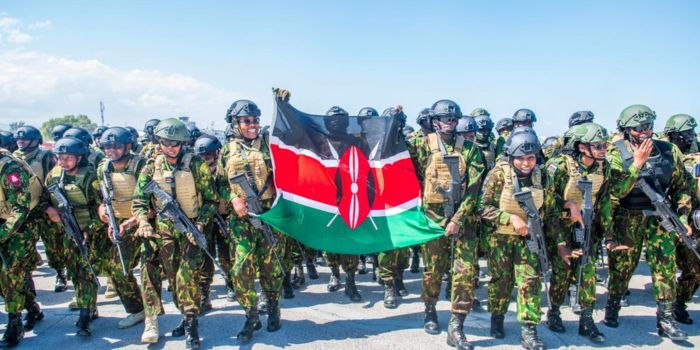
The Kenyan-led MSS mission has been on the ground for fifteen months, operating under difficult circumstances but recording notable progress. Despite staffing at less than 40 percent of the intended 2,500 personnel, the mission has reclaimed territory once held by gangs, reopened schools, secured vital infrastructure, and supported the Haitian National Police in reestablishing control in key districts. Kenyan President William Ruto praised these achievements as transformative, pointing to the reopening of ports and airports, the graduation of new police recruits, and a sharp decline in kidnappings and extortion.
President Ruto, however, was equally clear about the shortcomings. He acknowledged that while the United States provided logistical support, many of the vehicles were unreliable and broke down in dangerous conditions, exposing personnel to unnecessary risks. He insisted that future operations must be backed by predictable resources and a clear mandate, warning that guesswork and piecemeal assistance cannot guarantee success in a country where gangs continue to adapt with guerrilla-style tactics.
The United States is now advocating for the MSS to transition into a larger Gang Suppression Force supported by a new UN field office. The proposed force would include up to 5,500 officers drawn from contributing nations, with a leadership framework that brings together key troop contributors along with Washington and Ottawa. U.S. Deputy Secretary of State Christopher Landau framed the situation starkly, describing Haiti as standing at a crossroads and emphasizing that the MSS lacks the mandate and resources to meet the scale of the challenge.
For Haitian authorities, the priority is equally urgent. Laurent Saint-Cyr, president of the Transitional Presidential Council, reiterated that security remains the single greatest obstacle to completing a political transition through free and fair elections. He welcomed the proposal for a new international force, stressing that without security, Haiti cannot move toward sustainable governance. His remarks echoed the wider sentiment that international assistance is vital, but that Haitian leadership must remain central to the path forward.
Kenya’s role in Haiti has stood out as a demonstration of solidarity and responsibility. When other nations hesitated, Nairobi stepped up, drawing on decades of peace support operations to lead the MSS in one of the world’s most volatile environments. Ruto framed this decision as part of Kenya’s long-standing commitment to global peace and security, underlining that his country was responding to a direct request from Haitian authorities and acting within the framework of international cooperation. For Kenya, the mission is not only about Haiti but also about affirming Africa’s voice and leadership in shaping global security responses.
The challenges have been considerable. Plans to establish twelve new forward operating bases were delayed due to logistical constraints, allowing gangs to reclaim some areas. Troop deployment from partner nations has been slower than anticipated, leaving the MSS short of critical manpower. Yet, the Kenyan-led mission has disrupted gang dominance, forcing them to retreat into hiding and adapt to less conventional tactics. This, in itself, has altered the balance on the ground and given Haitians a glimpse of what is possible when international solidarity translates into action.
The push for a new UN-backed mission is therefore timely. It reflects recognition of Kenya’s achievements and acknowledges that sustaining momentum requires a broader coalition. The Organization of American States has already expressed support for an expanded mandate, and China has signaled openness to constructive solutions while emphasizing Haitian responsibility. The United Nations Security Council is expected to vote soon on the proposed transition, a decision that will determine whether Haiti’s fragile gains are consolidated or lost.
For the Haitian people, the prospect of a scaled-up mission offers renewed hope that gang violence can be contained, humanitarian assistance delivered, and elections held in a more secure environment. For Kenya, it affirms the credibility it has built as a leader in international peacekeeping and highlights the significance of African nations taking leadership roles in addressing crises beyond their borders. For the wider international community, it is an opportunity to demonstrate that coordinated action can succeed even in the face of entrenched instability.
The message from New York is one of cautious optimism. The MSS has shown that international cooperation can shift dynamics in Haiti, but it also revealed the cost of underinvestment and slow deployment. With stronger backing, the next phase could secure the country’s fragile recovery and set the stage for political renewal. If the Security Council acts decisively, Haiti could turn the corner on one of the hemisphere’s most difficult crises, and Kenya’s leadership will stand as a key turning point in that journey.
President William Ruto has unveiled a new package of economic measures aimed at easing the cost of living, increasing household incomes, creating employment and accelerating Kenya’s economic transformation,...
Read moreDetails