The County Government of Kisumu has secured Sh97.5 million in funding from the African Development Bank to support the redevelopment of its lakefront. The grant, which will finance a detailed feasibility study, marks a critical step in Kisumu’s ongoing transformation into a climate-resilient, investment-ready, and tourism-driven urban center along Lake Victoria.
The funding, provided through the African Development Bank’s Urban and Municipal Development Fund, will allow Kisumu to conduct comprehensive technical, financial, and environmental assessments for key lakefront development projects. These projects aim to reorient the city physically and economically toward the lake, tapping into its long-overlooked potential as a driver of economic growth, social inclusion, and environmental resilience.
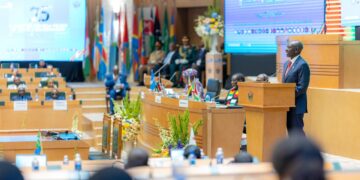
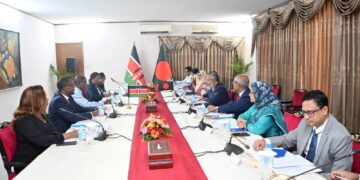
Governor Prof. Anyang’ Nyong’o welcomed the AfDB delegation in Kisumu and hailed the grant as a strategic milestone for the county. He noted that the feasibility study will not only evaluate project viability but will also create a pipeline of initiatives that align with Kisumu’s broader development agenda and climate adaptation goals.
The grant comes at a time when Kisumu has already completed city profiling and project prioritization. The next phase will see the county move into feasibility assessments that are essential for attracting large-scale infrastructure investment. These projects are being anchored within the county’s Local Physical and Land Use Development Plan and the County Integrated Development Plan, while also aligning with Kenya’s national public finance systems. This integration enhances the transparency and credibility of Kisumu’s urban transformation efforts, increasing investor confidence.
According to Governor Nyong’o, the feasibility report is expected to unlock additional financing from multilateral development institutions and private sector partners. It positions Kisumu as a flagship model for how mid-sized African cities can pursue inclusive, climate-smart urban renewal with tangible economic and social impact.
The African Development Bank’s delegation was led by Senior Urban Development Officer Babati Mokgethi, who reaffirmed the institution’s commitment to supporting secondary cities like Kisumu. Mokgethi noted that the feasibility study will ensure the proposed projects meet global standards of technical feasibility, environmental sustainability, and financial viability. He emphasized that strong urban planning and project preparation are essential for unlocking sustained investment and building resilience in fast-growing urban areas.
The Kisumu Lakefront Development Corporation, a county agency tasked with implementing the lakefront strategy, is spearheading several transformative initiatives. These include the development of a 46-kilometer public promenade, green recreational parks, public beaches, and an aquapark. The goal is to increase public access to the lakefront and establish Kisumu as a vibrant destination for tourism, recreation, and business.
Additionally, the lakefront vision includes investment in maritime infrastructure such as a marina, waterbus terminal, and facilities for the local fish processing and boat-building industries. These developments are expected to stimulate Kisumu’s blue economy and support the growth of new value chains tied to the lake’s natural resources.
The short-term impact of the feasibility study will be to generate employment opportunities for local professionals involved in urban planning, engineering, and environmental science. In the longer term, the lakefront transformation is expected to trigger job creation across tourism, trade, transport, and light manufacturing sectors. It will also elevate Kisumu’s status as a strategic economic hub in the Lake Region Economic Bloc and a gateway to East African inland water trade.
Beyond economic benefits, the project will contribute to environmental protection and public health by integrating nature-based solutions, flood control infrastructure, and sustainable waste management practices into its design. The vision is not just to build infrastructure but to create an inclusive, accessible urban environment that improves the quality of life for residents while also attracting investment.
Nationally, the Kisumu Lakefront Project supports Kenya’s Vision 2030 and the government’s broader push to spur development in secondary cities. It demonstrates how well-coordinated county planning and strategic international partnerships can deliver meaningful progress in infrastructure, job creation, and environmental stewardship.
As work begins on the feasibility study, Kisumu is entering a decisive phase of its development journey. The Sh97.5 million grant from the African Development Bank is not only a show of confidence in the county’s vision but a foundational investment that could open the door to billions more in future infrastructure funding. If successfully implemented, the lakefront redevelopment will serve as a blueprint for cities across Africa looking to grow sustainably while adapting to the climate realities of the 21st century.
Deputy President Kithure Kindiki has reaffirmed his unwavering commitment to supporting President William Ruto in delivering transformative development projects across the country, as he embarked on an extensive...
Read moreDetails