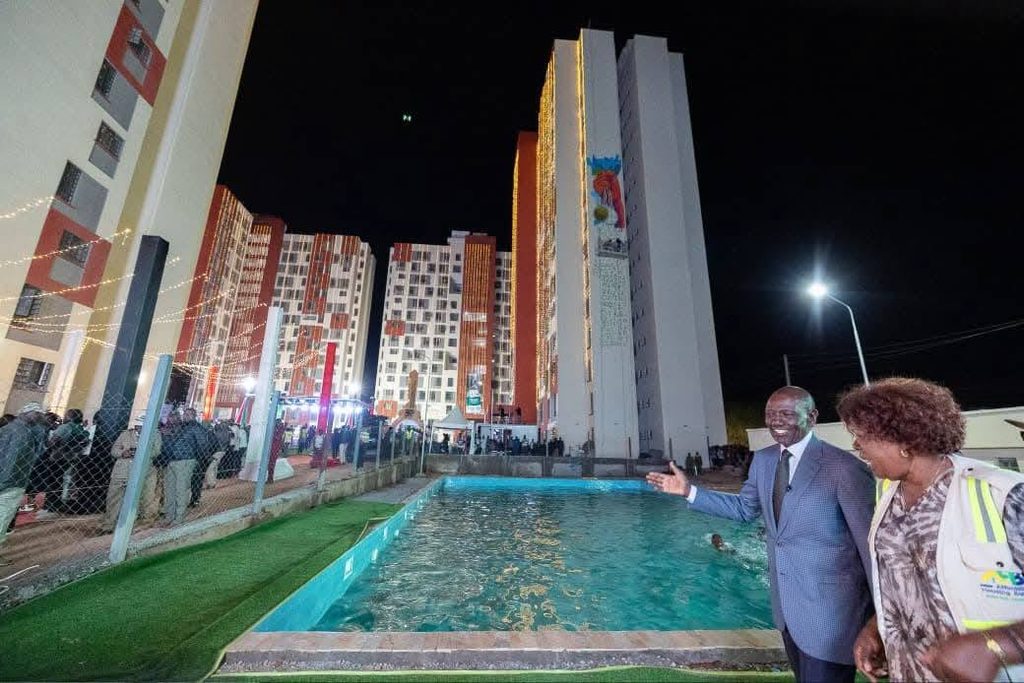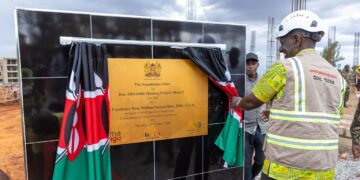
President William Ruto has handed over keys to 2,157 homeowners at the KSh5.3 billion Pioneer Affordable Housing Project in Eldoret City, Uasin Gishu County, marking another milestone in the government’s efforts to expand access to decent and affordable housing while stimulating economic growth. The colourful ceremony, held on Sunday evening, was attended by beneficiaries, construction workers and local artisans whose contributions helped bring the modern residential estate to completion. The project demonstrates the government’s commitment to transforming homeownership from a distant dream into a realistic opportunity for ordinary Kenyans.
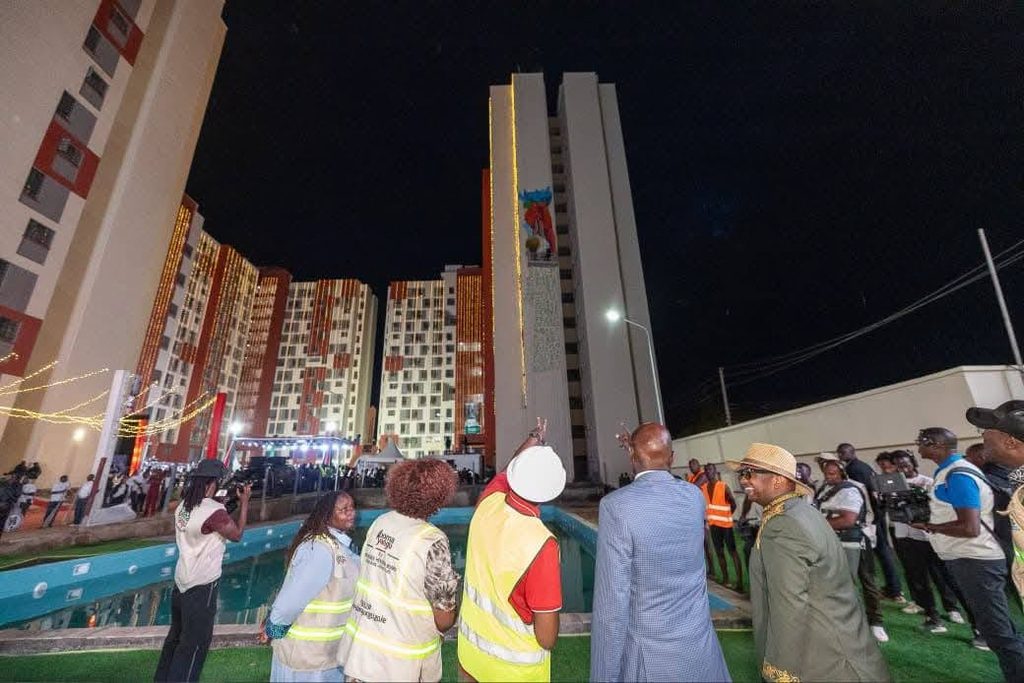
The Pioneer Estate comprises 15 residential blocks featuring 552 social housing units for vulnerable and low-income households, 1,065 affordable homes ranging from studios to three-bedroom apartments, and 540 market-rate units. Beyond providing shelter, the development offers an integrated living environment equipped with 104 shops, a kindergarten, green spaces, a clubhouse and a swimming pool. Additional facilities, including a junior school, basketball courts and a football pitch, are intended to support recreation, education and community interaction. President Ruto said the project was designed to provide a complete lifestyle, with modern amenities and Wi-Fi connectivity that allows residents to work from home.
The handover highlights the Affordable Housing Programme’s potential to promote social equity by enabling families who have traditionally struggled with high property prices to secure decent homes. Among the beneficiaries are 21-year-old Abigail Chepkemoi and fellow Eldoret National Polytechnic student Albert Ipolo. Chepkemoi began saving towards homeownership while working at the Pioneer construction site, eventually making a deposit for her own house. Her experience illustrates how the programme can create a pathway from employment to homeownership, particularly for young people seeking financial independence and greater stability. By expanding access to planned residential communities, the initiative also seeks to address the shortage of adequate housing and improve living conditions for low-income households.
The programme’s economic impact extends well beyond the completed homes, with construction activities generating employment for skilled and unskilled workers across the supply chain. At the height of construction at Pioneer this year, more than 1,000 people were employed at the site, while food vendors and other small businesses benefited from the increased demand for goods and services. Gladys Chemeli and Janet Jemutai, who operated food outlets during construction, are examples of entrepreneurs whose livelihoods were supported by the project. President Ruto said the housing initiative has created millions of employment opportunities across more than 200 construction sites and projected that over two million Kenyans would be working in the programme by the end of 2027. Such employment opportunities can support household incomes, skills development and local economic activity.
A major achievement at Pioneer Estate is its contribution to local manufacturing, with 97 per cent of construction materials sourced domestically. The project consumed more than 394,000 bags of cement and 4,500 tonnes of steel, alongside locally supplied sand, ballast and fittings. This demand provides a market for Kenyan manufacturers, supports distribution networks and strengthens businesses involved in producing construction materials. The decision to prioritise locally manufactured inputs also demonstrates how public investment in housing can stimulate industrial activity while reducing dependence on imported products. President Ruto noted that lifts were among the few imported items, accounting for approximately three per cent of the materials and equipment used, and announced that seven manufacturers had been secured to begin producing lifts locally for future housing developments.
The project has also opened significant opportunities for the Jua Kali sector, demonstrating the role of small and medium-sized enterprises in delivering large-scale national development projects. More than 50 Jua Kali associations in Eldoret supplied 2,272 steel doors and 6,486 windows for the estate, while KSh264 million in opportunities went to 84 local associations. Across the North Rift, Jua Kali artisans have benefited from opportunities valued at KSh3.8 billion, while similar associations nationwide have received opportunities worth KSh61 billion, according to the figures cited by the President. These contracts help local enterprises expand production, generate income and employ additional workers. The programme’s incorporation of local artists to decorate and beautify buildings further extends its economic benefits to the creative industry.
Pioneer Estate forms part of a wider government investment in housing and supporting infrastructure across Uasin Gishu County. Other developments include the Eldoret Railway City project, expected to deliver 2,231 homes, Kidiwa Phase Two with 1,800 units, and the Lumumba Housing Project, which is planned to provide 2,000 homes in a 24-storey development. Across the county, 12,429 affordable housing units worth KSh29.9 billion are planned or under construction. Together with student hostels, modern markets and a primary school, the government’s total investment in the county stands at KSh41.8 billion. President Ruto also cited projects in Nairobi, Bomet, Kakamega and Homa Bay, while stating that developments in Nanyuki and Gichugu were ready for handover. He said the government aims to complete 45,000 affordable housing units by December 2027.
President Ruto reaffirmed his administration’s commitment to accountability in managing the Affordable Housing Fund, promising that contributions would be used prudently to deliver homes, modern markets and student hostels. He acknowledged employees and employers who contribute 1.5 per cent of salaries monthly towards the housing agenda, describing them as key partners in the programme’s implementation. The long-term success of the initiative will depend on maintaining transparency, ensuring that completed homes remain accessible to intended beneficiaries, sustaining construction quality and delivering promised facilities. Nevertheless, the handover of 2,157 homes at Pioneer Estate underscores the programme’s broader economic significance: expanding homeownership, creating employment, empowering Jua Kali enterprises and supporting Kenyan manufacturing. By linking housing delivery with domestic production and job creation, the government aims to establish a development model in which investment in decent homes also drives wider economic opportunity.