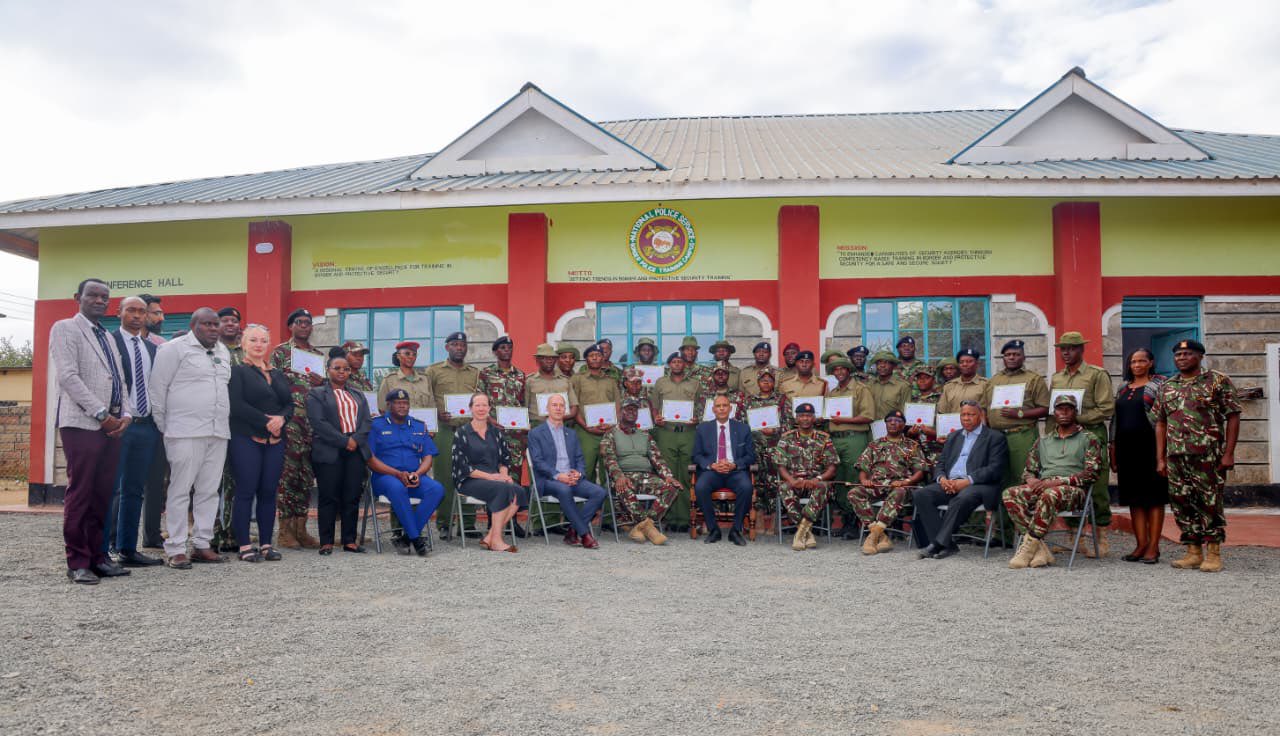
Kenya has taken another decisive step in strengthening its national security architecture following the launch of the Regional Counter-Smuggling Programme (RCSP) in Nairobi, a landmark Kenya-United Kingdom initiative designed to combat transnational organized crime, modernize border management, and deepen regional cooperation across the Horn of Africa. The programme, unveiled alongside the establishment of a specialized elite immigration crime unit, underscores the Government’s commitment to building secure borders, promoting safe migration, and reinforcing Kenya’s position as a regional leader in security cooperation.
Implemented by the International Organization for Migration (IOM) with support from the United Kingdom Home Office Border Security Command, the three-year programme brings together Kenya, Ethiopia, and Somalia under a coordinated framework that seeks to strengthen intelligence-led border management, dismantle migrant smuggling networks, and improve institutional collaboration among security agencies.
The launch represents a significant milestone in the deepening strategic partnership between Kenya and the United Kingdom, reflecting growing confidence in Kenya’s capacity to anchor regional security initiatives that respond to increasingly sophisticated cross-border criminal threats. Beyond reinforcing bilateral relations, the initiative demonstrates the value of international cooperation in addressing security challenges that transcend national boundaries while supporting orderly and well-managed migration.
A major highlight of the programme is the establishment of the Counter Organized Immigration Crime Team, an elite investigative capability comprising specially trained officers within the Directorate of Criminal Investigations. The specialized unit significantly enhances Kenya’s ability to detect, investigate, and dismantle criminal syndicates involved in migrant smuggling, human trafficking, immigration fraud, and other forms of transnational organized crime that threaten national security and regional stability.
The formation of the elite unit reflects the Government’s continued investment in specialized law enforcement capabilities that combine intelligence-led investigations, financial crime analysis, digital evidence management, victim-centered investigations, and coordinated operational planning. Such expertise strengthens the country’s preparedness to confront increasingly complex criminal networks that exploit vulnerable populations and porous borders.
The Regional Counter-Smuggling Programme also reinforces Kenya’s broader strategy of modernizing border governance through institutional strengthening, operational excellence, and the adoption of internationally recognized best practices. Standardized operational procedures across Kenya, Ethiopia, and Somalia are expected to improve intelligence sharing, harmonize investigative approaches, facilitate joint operations, and strengthen coordination among immigration, police, customs, and border management agencies.
This harmonized regional approach provides a stronger foundation for disrupting organized criminal networks that operate across multiple jurisdictions while improving the ability of frontline agencies to respond swiftly to emerging security threats. Enhanced interoperability among participating countries is expected to reduce operational gaps that have historically been exploited by transnational criminal organizations.
The programme places particular emphasis on strengthening security in high-risk border areas and key international airports, where investments in infrastructure, advanced detection technologies, intelligence systems, and specialized training will enhance Kenya’s ability to identify and intercept criminal activities without disrupting legitimate travel and commerce. The strengthened focus on strategic border points reflects a proactive approach that prioritizes prevention, early detection, and coordinated enforcement.
Equally significant is the programme’s investment in human capital. Immigration officers, investigators, and border management personnel will benefit from advanced technical training, professional development, and continuous knowledge transfer aimed at improving investigative skills, operational planning, intelligence analysis, and cross-border cooperation. These investments contribute to building resilient institutions capable of adapting to evolving security challenges while maintaining high standards of professionalism and accountability.
The partnership with the International Organization for Migration further strengthens Kenya’s institutional capacity by providing technical expertise, operational support, and global experience in migration governance. Through collaborative implementation, the programme promotes balanced border management that combines effective law enforcement with the protection of vulnerable migrants, ensuring that security measures remain consistent with international standards and human rights principles.
Improved border security also delivers substantial economic benefits. By strengthening the integrity of Kenya’s borders, the programme safeguards legitimate trade, facilitates lawful movement of people and goods, protects government revenue, and creates a more secure environment for investment. Stronger border governance enhances business confidence by reducing the risks associated with organized crime, illicit trade, and document fraud while supporting the efficient movement that underpins regional commerce.
The initiative aligns with the Government’s wider agenda of strengthening institutional resilience through greater inter-agency coordination. Closer collaboration among the Directorate of Immigration Services, Directorate of Criminal Investigations, Border Management Secretariat, Kenya Airports Authority, Counter Trafficking in Persons Secretariat, and other national security institutions is expected to improve operational efficiency and ensure a unified response to complex cross-border threats.
At the regional level, the programme contributes to broader efforts to promote peace, stability, and economic integration throughout the Horn of Africa. Stronger coordination between Kenya, Ethiopia, and Somalia enhances collective capacity to disrupt criminal enterprises that undermine security while creating an environment that supports trade, mobility, humanitarian cooperation, and sustainable development across the region.
The programme also reinforces the importance of maintaining a robust legal, policy, and institutional framework capable of responding to emerging security risks. Continued innovation in border management, supported by advanced technology, intelligence-driven operations, and strong international partnerships, will enable Kenya to remain agile in addressing evolving criminal tactics while protecting vulnerable communities.
As Kenya continues to expand its international security partnerships, the launch of the Regional Counter-Smuggling Programme reflects growing recognition of the country’s strategic role as a trusted regional security partner. By investing in institutional modernization, specialized enforcement capabilities, and coordinated regional action, Kenya is strengthening its international standing while creating a safer environment that supports long-term economic growth and national resilience.
The launch of the Regional Counter-Smuggling Programme and the operationalization of the elite Counter Organized Immigration Crime Team therefore represent a transformative investment in Kenya’s national security and regional leadership. Through stronger international partnerships, modernized border management, enhanced institutional capacity, and coordinated action against transnational organized crime, the Government is reinforcing secure migration, protecting communities, safeguarding economic development, and positioning Kenya at the forefront of regional efforts to build lasting peace, security, and shared prosperity.